
The Nomination of Michelle Steel and How the Senate Confirms an Ambassador
She has held elected office at the local, state, and federal levels, with a career rooted in taxation and fiscal management.
By Arius Derr and Sia Choi
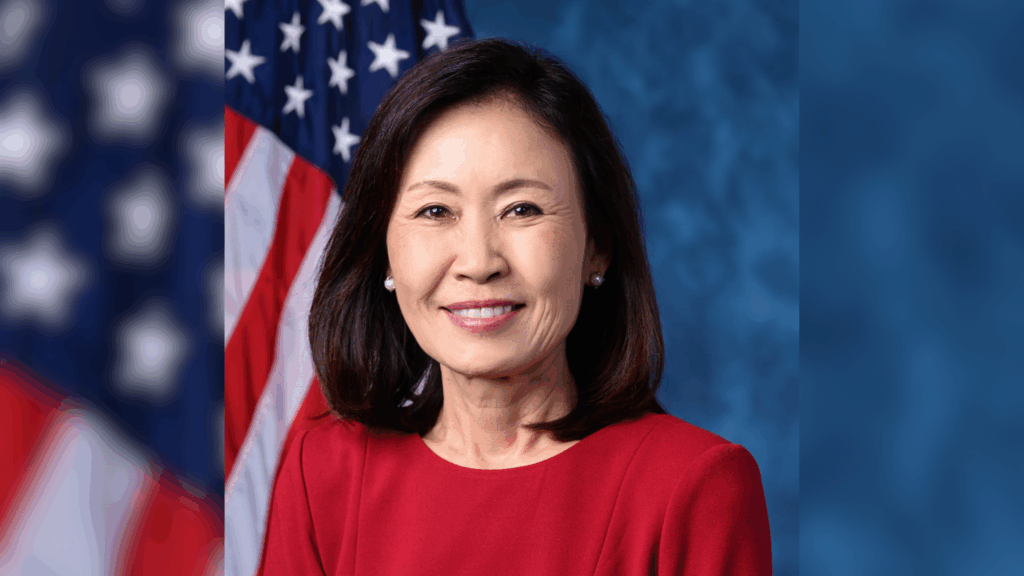
On April 13, 2026, President Donald Trump nominated Michelle Steel as U.S. Ambassador to South Korea. Steel is a Republican politician from Orange County, California, who served in the U.S. House of Representatives representing California’s forty-fifth and forty-eighth congressional districts. She has held elected office at the local, state, and federal levels, with a career rooted in taxation and fiscal management.
Steel first entered public office in 2007 as a member of the California State Board of Equalization, which administers taxes and oversees revenue collection in the state, and served until 2015. She was elected to Orange County’s Board of Supervisors in 2015 and served until 2021. In that role, she oversaw the county budget, infrastructure projects, public safety, public health, and social services, and served as Board chair in 2017 and 2020.
In 2020, Steel was elected to the U.S. House of Representatives and began her term in January 2021. She served on the House Committee on Ways and Means, the House Committee on Education and the Workforce, and the House Select Committee on Strategic Competition Between the United States and the Chinese Communist Party. In the past, she has advocated for expanding U.S.-South Korea trade, including by supporting the establishment of high-skilled visas for Korean nationals to facilitate investment in the United States. Steel has also co-sponsored legislation condemning human rights violations in China and North Korea.
Steel moved to the United States in 1975 after spending her childhood in South Korea and Japan. She has said her entry into politics grew out of concern for her mother, a small business owner who struggled with tax laws and regulations. Steel’s parents fled North Korea during the Korean War, suggesting a personal interest in inter-Korean and U.S.-North Korea relations.
It may take several months before Steel assumes her post in Seoul. Philip Goldberg, who most recently served as U.S. Ambassador to South Korea from 2022 to 2025, was nominated in February 2022, confirmed in May 2022, and presented his credentials in July 2022. His predecessor, Harry Harris, followed a similar timeline.
How the Senate Confirms an Ambassador
The following is a synthesized timeline from the Congressional Research Service on the Senate’s consideration of presidential nominations, available here.
Receipt and Referral. The president sends the nomination to the Senate in writing. The executive clerk numbers it, reads it on the floor, and refers it to the Senate Committee on Foreign Relations. The Senate cannot vote on the nomination the day it arrives.
Committee Vetting. An FBI field investigation, completed before the nomination, goes to the White House; the committee chair and ranking member may also receive a summary. The nominee also files a financial disclosure certified by the relevant agency and the U.S. Office of Government Ethics, and answers the committee’s written questionnaire. Committee rules typically require a one- to two-week layover before a hearing.
Confirmation Hearing. Hearings are public unless closed by majority vote. Home-state senators often introduce the nominee, who then testifies on qualifications, policy views, and potential conflicts of interest. Committees may send written questions before and after the hearing.
Committee Action. The committee has four options: report the nomination favorably, unfavorably, without recommendation, or take no action at all. Inaction is more common than an unfavorable report. Senate staff file the report with the executive clerk, and the Senate cannot vote on the nomination the same day it is reported.
Floor Consideration. Three paths are possible at this phase:
- Unanimous consent. Most ambassadorial nominations take this route. The Senate brings them up by unanimous consent and approves them without objection, often grouped en bloc with other nominations and confirmed by voice vote without debate.
- Cloture. When a senator objects, the majority leader moves to executive session and files cloture. The vote takes place two session days later and requires a simple majority. Once cloture is invoked, post-cloture debate on ambassadorial nominations is capped at two hours (the 30-hour ceiling applies only to Cabinet-level executive positions, the Supreme Court, and the Circuit Courts of Appeals). A simple majority then confirms.
- En bloc via executive resolution. A September 2025 reinterpretation lets the Senate bundle qualifying nominations—those on the Executive Calendar, below Level I, and not Article III judgeships—through a two-step process: first a vote to adopt a resolution authorizing the bundle, then a vote to confirm the package itself. Each step requires only a simple majority, though each may also require a cloture vote to end debate.
After Confirmation. The secretary of the Senate transmits the resolution of confirmation to the White House. The president signs the commission. The ambassador is sworn in, travels to their post, and presents their credentials to the head of state of the receiving country.
If the Senate Doesn’t Act. A pending nomination is returned to the president at the end of a session or during any recess longer than thirty days—unless the Senate waives the rule by unanimous consent, which it often does. If the president still wants the nominee considered, he must submit a new nomination.
Arius Derr is Director of Communications at KEI. Sia Choi is Communications Intern at KEI. The views expressed are the authors’ alone.
Feature image from Michelle Steel, formatted in 16×9 by KEI.
KEI is registered under the FARA as an agent of the Korea Institute for International Economic Policy, a public corporation established by the government of the Republic of Korea. Additional information is available at the Department of Justice, Washington, D.C.