
Search All Site Content
Total Index: 6887 publications.
Subscribe to our Mailing List!
Sign up for our mailing list to keep up to date on all the latest developments.
The Peninsula
2025 Year in Review: South Korea’s Post-Martial Law Reset
The following is part of a new miniseries from KEI surveying the most important developments and trends in the U.S.-South Korea relationship in 2025. You can read all year-in-review pieces by clicking here.
December 3, 2025, marked one year since then South Korean President Yoon Suk Yeol declared martial law. The widespread protests and presidential impeachment that followed were regarded as positive markers for the state of South Korea’s democracy and handed a new and unique mandate to current President Lee Jae Myung, who was elected in June 2025.
In the months prior to declaring martial law, President Yoon and the opposition-led National Assembly’s relationship was contentious, with the president expressing discontent with the state of the legislature and the twenty-two impeachment motions filed against his administration since May 2022. Believing that budget cuts threatened his political agenda, Yoon was adamant that the actions of the parliament were tantamount to a “legislative dictatorship.” Piling on to these grievances were allegations of election fraud and conspiracies about collaboration by the opposition party with North Korean communists. These circumstances apparently compelled Yoon to declare martial law. Weeks later, the National Assembly voted to remove him from office.
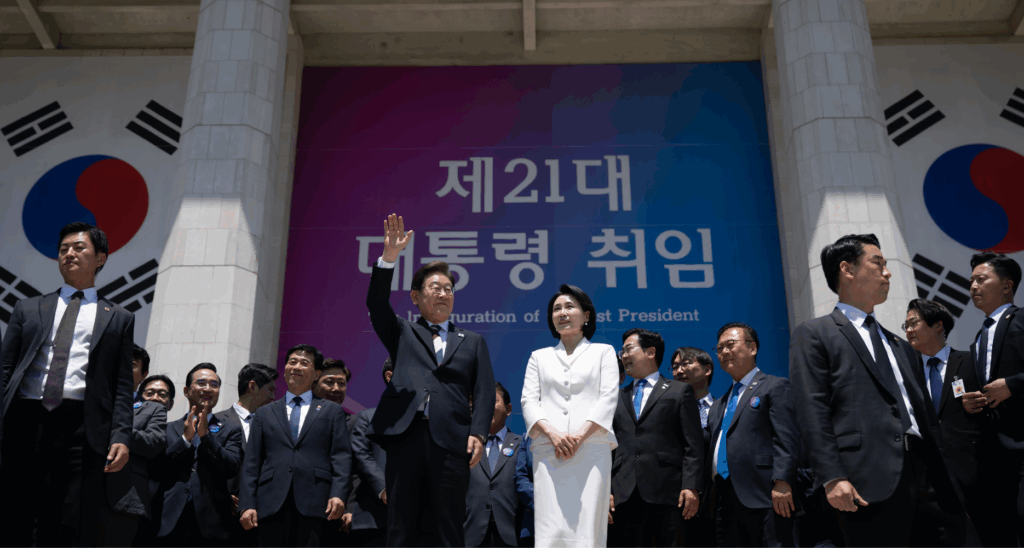
The election of President Lee in June 2025 marked a new era for South Korea. President Lee expressed his concerns over the damage done to South Korea’s democracy, calling for extensive reform and better safeguards for holding officials accountable: “The December 3 coup d’etat was not just a crisis for democracy in one country. If democracy in South Korea collapsed, it would have meant a setback…for world democracy.” In July 2025, the National Assembly amended the provisions for declaring martial law, requiring more stringent parameters and strengthening protections of the legislature, including a ban on military and police from entering the National Assembly’s compound even if martial law is in effect. Additional safeguards include barring any attempt to block lawmakers from entering the National Assembly. Following new proposed bills that allow military personnel and public servants to disobey unlawful orders, the Lee administration began a government-wide investigation into those who cooperated in Yoon’s martial law. The Lee administration also proposed amendments to the constitution in September 2025 that would change presidential terms from a single five-year term to two four-year terms, with the introduction of midterm elections.
Despite the instability that followed Yoon’s declaration of martial law, civilian trust in the military, elections, and the national government reached record highs, according to a Gallup Korea poll published in November 2025. Institutional trust has not, however, decreased political polarization. The same poll showed a fifty-percentage-point gap between progressives and conservatives regarding confidence in the government. The Lee administration will have to navigate these extreme differences in domestic political opinion in conjunction with steady concerns about corruption from the broader public throughout 2026.
South Korea’s efforts to rebuild democratic faith following the martial law declaration will be a long-term project. Early initiatives throughout 2025 signal an attempt not only to prevent recurrence but to frame the incident as a moment of democratic restoration and institutional learning.
Nailah-Benā Chambers is a Research Intern at the Korea Economic Institute of America (KEI). All views presented here are the author’s alone.
Feature image from the South Korean Presidential Office.
KEI is registered under the FARA as an agent of the Korea Institute for International Economic Policy, a public corporation established by the government of the Republic of Korea. Additional information is available at the Department of Justice, Washington, D.C.