Q2 2026 U.S.-South Korea Trade and Investment Ledger
America’s new tariff framework comes alongside significant South Korean investment into strategic sectors across the United States, and Q2 2026 showed this pattern taking hold...
Showing 89 items
America’s new tariff framework comes alongside significant South Korean investment into strategic sectors across the United States, and Q2 2026 showed this pattern taking hold...
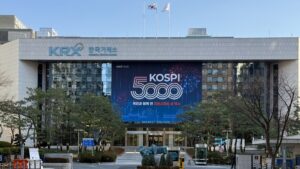
The KOSPI, South Korea’s benchmark stock market index, nearly doubled during the first half of 2026, the largest increase in the world (Figure 1, Panel...
South Korea recorded a historic high in monthly exports in May 2025. According to recently released trade statistics, exports reached USD 87.8 billion, jumping 53.4...
War in the Middle East has cut the global growth outlook. However, despite South Korea’s heavy reliance on Middle Eastern energy, the OECD Economic Outlook in June...
South Korea and Japan rank among Asia’s most advanced digital economies. Their firms are deeply linked across semiconductor supply chains, online shopping, cloud services, and...
South Korea has become more dependent on China for imports and on the United States for exports. This concentration of trade with the two global...
On May 7, the U.S. Court of International Trade (CIT) invalidated the Donald Trump administration’s 10 percent across-the-board tariffs imposed under Section 122 of the...
The lesson for Korea is that the outcome of the IEEPA case will not have a significant impact on future trade deals.
The document lays out the initial rules of the road, revealing both where the two governments are aligned and where future negotiations will be essential.
Explore how Hyundai’s $7.6B Metaplant is driving jobs, suppliers, and clean-energy growth across the state of Georgia.
A must-read look at the trade deals and diplomacy that reshaped U.S.–Korea relations in Q3 2025.
The U.S. and South Korean governments appear committed to following other countries like the United Kingdom, Indonesia, and Japan in making a deal.
Korean companies find themselves confronting a familiar yet pressing dilemma: how to convert mounting pressure into a strategic opportunity.
Section 338 allows the president to impose 'new or additional duties' of up to 50% on products from countries that 'discriminate' against U.S. commerce
Seoul's optimistic rhetoric belies deep skepticism about the prospects for a significant breakthrough on trade with the Trump administration.