
Japan’s Succession Battle Pits Moderates Against the Right—and Korea Is Watching
The path ahead in Japan is likely to be fraught with ongoing political instability until the party wins a new election and regains its majority.
Showing 325 items
The path ahead in Japan is likely to be fraught with ongoing political instability until the party wins a new election and regains its majority.
The Trump administration is asking Asian allies to contribute more to their defense and collectively step up military coordination to deter China.
Washington and Seoul must cast their vision to the broader challenge of shaping regional peace and prosperity.
If the value of the partnership is diminished from within, it will become increasingly difficult for the alliance to be sustained.
The two Asian neighbors and allies of the United States appear determined to tightly coordinate their response to the Trump administration.
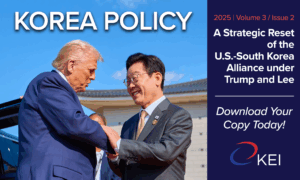
The primary challenge may be whether Trump and Lee can abandon “America First” and “Korea first” instincts to “Make the Alliance Great Again.”
For the first time since 1994, the ruling LDP coalition controls neither chamber of the Japanese legislature.
North Korea issues like human rights may be awkward and controversial for the Lee administration, but Seoul is committed to testing the waters.
Leaders Lee and Ishiba emphasize overlapping concerns about global turmoil as their primary security partner turns inward.
South Korea’s friends and neighbors are watching not just what Lee says but whether he governs as the centrist he campaigned to be.
Depending on how Lee leads, South Korea may be on the threshold of dramatic domestic and international policy changes.
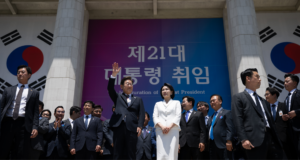
South Korean voters will elect a new president on June 3, 2025, following the impeachment of former President Yoon Suk Yeol earlier this year.
The decision to shutter these agencies impacts their important role in the Indo-Pacific region broadly and on the Korean Peninsula.