Search All Site Content
Total Index: 6896 publications.
Subscribe to our Mailing List!
Sign up for our mailing list to keep up to date on all the latest developments.
The Peninsula
2025 Year in Review: U.S.-South Korea Security and Extended Deterrence
The following is part of a new miniseries from KEI surveying the most important developments and trends in the U.S.-South Korea relationship in 2025. You can read all year-in-review pieces by clicking here.
In 2025, security developments on the Korean Peninsula underscored both the durability and the evolution of the U.S.-South Korea alliance. Against the backdrop of North Korea’s advancing capabilities and intensifying great power competition, Seoul and Washington spent much of the year refining how extended deterrence is operationalized and how alliance responsibilities are shared.
One of the year’s most consequential alliance developments was South Korea’s renewed push for nuclear-powered submarines. On the sidelines of the Asia-Pacific Economic Cooperation (APEC) summit, U.S. President Donald Trump signaled openness to South Korea’s bid to develop nuclear-powered submarines, marking a notable shift from Washington’s long-standing caution on sensitive nuclear propulsion technologies. The move reflected growing U.S. acceptance of South Korea’s expanding strategic role in regional deterrence.
That momentum carried into December during the fifth U.S.-South Korea Nuclear Consultative Group (NCG) meeting in Washington. The joint statement reaffirmed Washington’s commitment to provide extended deterrence “utilizing all U.S. defense capabilities, including nuclear,” while emphasizing Seoul’s increasing leadership in conventional defense on the peninsula.
Taken together, these developments point to a broader recalibration of roles and responsibilities within the alliance. South Korea has increased defense spending and assumed greater operational responsibilities, aligning its forces more closely with U.S. planning and expanding joint exercises. U.S. commanders repeatedly stressed that regular combined drills and consultations remain “absolutely necessary” to sustain readiness and deterrence credibility amid growing regional threats.
At the same time, debates persisted over how explicit U.S. defense commitments should be. Some analysts argued that clearer assurances would strengthen deterrence against Pyongyang, while others warned that excessive specificity could constrain strategic flexibility in a crisis. These competing views highlighted a core challenge of extended deterrence: balancing credibility with ambiguity.
Complicating these discussions was a shifting geopolitical backdrop. North Korea’s deepening military ties with Russia raised concerns about technology transfers and operational coordination. For U.S. and South Korean officials, these developments reinforced the view that deterrence on the Korean Peninsula can no longer be treated in isolation from wider global rivalries, elevating the importance of sustained alliance coordination.
Following the first Trump-Lee summit, South Korea moved to institutionalize its submarine-related discussions. In mid-December, National Security Advisor Wi Sung-lac traveled to Washington to consult with U.S. counterparts on nuclear-powered submarine development and related follow-up measures. In parallel, Seoul established an interagency task force to prepare consultations on submarine construction, uranium enrichment, and spent fuel reprocessing. While these talks remain preliminary, they signal a more assertive South Korean approach to alliance-based deterrence.
Looking ahead to 2026, the alliance faces a familiar challenge in a more complex environment: maintaining credible deterrence while adapting to evolving threats. How effectively Seoul and Washington manage this balance will shape both alliance stability and deterrence effectiveness in the years ahead.
Yujin Son is Communications Intern at KEI. All views presented are the author’s alone.
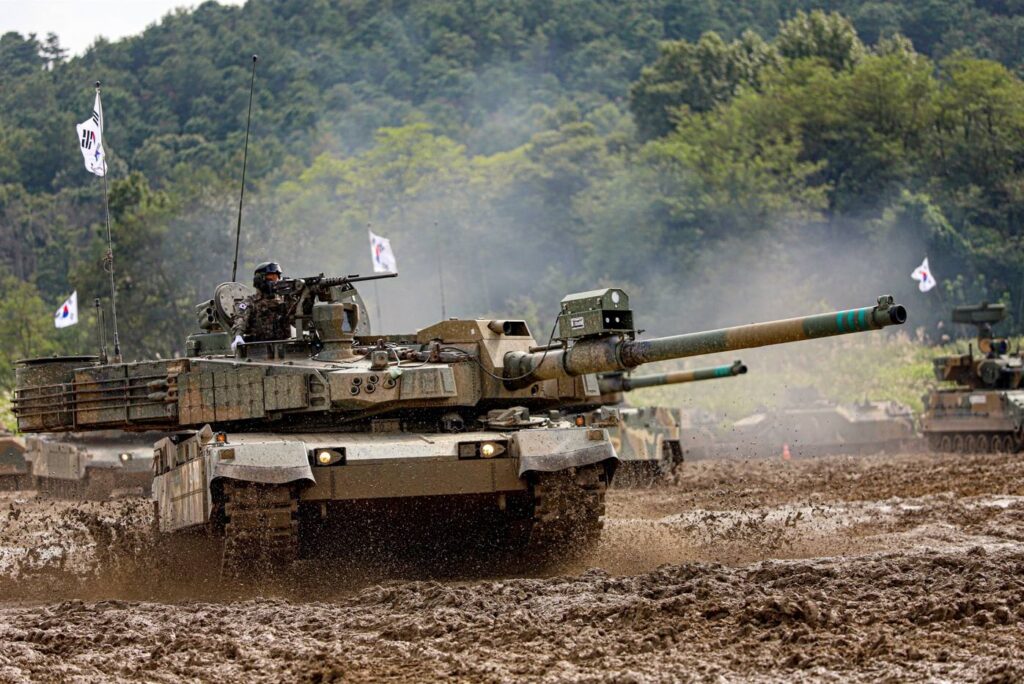
Feature image from the Army of the Republic of Korea.
KEI is registered under the FARA as an agent of the Korea Institute for International Economic Policy, a public corporation established by the government of the Republic of Korea. Additional information is available at the Department of Justice, Washington, D.C.