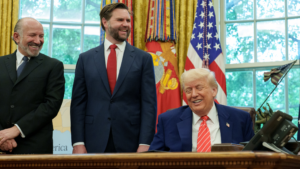
Scott Snyder on South Korea’s Stalled Investment Pledge
KEI President and CEO Scott Snyder spoke with The Dispatch about Washington’s frustration with the pace of South Korea’s promised investments under last year’s trade...
Analysis and publications on economic policy, trade relations, business, financial issues, and commercial developments affecting U.S.-Korea relations.
Showing 758 items
KEI President and CEO Scott Snyder spoke with The Dispatch about Washington’s frustration with the pace of South Korea’s promised investments under last year’s trade...
America’s new tariff framework comes alongside significant South Korean investment into strategic sectors across the United States, and Q2 2026 showed this pattern taking hold...
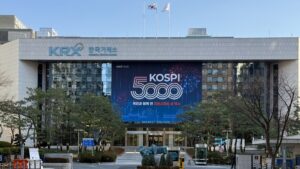
The KOSPI, South Korea’s benchmark stock market index, nearly doubled during the first half of 2026, the largest increase in the world (Figure 1, Panel...
South Korea recorded a historic high in monthly exports in May 2025. According to recently released trade statistics, exports reached USD 87.8 billion, jumping 53.4...
War in the Middle East has cut the global growth outlook. However, despite South Korea’s heavy reliance on Middle Eastern energy, the OECD Economic Outlook in June...
South Korea and Japan rank among Asia’s most advanced digital economies. Their firms are deeply linked across semiconductor supply chains, online shopping, cloud services, and...
South Korea has become more dependent on China for imports and on the United States for exports. This concentration of trade with the two global...
On May 7, the U.S. Court of International Trade (CIT) invalidated the Donald Trump administration’s 10 percent across-the-board tariffs imposed under Section 122 of the...
Iran’s failure to achieve nuclear latency has significant implications for South Korea and Japan’s thinking on their own nuclear strategy.
Contrasting interest rate directions by the U.S. Federal Reserve and the Bank of Japan complicate South Korea’s economy.