Search All Site Content
Total Index: 6907 publications.
Subscribe to our Mailing List!
Sign up for our mailing list to keep up to date on all the latest developments.
The Peninsula
UN Condemnation of North Korea’s Human Rights Abuses Holds Firm Despite Political Shifts
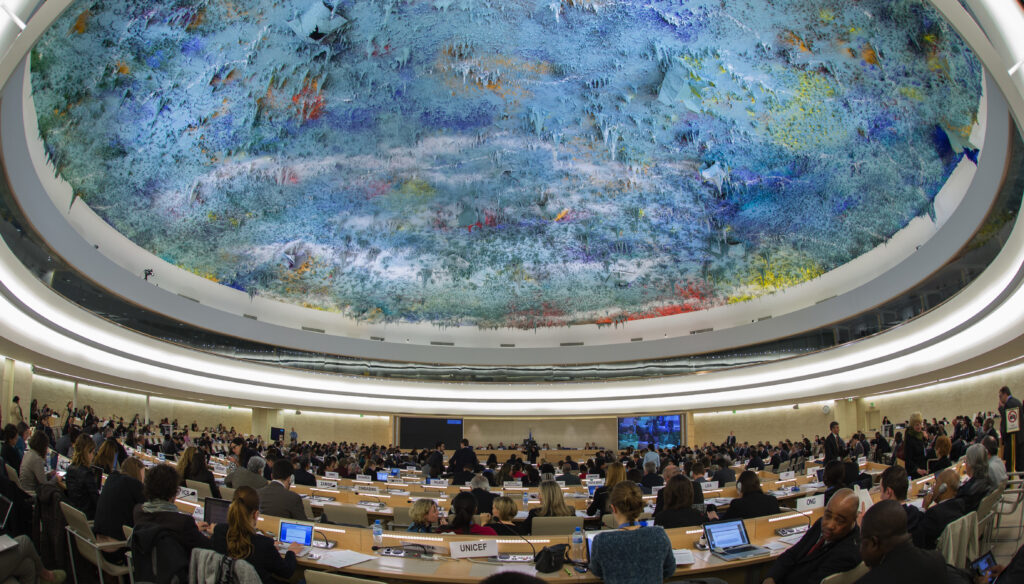
For the twentieth year in a row, the UN General Assembly condemned North Korea’s human rights violations and did so at a moment when changing governments in the United States and South Korea raised real questions about whether the streak would hold. Instead, the vote underscored how deeply rooted global concern over Pyongyang’s abuses has become and how even engagement-minded leaders are constrained by the gravity of the regime’s record.
The first such resolution, in 2005, came two years after the UN Human Rights Council (UNHRC) adopted a resolution harshly critical of human rights in North Korea. The council had just designated Vitit Muntarbhorn, a law professor, as the UN special rapporteur for human rights in North Korea. This mandate was established to investigate and report to the UN General Assembly and the UNHRC on the status of human rights in North Korea. The latter body has appointed or approved the mandate of a special rapporteur annually since 2004, and several distinguished scholars and legal experts have served in that position. Muntarbhorn (2004–2010) was followed by Marzuki Darusman (2010–2016), former attorney general of Indonesia, Tomás Ojea Quintana (2016–2022), a professor of law from Argentina, and Elizabeth Salmon (since 2022), a professor of law from Peru.
The yearly resolution critical of North Korea has been approved by consensus (without a recorded vote) for the past twenty years. A recorded vote would only quantify and emphasize North Korea’s limited support in the United Nations and the negative view that most UN member countries share regarding its abysmal human rights record. Rather than face the public embarrassment of an overwhelming recorded vote critical of its human rights practices, North Korea does not demand a recorded vote.
There was concern that 2025 might break the streak because of political changes in Washington and Seoul, with both governments showing interest in better relations with Pyongyang. South Korea just elected a new president who publicly favors engagement with North Korea and improving inter-Korean relations. In addition, Donald Trump’s previous engagement with Kim Jong Un and his penchant for such dramatic public actions raises some expectation and concern among UN members that improving relations between Washington and Pyongyang might reemerge on Trump’s agenda.
The Political Change in Seoul
South Korea took modest steps after Lee’s mid-year election to emphasize the new president’s positive approach toward Pyongyang. For example, in August, just a few weeks after Lee’s election, the South Korean government suspended propaganda critical of the North on South Korean radio stations and on loudspeaker broadcasts along the inter-Korean border. In response, North Korea began dismantling some of its own border loudspeakers that were used for blasting propaganda into the South’s border areas. Positive signals, however, did not go much further. Additional signals of Lee’s interest in improved relations with Kim came at the recent Asia-Pacific Economic Cooperation (APEC) summit hosted by South Korea. Lee reportedly asked Chinese President Xi Jinping to help the administration’s reengagement efforts with North Korea.
Lee was in New York City in September, and told the UN General Assembly that he sought to end the “vicious cycle of unnecessary military tensions” with North Korea and suggested “a cool-headed” approach to limiting nuclear weapons, recognizing that “denuclearization cannot be achieved in the short term.” More recently, when Lee returned from the Group of Twenty (G20) summit in South Africa in November, he told journalists that North Korea refused to respond to calls by the South to more clearly demarcate the boundary between the two countries to avoid clashes along the border.
The Political Focus in Washington
In Washington, DC, Trump’s return to the White House has produced greater upheaval and chaos than his first term. Although he failed to breakthrough in his meetings with Kim, there were initial expectations that Trump’s second term might lead to a revival in contacts between Washington and Pyongyang. But that hasn’t happened thus far.
Trump began his second term with a flurry of dramatic changes in foreign and domestic policies. His focus on international economic issues, an apparent quest for the Nobel Peace Prize (which was an important consideration behind his efforts toward North Korea in his first term), and major bureaucratic restructuring and serious domestic issues left little bandwidth for dealing with North Korea. The failure to achieve any progress after the high-profile meetings with Kim in Singapore, Hanoi, and at the thirty-eighth parallel left little incentive for Trump to devote the effort required for another round of talks with Kim.
North Korea is “small potatoes” in comparison with Trump’s high-profile efforts to resolve the ongoing conflict between Russia and Ukraine and the ongoing humanitarian and political catastrophe in Gaza. Improving relations with North Korea in 2025 is not a high priority in Trump’s effort to put a Nobel Peace medal on display at Mar-a-Lago.
Furthermore, Trump’s domestic political agenda has become more urgent with election results in early November 2025 suggesting a significant decline in support for Trump-led Republicans. The midterm elections in November 2026 are expected to be very close, and a poor showing for Republicans may make Trump a lame duck as early as next year.
Recent Actions on Human Rights at the United Nations
Both Washington and Seoul underwent political changes this year, and both endorsed the UN resolution critical of North Korea’s human rights record, despite some misgivings. Such resolutions have been adopted in the UN General Assembly every year since 2005, and the resolutions have been endorsed by a significant majority of UN member countries. In the past, both the United States and South Korea have supported human rights in the United Nations.
In October 2025, the UN General Assembly’s Third Committee, which deals with human rights issues, considered a resolution critical of North Korea’s human rights policies. The UN High Commissioner for Human Rights issued a report to the UN General Assembly Third Committee, which concluded that “despite the isolated steps taken, the human rights situation in the Democratic People’s Republic of Korea [North Korea] has not improved since 2014.” In 2014, the United Nations established a high-level panel of experts that issued a highly acclaimed report, which concluded North Korea’s human rights conditions were among the worst in the world. The 2025 UN report on North Korea’s human rights conditions echoed the report of the 2014 Commission of Inquiry, concluding: “No other population is under such restrictions in today’s world.”
The commission concluded its 2014 report with this statement: “Systematic, widespread and gross human rights violations have been, and are being, committed by the Democratic People’s Republic of Korea, its institutions and officials. In many instances, the violations of human rights found by the Commission constitute crimes against humanity. These are not mere excesses of the state. They are essential components of a political system that has moved far from the ideals on which it claims to be founded.
The gravity, scale and nature of human rights violations in North Korea are without parallel in the contemporary world. Political scientists of the 20th century characterized this type of political organization as a totalitarian state: A state that does not content itself with ensuring the authoritarian rule of a small group of people, but seeks to dominate every aspect of its citizens’ lives and terrorizes them from within.”
Despite President Lee’s desires to improve relations with North Korea, the South Korean government ultimately endorsed the UN resolution critical of human rights in North Korea in November 2025. On November 20, the South Korean Ministry of Foreign Affairs issued an official statement noting that, in addition to sixty other countries, South Korea was a cosponsor of the UN resolution calling for improvements in human rights in North Korea. It is noteworthy that the liberal Moon Jae-in administration (2017–2022) did not cosponsor similar UN resolutions between 2019 and 2021 in an effort to improve relations with North Korea.
Initially, there were concerns that South Korea might not endorse the adoption of the resolution in 2025. Human Rights Watch issued a strong letter urging President Lee to support the resolution, which was signed by twenty-one international human rights organizations and two prominent international human rights advocates.
The United States also left people guessing as to whether it would support the resolution. The U.S. government finally came through with a statement of support on the morning of November 4, the day the Third Committee took up the resolution in a formal session. In fact, the draft of the resolution released as the meeting opened that day did not include the United States in the list of countries cosponsoring the resolution. It was only during the committee meeting on November 4 that Department of State officials requested that the United States be included as a cosponsor of the resolution.
The North Korean government and its allies, particularly China and Russia, have not prevented the adoption of resolutions critical of North Korea’s human rights record in the UN General Assembly. They could demand a recorded vote, in which every UN member country would be put on record on the documents involved. The vote would be overwhelmingly against North Korea, so North Korea and its allies continue to strongly speak against the resolutions, but they do not demand a recorded vote.
North Korea is frequently criticized in UN organizations because its human rights record is appalling. The harsh criticism is highlighted by the frequency of condemnations by free and democratic countries. Earlier this year, for example, the UN General Assembly held its first-ever “high-level session” devoted to human rights abuses in North Korea.
The latest UN discussion and vote on the resolution in November and December continue to place North Korea clearly outside the consensus of the international community.
Robert King is a Non-Resident Distinguished Fellow at the Korea Economic Institute of America. The views expressed here are the author’s alone.
Feature image from the United States Mission in Geneva
KEI is registered under the FARA as an agent of the Korea Institute for International Economic Policy, a public corporation established by the government of the Republic of Korea. Additional information is available at the Department of Justice, Washington, D.C.