
Search All Site Content
Total Index: 6918 publications.
Subscribe to our Mailing List!
Sign up for our mailing list to keep up to date on all the latest developments.
The Peninsula
The Trump Administration’s Next Trade Moves After IEEPA Ruling
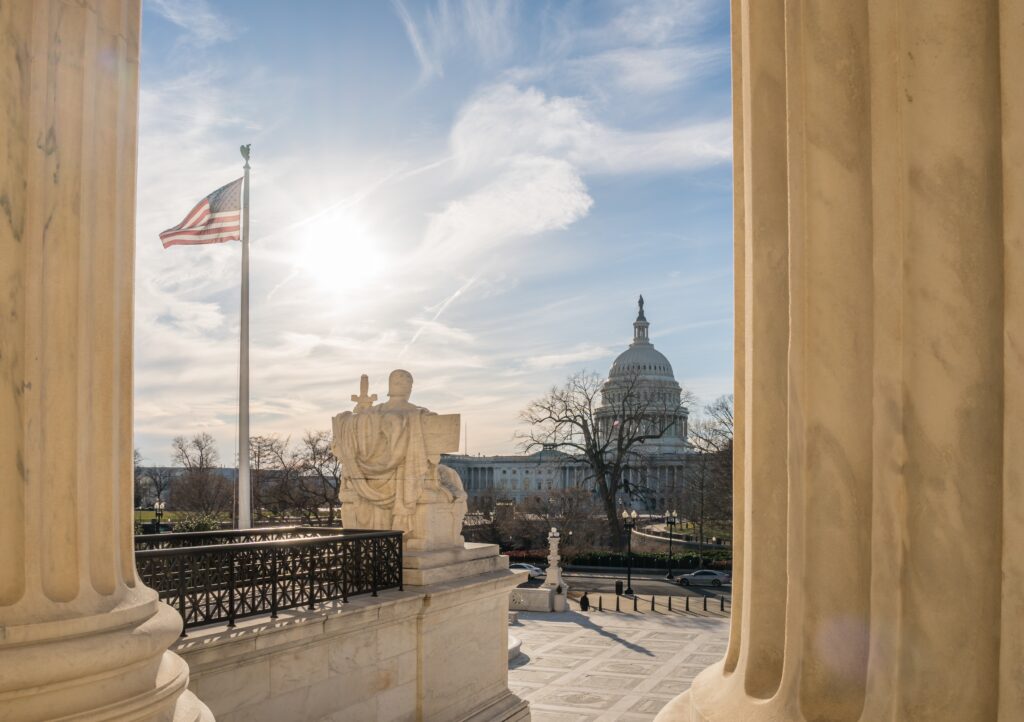
The Supreme Court’s ruling that President Donald Trump’s tariffs under the International Emergency Economic Powers Act (IEEPA) are unconstitutional is being read as a constraint on executive power. But the administration retains substantial authority to pursue aggressive trade policy through sections 122, 301, and 338, as well as non-tariff mechanisms such as quotas, licensing regimes, and embargoes that are harder to litigate and less visible to markets. What the ruling signifies is a shift in the U.S. trade policy’s center of gravity back toward traditional trade institutions, making the road ahead murkier rather than clearer.
The Immediate Economic Impact Is Minimal
Trade-sensitive stocks fell after the Supreme Court’s Friday ruling triggered the reimposition of 15 percent tariffs, but it did not lead to a market collapse that Trump had warned about if the justices ruled against him. Equity markets barely reacted, suggesting that the outcome was largely anticipated and already priced in. At its core, the case focused on whether the president can use IEEPA to raise revenue through tariffs, a power the Constitution assigns to Congress, not the White House. The ruling does not break new ground—rather, the markets reflect a boundary that was always there.
The elimination of IEEPA tariffs does not mean the end of tariffs. The administration can, and likely will, pivot to other legal authorities, including sections 201, 232, and 338. Section 122 allows for across-the-board tariffs (up to 15 percent) to address balance-of-payments concerns, though these measures are subject to a 150-day limit. Meanwhile, Section 301 permits substantially higher tariffs, often exceeding 25 percent, but requires lengthy investigations. President Trump relied heavily on this mechanism during his first term and may do so again during his second, leaning on the U.S. trade representative to execute these investigations. Section 301 could also be used to target digital services disputes. The most immediate example is South Korea’s regulatory treatment of Coupang, the Seattle-based e-commerce giant whose data breach investigation has already drawn a Section 301 petition from U.S. investors and a congressional subpoena.
U.S. Trade Representative Jamieson Greer’s official statement following the court ruling noted that he expects Section 301 investigations to be “areas of concern” for major trading partners, specifically highlighting “discrimination against U.S. technology companies and digital goods and services” and “digital services taxes.” Again, the Supreme Court’s decision reshapes how that uncertainty is created and managed. As tariff authority shifts away from emergency powers, traditional trade institutions, particularly the Office of the U.S. Trade Representative (USTR), move back to the center of the policy process, reestablishing investigations, negotiations, and procedural delays as critical tools for U.S. trade.
But Section 301 is not the administration’s only remaining tool. Even without IEEPA tariffs, the Trump administration retains wide latitude to restrict trade through non-tariff barriers such as quotas, export and import licensing, and embargoes. These non-tariff barriers raise a different set of economic concerns because they can disrupt supply chains in ways that are far less transparent than tariffs. Much of this opacity comes from the import licensing process.
Consider Korean automobile imports. Many Hyundai dealerships in the United States are owned by Americans, but if the U.S. government were to impose quotas on Korean cars, those dealerships would need government approval—an import license—to receive vehicles. When licenses are limited, who gets them is no longer determined by the market but by administrative decisions. In practice, this creates incentives for lobbying and preferential treatment, as firms seek access through political channels rather than competition. A dealership spending money on a trade attorney to secure its allocation means the dealership is not spending that money on inventory, staff, or customers. If non-tariff barriers become more common, the drag on the economy will compound over time.
Implications for Korea
The U.S.-Korea trade framework negotiated following the April 2025 “Liberation Day” tariff was premised on IEEPA-based measures that are now invalid. This creates space for renegotiation and leverage on both sides.
But the worst part may be that none of this will be resolved quickly. Congress is not a realistic venue for trade policy, and the administration knows it. President Trump has already indicated little interest in working with Congress to draft more durable alternatives to IEEPA tariffs. If Democrats retake the House of Representatives or the Senate during the midterm elections in November, passing tariff legislation becomes even more difficult. That gridlock makes it more, not less, likely that the administration will continue testing the limits of executive trade authority through regulation and litigation.
The ruling also leaves important questions unanswered, most notably, whether tariff revenues collected under IEEPA should be returned to U.S. firms or consumers. As a result, legal challenges are likely to continue for years. Future lawsuits will likely test IEEPA, as well as the boundaries of Section 122, Section 301, and other trade statutes.
Feature image from Shutterstock.
KEI is registered under the FARA as an agent of the Korea Institute for International Economic Policy, a public corporation established by the government of the Republic of Korea. Additional information is available at the Department of Justice, Washington, D.C.