
The $350 Billion MOU Moves Forward After South Korea Passes Investment Act
While annual investment funding is capped at USD 20 billion, the full package including $150 billion in shipbuilding must be announced by January 2029.
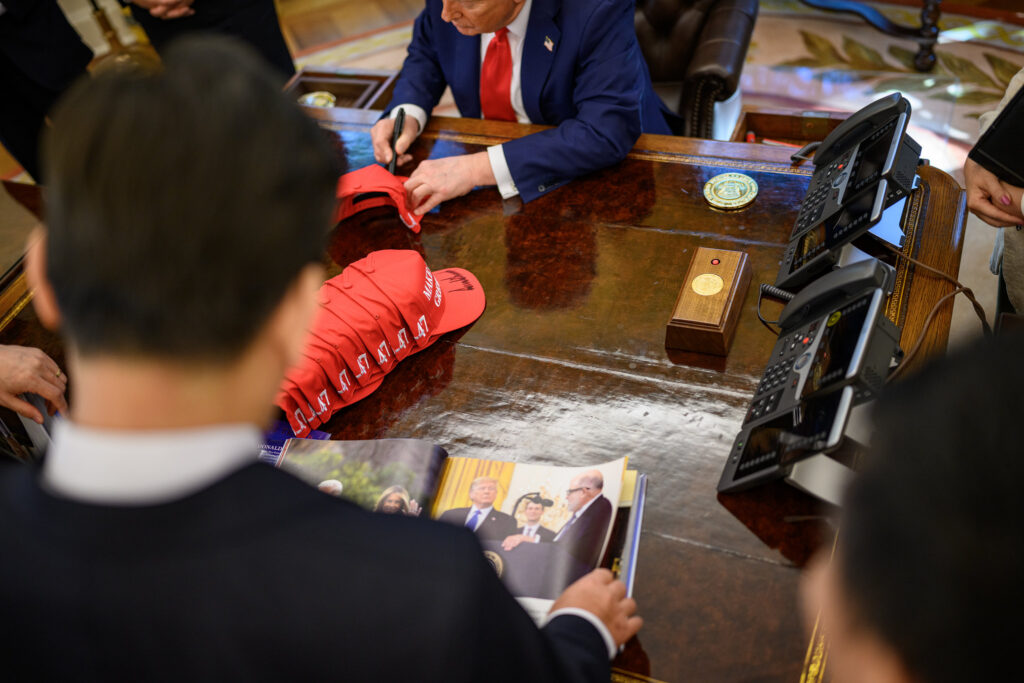
On March 12, South Korea’s National Assembly passed the highly anticipated Special Act on Strategic Investment Management between South Korea and the United States, also known as the Special Act on Investment in the United States. The passage clears the path for up to USD 350 billion in Korean investments in the United States under the bilateral memorandum of understanding (MOU) reached last fall by establishing the necessary mechanisms and funding.
President Donald Trump previously expressed frustration over the dragged-out process to pass the bill, threatening to reinstate higher tariffs against Korea. The bill’s passage comes amid ongoing Section 301 tariff investigations against trading partners, including Korea, following the U.S. Supreme Court ruling that struck down President Trump’s implementation of tariffs under the International Emergency Economic Powers Act (IEEPA). As such, the special act comes at a crucial moment for the U.S.-Korea trade relationship, signaling a commitment to the trade deal and the investment MOU.
Funding the MOU
The special-purpose bill establishes the Korea-U.S. Strategic Investment Corporation, which will be responsible for funding MOU investments and managing returns. The MOU requires Korea to fund investments selected by President Trump in tranches of cash within forty days of receiving instructions from the U.S. Investment Accelerator. The bill also allocates approximately USD 1.3 billion (KRW 2 trillion) and fifty employees to manage the investment corporation.
The corporation will directly fund up to USD 20 billion in investments in the United States each year and provide loan guarantees until reaching a total of USD 350 billion, including shipbuilding investments outlined in the MOU. To fund these investments, the investment corporation will rely on both returns from the national foreign exchange reserves, managed by the Bank of Korea (BOK) and partly owned by Korea’s Ministry of Finance and Economy, and international bond issuance, guaranteed by the Korean government.
Managing Risk
To manage investment risk, the MOU includes language requiring commercial feasibility for selected investments. It states that President Trump will only select investments that the U.S. Investment Committee believes, in good faith, can recoup the cost of the investment. The special bill passed by the National Assembly goes a step further by establishing a risk management committee to oversee exposure to investment risk, along with a business management committee under the Ministry of Trade, Industry and Resources to assess commercial feasibility, and an operations committee under the Ministry of Finance and Economy to approve investments.
The new legislation also provides options for investments that lack commercial feasibility. A National Assembly subcommittee may approve investments deemed necessary for national security and supply chain resilience.
Implications
With the MOU bill clearing the National Assembly, and implementation expected by June, anticipation builds for the first investment announcements under the framework. The MOU contains important stipulations, including cash flow distributions and full U.S. ownership of investments, as well as defining strategic industries. This is likely to make some investment projects more suitable candidates for funding than others.
While annual investment funding is capped at USD 20 billion, USD 350 billion in investments in strategic industries, including USD 150 billion in shipbuilding, must be announced at a rapid pace by January 2029. With the first Japanese investments already announced, the bill alleviates pressure on Korea and brings a degree of certainty amid U.S. tariff investigations and the upcoming midterm elections.
Nils Wollesen Osterberg is Economic Policy Associate at the Korea Economic Institute of America. The views expressed here are the author’s alone.
Feature image from The White House.
KEI is registered under the FARA as an agent of the Korea Institute for International Economic Policy, a public corporation established by the government of the Republic of Korea. Additional information is available at the Department of Justice, Washington, D.C.