Search All Site Content
Total Index: 6918 publications.
Subscribe to our Mailing List!
Sign up for our mailing list to keep up to date on all the latest developments.
The Peninsula
South Korea’s Salt Farm Problem: How Local Labor Failures Create Trade Risk
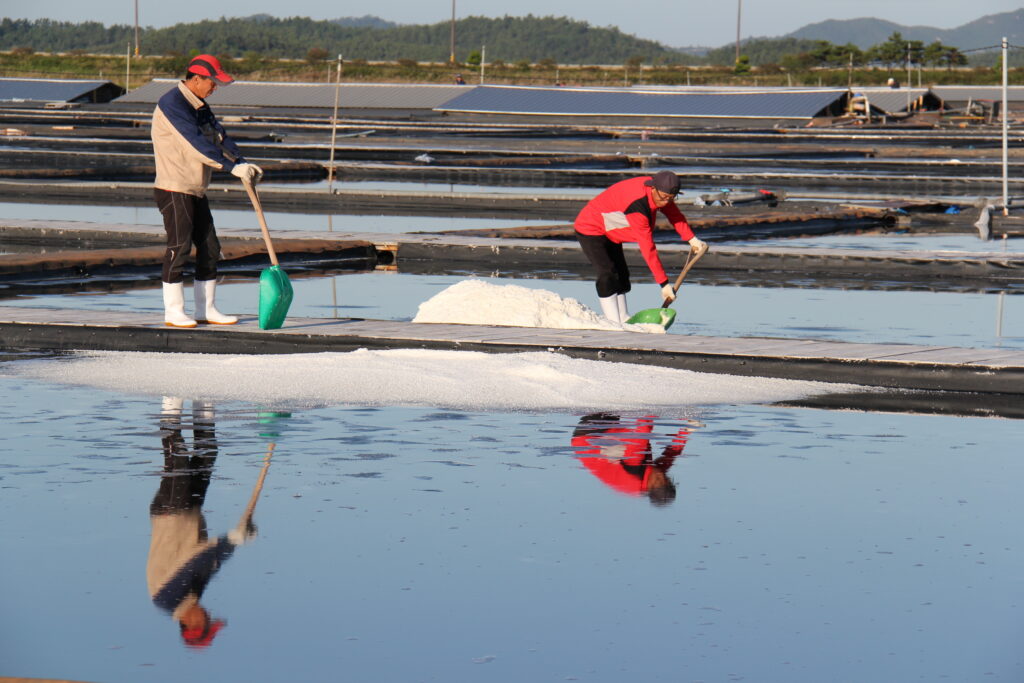
In April 2025, U.S. authorities issued a Withhold Release Order (WRO) on salt from Taepyung Salt Farm, South Korea’s largest producer, citing concerns over forced labor and blocking its entry into the U.S. market. Months later, officials at the U.S. Embassy in Seoul reviewed allegations of exploitation involving intellectually disabled workers at a major salt farm in South Jeolla Province.
While these cases involve a single industry, they reveal how local enforcement failures can escalate into trade and diplomatic liabilities. What began as a domestic labor oversight failure has become a test of South Korea’s credibility as a high-standard economic partner in the U.S.-Korea relationship.
A Recurring Problem
These recent revelations are not isolated incidents. Reports of abusive labor conditions in Sinan County—the home of the Korean salt industry, roughly four hours southwest of Seoul—have surfaced repeatedly over the past decade. The U.S. Department of State’s 2015 Trafficking in Persons Report documented cases in which Korean workers with physical or intellectual disabilities were coerced into working at salt farms under abusive conditions, including unpaid wages, excessive hours, and unsafe living and working environments.
Media investigations helped drive the Korean government to crack down on abusive employers, expand labor inspections, update disability protection guidelines, and tighten registration requirements for salt farms receiving government support. Local governments were also tasked with closer monitoring of labor conditions in designated high-risk rural industries.
Despite these reforms, enforcement gaps persisted. The recurrence of similar abuses suggests that enforcement capacity, rather than the absence of legal protection, remains the central issue.
Structural Labor Vulnerabilities
South Korea’s labor laws are comprehensive on paper, but enforcement remains highly uneven, especially in small, geographically isolated workplaces. In urban manufacturing and service sectors, more frequent inspections and stronger union presence have generally resulted in quicker remediation when violations occur. But in rural areas like Sinan County, limited inspection capacity, driven by staffing shortages and logistical obstacles, reduces the frequency and depth of workplace monitoring. Reliance on vulnerable workers, particularly individuals with disabilities or limited social support, lowers reporting rates. At the local level, economic dependence on one or a small handful of dominant industries makes it easier for firms in these sectors to exploit labor.
These dynamics reinforce one another: weak monitoring allows violations to persist, while worker dependency and local economic pressures discourage intervention. The result is a regulatory blind spot where legal standards exist but are inconsistently applied.
Rural Labor Shortages and Demographic Pressures
The Sinan salt farm cases reflect broader stresses across South Korea’s rural labor market. Agriculture, fisheries, and food processing—sectors concentrated outside urban centers—face chronic labor shortages and increasingly rely on migrant workers to fill gaps that domestic labor no longer covers.
Korea has special work visas designed to address these shortages, but these visas often lock migrant workers to a single employer. Although the recent cases involved Korean nationals with disabilities, these oversights may affect many foreign workers as well.
These pressures are likely to intensify. South Korea is aging more rapidly than nearly any other country. The average age in Sinan County, for example, is 55.7, compared to 45.4 in Seoul (as of January 2026). This urban-rural divide is seen across the country. As the working-age population declines, incentives to bypass labor standards may intensify in the absence of stronger oversight.
Trade and Reputational Spillovers
The U.S. customs ban on Korea’s largest salt exporter illustrates how labor violations can move from a domestic human rights concern to broader economic and diplomatic risks.
For the United States, such cases complicate efforts to deepen economic cooperation under frameworks that increasingly emphasize labor standards, ethical sourcing, and supply-chain resilience. Enforcement actions against Korean products risk introducing friction into the U.S.-Korea trade relationship, particularly if additional industries are drawn into labor-related reviews. More broadly, allegations of forced labor in one industry undermine Korea’s standing as a trusted supplier across all sectors, carrying significant downstream risks for U.S.-Korea trade as the two countries execute the USD 350 investment package agreed to last year.
Perhaps cognizant of these spillover effects, the Ministry of Employment and Labor recently announced a significant increase in nationwide inspections targeting labor abuses, including joint enforcement initiatives focused on foreign workers in rural and fishing communities.
Beyond general inspection increases, Seoul could consider establishing dedicated rural labor inspection units with authority to conduct unannounced audits in high-risk industries such as agriculture, fisheries, and food processing. Concentrating expertise in these regions would help overcome logistical barriers and reduce uneven enforcement across provinces. For workers on temporary work visas, expanding job-transfer flexibility would reduce employer leverage and lower barriers to reporting violations. Together, these measures shift oversight from reactive enforcement to more preventive, sustained compliance.
Conclusion
The Sinan salt farm case reflects deeper governance challenges linking demographic decline, rural labor markets, enforcement capacity, and global supply-chain scrutiny. For Korea, strengthening workforce oversight is now a strategic economic imperative to sustain an economic pivot toward the United States.
Feature image from the South Korean government’s Flickr account.
KEI is registered under the FARA as an agent of the Korea Institute for International Economic Policy, a public corporation established by the government of the Republic of Korea. Additional information is available at the Department of Justice, Washington, D.C.