
Search All Site Content
Total Index: 6903 publications.
Subscribe to our Mailing List!
Sign up for our mailing list to keep up to date on all the latest developments.
The Peninsula
Powering a Future-Oriented Alliance: U.S.-South Korea Energy Cooperation
The first summit between President Donald J. Trump and President Lee Jae Myung on August 25 could be a clarion call for a new era of “future-oriented, comprehensive strategic alliance.” While the agenda announced by South Korea’s Office of the President indicates that the two leaders will discuss a broad range of topics related to the economy and national security, one topic that deserves some spotlight is energy.
Although this is not an exhaustive accounting, there are at least three issues tied under this heading.
U.S. and South Korea LNG
One obvious issue under this heading relates to the recently announced trade deal, which included a pledge by South Korea to purchase USD 100 billion worth of liquefied natural gas (LNG) from the United States.
It is obvious that the details of this agreement have yet to be worked out. In 2024, South Korea imported a little over 5.6 million tons of LNG (HS Code: 27111) from the United States, amounting to about USD 3.1 billion. Given that the total import of LNG to South Korea in 2024 was a little over 46 million tons (over USD 29 billion), the share of LNG imported from the United States was around 10 percent of total imports. Assuming price and quantity hold steady, USD 100 billion could account for about thirty years’ worth of LNG purchases from the United States.
This figure could be adjusted upwards depending on fluctuations in price and demand, but a typical LNG contract term is about fifteen to twenty years. And sources indicate that the current contracted volume accounts for a little over 70 percent of the total projected Korean national demand, meaning that there is a limit to how much South Korea can increase its purchases annually as far as LNG imports from the United States are concerned.
It is also worth mentioning that an assessment by the Energy Information Administration indicates that the United States exported 11.9 billion cubic feet per day of LNG in 2024 (which translates to a little over 91 million tons or approximately USD 29 billion), maintaining its lead over Australia and Qatar as the world’s largest LNG exporter. Still, this portion of the deal will require some work, which the two leaders are likely to begin at their first meeting.
South Korea’s Role in the Alaska Pipeline Project
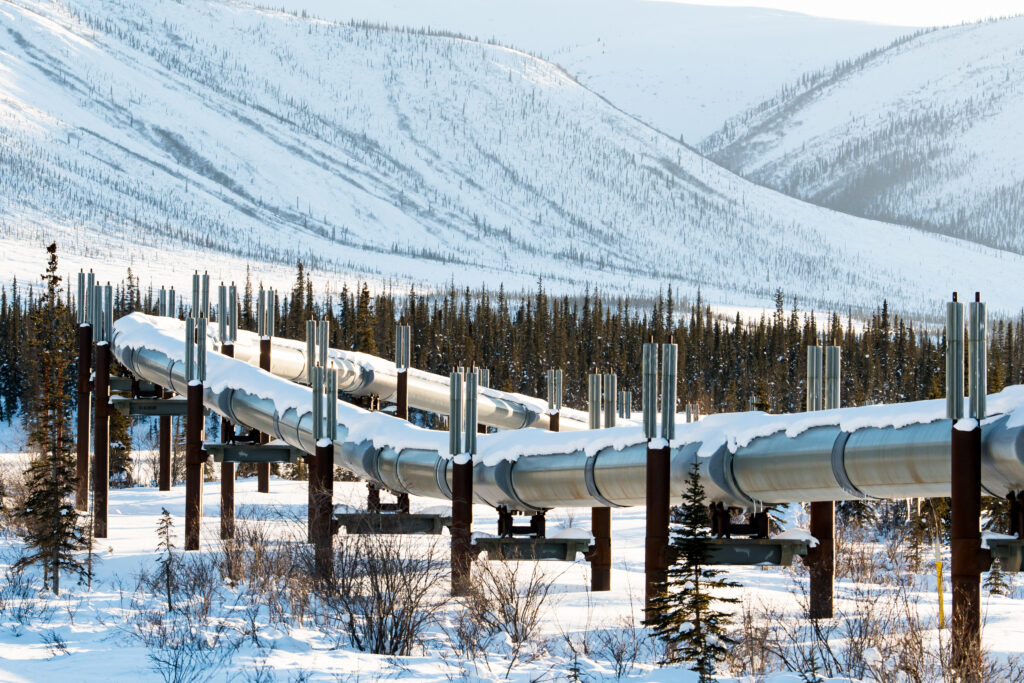
The second issue that will likely gain some attention is South Korea’s potential participation in the USD 44 billion Alaska LNG pipeline project. The fact that the Trump administration has been encouraging countries like South Korea, Japan, and Taiwan to invest in this project suggests that this matter is likely to be on the agenda for this summit as well. While there are conflicting reports about Japan’s interest in this project, the March announcement about the Taiwanese CPC Corporation’s participation in this project is likely to put some pressure on South Korea to consider this offer. At least two Korean companies have already entered the selection process.
Even if Korea does take part in this upstream project, it is unclear how large its stake will be. As a comparison, the largest upstream natural gas project that the Korea Gas Corporation (KOGAS) has participated in is the LNG Canada project, which involves the development of a major LNG export facility in Kitimat, British Columbia. The total project cost was estimated to be around USD 40 billion, which was jointly financed by Shell (40 percent), Petronas (25 percent), PetroChina (15 percent), Mitsubishi Corporation (15 percent), and KOGAS (5 percent). This fourteen-year-long development project, which only began its first batch of LNG exports in June, is expected to produce about 14 million tons of LNG per year.
Given that there are plans to nearly double this capacity to 26 million tons by mid-2030s, it is a good benchmark to set some baseline expectations about Korean corporate participation in the Alaska project, which is expected to export up to 20 million tons of LNG per year.
The Opportunity for Nuclear Energy Cooperation
The third issue on the agenda may be nuclear cooperation. With U.S. electricity demand projected to increase by 25 percent by 2030 and 78 percent by 2050—largely due to the transformative impacts of artificial intelligence and industrial reshoring, as well as the electrification of transportation and heating systems—the United States faces significant challenges in meeting short-term spikes in demand.
Wind and solar account for a record 17 percent of U.S. power generation in 2024, overtaking coal (15 percent) for the first time, but the reliability of these sources has been a concern when we account for intermittency, siting, and permitting. Even though the Trump administration and the Republican majority in Congress have been supportive of increasing the share of coal and fossil fuels in the overall energy mix, nuclear power as an “always on” clean source of electricity will have to be a part of this story.
With advanced nuclear technologies (e.g., small modular reactors and next-generation reactors) still in the early phase of their deployment, much of the new capacity from these sources is unlikely to be grid-connected before the early 2030s. Maintaining and possibly upgrading existing plants could be an interim solution. President Trump has already signed four executive orders in May that call for the construction of ten new large reactors by 2030 and increasing U.S. nuclear capacity fourfold by 2050. This is where South Korea’s demonstrated world-class capacity in nuclear construction can help.
The memorandum of understanding (MOU) signed by the United States and South Korea on January 9 to promote nuclear export cooperation, coupled with the passage of the Accelerating Deployment of Versatile, Advanced Nuclear for Clean Energy Act (ADVANCE Act) in July 2024, means the door is wide open for joint U.S.-South Korean ownership and financing of U.S. nuclear facilities.
Ever since Westinghouse Electric Company and Korea Hydro and Nuclear Power (KHNP) settled their longstanding dispute over intellectual property rights in January, discussions have been underway for a soon-to-be-announced “Team KORUS,” which can build, upgrade, and maintain large reactors in the United States. The fact that Korean companies are also keeping pace with the development of next-generation reactor technologies suggests that this partnership will prove fruitful for the ages.
Drawing up a blueprint for a future-oriented, comprehensive strategic alliance would likely require adjustments and upgrades across multiple aspects of the bilateral relationship. While there may be many interesting announcements during and after the U.S.-South Korea summit on August 25, there are signs of significant breakthroughs on energy cooperation that would be a positive-sum gain for both countries.
This article originally appeared on The National Interest and was reposted on The Peninsula blog with permission. Light edits have been made for clarity and brevity.
Dr. Je Heon (James) Kim is the Director of Public Opinion and External Relations at KEI. The views expressed here are the authors’ alone.
Photo from Shutterstock.
KEI is registered under the FARA as an agent of the Korea Institute for International Economic Policy, a public corporation established by the government of the Republic of Korea. Additional information is available at the Department of Justice, Washington, D.C.