Search All Site Content
Total Index: 6892 publications.
Subscribe to our Mailing List!
Sign up for our mailing list to keep up to date on all the latest developments.
The Peninsula
2025 Year in Review: Kim Jong Un’s Financial Conundrum
Published December 30, 2025
Author: William Brown
Category: Economic Security, Economics, North Korea
The following is part of a new miniseries from KEI surveying the most important developments and trends in the U.S.-South Korea relationship in 2025. You can read all year-in-review pieces by clicking here.
2025 saw remarkable changes underway inside North Korea that have little to do with its relations with China, Russia, South Korea, or the United States. As in politics everywhere, local conditions outweigh distant ones, and as Pyongyang finalizes its new Five-Year Development Plan this month, an unspoken domestic crisis looms over every decision.
That backdrop is inflation.
The price of rice—the effective bellwether for all North Korean prices—has more than doubled in 2025, following a similar jump in 2024. According to Asia Press, rice now costs about KPW 19,000 per kilogram, compared with roughly KPW 5,000 just two years ago.
The currency collapse has been even more dramatic. The North Korean won has fallen from about KPW 8,000 per U.S. dollar in mid-2024 to roughly KPW 36,000 today, despite ostensible financial support from Russia and massive state-organized cybercrime. Leader Kim Jong Un must be wondering where all this money is going, because it is clearly not flowing into North Korea’s central bank in sufficient quantity to arrest inflation or stabilize the DPRK won.
As 2025 draws to a close, some reporting suggests that financial conditions may be stabilizing—but at levels radically worse than just two years ago. The regime has already been forced to abandon the socialist ration-based pay system, replacing it with cash wages. That shift implicitly legitimizes private money and capital accumulation, further eroding state control.
Major—if ad hoc—changes began in mid-2024 as the won collapsed. These continue today in what appears to be a pilot program in which farmers are paid cash rather than in-kind rations for their output. This is critical, as roughly half of North Korea’s workforce remains in agriculture. With money in hand, productivity could rise sharply as many abandon unproductive collective farming for independent or locally controlled enterprises.
The key question is whether farmers will trust the won enough to hold it. If not, they will immediately convert cash wages into U.S. dollars, Chinese yuan, or hard goods—fueling yet another inflationary spiral.
South Korea’s Bank of Korea (BOK) continues its effort to estimate North Korea’s GDP, reporting roughly 4 percent growth in 2024, with likely further gains in 2025 due to favorable weather, increased trade, and unreported military exports to Russia. Curiously, the BOK avoids commenting on the ballooning gap between imports and exports, as well as on inflation or currency collapse—normally the central concerns of any central bank.
Economic analysis in 2025 has been further complicated by a sharp divergence between data from Asia Press and Daily NK beginning in October. That gap has since closed, suggesting extreme volatility rather than faulty reporting—likely tied to Kim’s high-profile meetings with Vladimir Putin and Xi Jinping in early September. In the weeks following those summits, the won lost more than 50 percent of its value, and other commodity prices surged at triple-digit rates.
One can reasonably speculate that Kim returned from those meetings without the financial support he expected—and faced a rapidly deteriorating domestic situation. His response has been a familiar anti-corruption crackdown. Whether this leads to meaningful reforms in the new Five-Year Plan remains uncertain.
What does seem likely is further decentralization—pushing responsibility down to provinces and counties. In an over-centralized and inefficient system, this could boost productivity. It would also represent another nail in the coffin of North Korean socialism.
William B. Brown is the principal of Northeast Asia Economics and Intelligence, Advisory LLC (NAEIA.com) and Non-Resident Distinguished Fellow at the Korea Economic Institute of America. The views expressed here are the author’s alone.
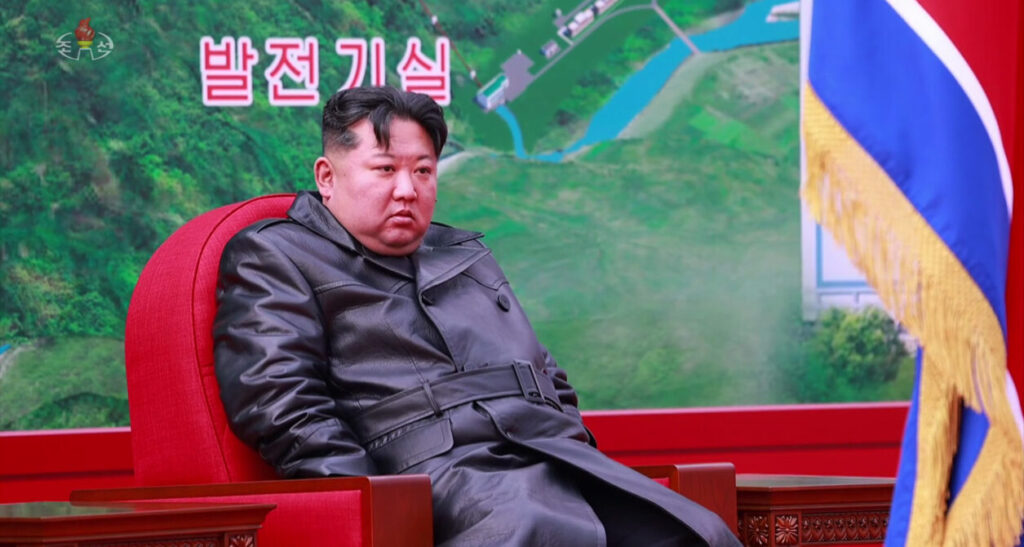
Feature image from North Korean state media.
KEI is registered under the FARA as an agent of the Korea Institute for International Economic Policy, a public corporation established by the government of the Republic of Korea. Additional information is available at the Department of Justice, Washington, D.C.