
The United States Breaks a Decade of UN Consensus on North Korean Human Rights
Washington asked for a recorded vote, then abstained over ICC language. The timing may say more about a Trump-Kim summit.
By Robert King
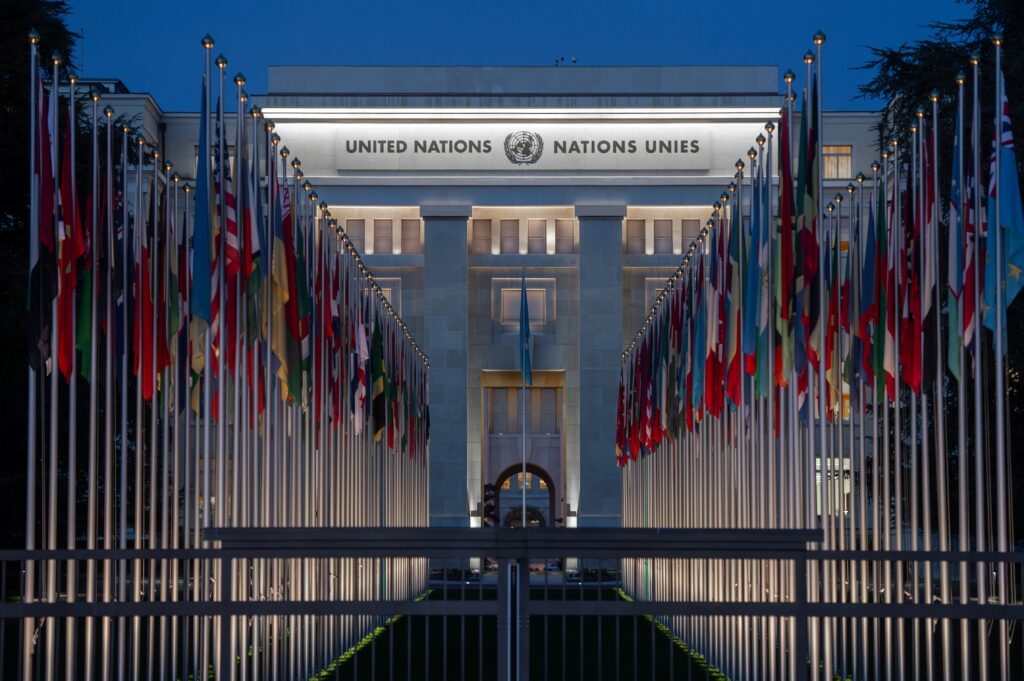
In a reversal of its position for the past twenty-one years since the United Nations first began annual examination of North Korea’s record on human rights, the United States abstained in a key recorded vote at the UN General Assembly’s Third Committee to adopt a resolution sharply critical of North Korea’s human rights record.
The United States has been a leading voice in the United Nations discussions of North Korea’s human rights record beginning in 2005 with annual UN General Assembly resolutions critical of Pyongyang. This policy has been followed during the presidencies of George W. Bush, Barack Obama, Joe Biden, and Donald Trump in his first term. The vote came on November 18.
Despite the unexpected U.S. abstention in the Third Committee vote, the resolution critical of North Korea was adopted with ninety-five countries voting in favor, fourteen countries voting against, and fifty-eight countries (including the United States) abstaining. The ninety-five countries voting in favor of the resolution included all countries of the European Union, as well as South Korea, Australia, Brazil, Canada, Japan, Mexico, New Zealand, and Turkiye. The fourteen countries that voted against the resolution included China, Iran, and Russia.
The U.S. delegation also called for a recorded vote on the issue. For the past decade, votes on North Korean human rights at the United Nations were not brought to a recorded vote. North Korea and its closest allies, China and Russia, did not call for the vote to be recorded because that would only highlight how little support North Korea has on human rights at the United Nations.
The U.S. representative at the Third Committee made a statement following the vote. Half of the statement focused on U.S. disapproval of the International Criminal Court (ICC). The ICC was a minor issue in the resolution, and certainly not the focus of the document. The U.S. representative followed his explanation and negative comments on the ICC by noting that “the United States shares the concerns expressed in this resolution about the continued systemic violations and abuses of human rights in the DPRK.”
The official U.S. explanation for the about-face of the United States on North Korea was that Washington objected to language in the resolution urging the UN Security Council to consider referring North Korea’s human rights issues to the ICC, and the United States objects to the court. The United States requested that all references to the ICC be removed.
The United States, however, called considerably more attention to its vote on North Korea human rights issues by demanding the recorded vote. The U.S. action on the North Korea human rights vote was more likely related to North Korea and not the U.S. position on the International Criminal Court. Without the U.S. request, there would have been no vote, and the United States certainly did not need such a vote to call attention to its disapproval of the ICC.
Rising Inter-Korean Tensions at the DMZ
Just as the UN General Assembly began its high-level meetings in late September, three South Korean soldiers were injured, two seriously, by land mines inside the demilitarized zone (DMZ), south of the military demarcation line (MDL). A joint investigation by the South Korean military and the UN Command at the border found a North Korean antipersonnel mine on the South Korean side of the line. North Korean troops were also found to have crossed the MDL into the South Korean side of the DMZ.
The MDL is the boundary established by the 1953 Korean Armistice Agreement, and it stretches roughly 155 miles from east to west across the center of the Korean Peninsula. The United Nations played a critical role in the Korean conflict and the armistice negotiations, and through the UN Command, it continues to play a significant role in inter-Korean interactions.
On November 5, UN Secretary-General Antonio Guterres called for dialogue to resolve the hostility involving the recent DMZ incursions. Five days later, North Korea responded with harsh criticism. Kim Yo Jong, a senior official of the ruling Workers’ Party and, more importantly, North Korean leader Kim Jong Un’s sister, accused the UN secretary-general of repeating South Korea’s position on the incident without presenting facts. She concluded that Seoul was falsely blaming Pyongyang for the heightened tensions.
UN Debates North Korean Human Rights Violations
The UN General Assembly’s Third Committee, which focuses on human rights issues both generally and regarding UN member countries, again took up the issue of North Korean human rights in a session on October 27. UN Special Rapporteur Elizabeth Salmon presented an extensive report on the severe limitations on fundamental human rights in the country. She said that North Korea has further restricted rights and freedoms through expanded surveillance and tighter ideological and social controls. Private commercial activity is tightly restricted, people suffer from food insecurity, and medical treatment is very limited despite official pronouncements about increased health care infrastructure.
Salmon gave particular attention to the right to life and the death penalty. She reported that “recent developments in the DPRK regrettably indicate an expansion, rather than a restriction, of the death penalty.” She said that since 2015, the number of offenses punishable by death under North Korea’s criminal law has doubled, from eight to sixteen. She cited a 2025 report on this issue from Seoul’s UN office for North Korean human rights, which researches, identifies, and publicizes human rights violations.
On August 25, Guterres issued a report on the “situation of human rights” in North Korea, as called for by the resolution adopted by the UN General Assembly last year. The report was produced by the UN human rights office in Seoul. The secretary-general’s report concluded that “the deteriorating human rights situation” in North Korea “continues to be a cause for serious concern, including the expanded use of the death penalty, continued use of political prison camps, widespread arbitrary detention, failure to address torture and ill-treatment and institutionalized forced labor.”
Following the discussion of North Korea’s human rights abuses on October 27, North Korean state media “lashed out” at the European Union, which introduced the resolution criticizing North Korea’s human rights record. The statement issued by North Korea’s UN mission on November 5 said, “The EU submitted again a ‘draft resolution’ flagrantly distorting the human rights policy and situation of the DPRK.”
What Comes Next
For the first time, the resolution also condemned North Korea’s cyber threats. The full General Assembly is expected to take it up in December. Forcing another recorded vote on final adoption is not necessary and is unlikely. The results will not be different.
South Korea’s Ministry of Foreign Affairs announced on November 5 that Seoul had joined as a co-sponsor of the resolution. South Korea has co-sponsored similar annual resolutions for the past five years, resuming in 2022 after the Moon Jae-in government declined to support such resolutions from 2019 to 2021. In announcing that it would co-sponsor the resolution, the Foreign Ministry said that, at Seoul’s suggestion, the resolution also emphasizes the importance of dialogue and engagement with North Korea, including inter-Korean dialogue.
In the United States, Donald Trump is facing a House of Representatives and U.S. Senate with substantial Democratic majorities beginning in January 2027. He may well be looking to give greater attention to foreign policy, which involves far less congressional approval and input. Many “lame duck” presidents have focused on foreign affairs when their political influence fades with a Congress controlled by the other political party.
A summit with Kim Jong Un may be one of his objectives, and the abstention may be an early signal to Pyongyang. But Kim has much closer ties with Russia and China than when the two leaders met in Singapore, Hanoi, and at the DMZ, and he may see less need for another meeting. The December plenary will offer the next indication. Whether Washington joins the consensus there or again stands apart will show whether the abstention was about the ICC language or about North Korea.
Robert King is Nonresident Distinguished Fellow at the Korea Economic Institute of America (KEI). The views expressed here are the author’s alone.
This material is distributed by KEI on behalf of the Korea Institute for International Economic Policy. Additional information is available at the Department of Justice, Washington, DC.