
How Far Can South Korea’s Export Rally Go?
National exports hit record highs in 2026, powered by semiconductors and surging demand for AI, though energy market risks could test the momentum.
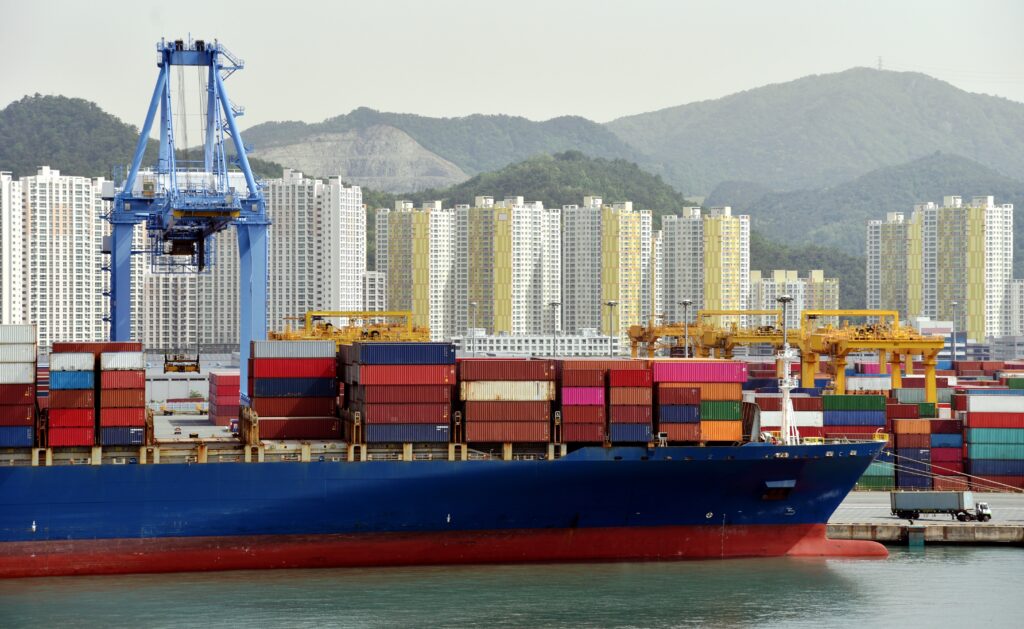
South Korea recorded a historic high in monthly exports in May 2025. According to recently released trade statistics, exports reached USD 87.8 billion, jumping 53.4 percent from a year earlier. Prior to March 2025, national monthly exports did not exceed USD 70 billion.
But exports surged to USD 87.3 billion in March 2026 and remained above USD 80 billion for three consecutive months. At the same time, imports also increased significantly, exceeding USD 60 billion per month beginning in March of this year. This rise was driven by semiconductor imports and higher energy import costs, particularly for crude oil, following disruptions in energy markets associated with the conflict in the Middle East.
Korea’s annual total exports reached a historic high of USD 709 billion in 2025, and export growth remained robust in 2026, rising 43.5 percent year-on-year in the first five months of the year. Imports also expanded to USD 292 billion, increasing 14 percent over the same period.
Key Products Driving Rising Exports
Semiconductors, parts and components for computers and servers, petroleum products, and shipbuilding exports drove the strong growth in Korea’s exports during the January–May 2026 period. Displays and beauty products also made notable contributions to overall export growth.
Strong investment by U.S. technology companies in infrastructure, including data centers and other AI-related facilities, helped sustain elevated prices for memory semiconductors. As a result, exports of dynamic random-access memory (DRAM) and other memory chips from Korea recorded triple-digit growth rates. Demand for AI servers and related computing infrastructure contributed to a significant expansion in exports of parts and components for computers and servers.
Korea heavily relies on Middle Eastern crude oil and was hard hit by the closure of the Strait of Hormuz. In 2025, 70.8 percent of Korea’s crude oil imports originated from the region. Nevertheless, exports of petroleum products increased by 38.5 percent year-on-year, driven by higher export prices for refined petroleum products, including gas oil and jet fuel.
Another notable development was the strong performance of the beauty products sector. Exports reached USD 4.6 billion, up 22.1 percent from the previous year. Growing global interest in K-beauty and related products has contributed to rising demand, and exports of Korean beauty products are expected to continue expanding in the coming years.
Top Trade Destinations
Korea’s exports to its ten largest export destinations recorded robust growth during the January–May period of this year. Among these markets, exports to Hong Kong rose 151 percent year-on-year. Exports to China also expanded by 58.9 percent over the same period, driven by semiconductor shipments, which accounted for nearly half of total exports to China. Semiconductors were the primary driver of export growth across almost all of Korea’s top ten export destinations. The only exceptions were Japan and Australia, where petroleum products served as the leading contributor to export growth.
China remains Korea’s largest export destination since 2003. But its share of Korea’s total exports has steadily declined from a peak of 26.8 percent in 2018 to 20.2 percent in the first five months of this year. In contrast, exports to the United States have expanded rapidly since 2021, with the U.S. share of Korea’s exports increasing from 14.8 percent in 2021 to 18.6 percent in 2026. This shift is partly attributable to the substantial increase in Korean investments in the United States. Large-scale investments in manufacturing industries typically generate sustained demand for a wide range of capital goods and intermediate inputs, leading to increased export shipments from Korea during the construction and operational phases of these projects.
Korea’s Exports to and Imports From the United States
Korea’s monthly exports to the United States have declined since June 2025. This drop partly reflects U.S. tariffs imposed under the International Emergency Economic Powers Act (IEEPA) and Section 232 measures affecting key sectors such as autos, steel, and aluminum, which accounted for more than 75 percent of Korea’s exports to the United States in 2025. Despite this downward trend, exports began to recover in November and reached USD 16 billion in May this year.
Korea’s imports from the United States remained relatively stable through January and February of this year. However, imports rose sharply by 33.4 percent year-on-year to USD 7.2 billion in March and increased further to USD 8.3 billion in April. This surge was influenced in part by conflicts in the Middle East, which disrupted global supply chains and shipping routes. In response to these disruptions, Korea sought to diversify its import sources away from the region, particularly for crude oil and other commodities.
The recovery of Korea’s exports to the United States was driven primarily by a sharp increase in shipments of semiconductors and components for computers and servers, alongside robust growth in mobile phone exports. Those four products, all among Korea’s top ten exporting items to the United States, accounted for more than 40 percent of total exports and recorded triple-digit year-on-year growth rates. Rising demand associated with the expansion of data centers and AI infrastructure in the United States contributed significantly to this trend.
In addition, growing consumer interest in Korean cultural products and brands has supported heightened demand for K-beauty products in the U.S. market. The strong performance of beauty product exports further contributed to the overall expansion of Korea’s exports to the United States.
During the first five months this year, Korean imports from the United States jumped 19.1 percent compared to the same period last year. This growth was driven primarily by higher imports of energy-related products, with crude oil imports rising by more than 30 percent year-on-year. Notably, imports of petroleum products surged by 299 percent, reflecting Korea’s efforts to diversify its naphtha sources away from traditional suppliers such as Algeria, Qatar, and the United Arab Emirates and toward the United States. In addition to energy products, increased aircraft imports also contributed significantly to the overall expansion of Korea’s imports from the United States.
Conclusion
Korea’s exceptional export growth is likely to continue in the near term, supported by strong global demand for AI-related semiconductors and parts and components for computers and servers. These products are expected to remain key drivers of export performance as investment in digital infrastructure and AI technologies continues to expand worldwide.
However, developments in the global energy market could moderate some of the factors that have supported export growth. Following the agreement between the United States and Iran to reopen the Strait of Hormuz, oil prices dropped from a peak of USD 114.58 per barrel to USD 84.65 per barrel on June 15 amid expectations of easing energy supply disruptions associated with conflicts in the Middle East. Lower oil prices could reduce the export value of petroleum products, which have contributed to Korea’s recent export expansion. Nevertheless, oil prices are unlikely to stabilize immediately, as uncertainties regarding the long-term security and operation of the Strait of Hormuz continue to pose risks to global energy markets while the restoration of damaged oil and gas production facilities is expected to take a considerable amount of time.
Some observers have expressed concerns that Korea’s export growth is becoming overly dependent on information technology (IT) products, particularly semiconductors, making the economy vulnerable to industry-specific shocks. However, the country maintains a relatively diversified export structure encompassing IT products, automobiles, ships, petroleum and petrochemical products, steel and steel products, and beauty products, each of which is characterized by distinct business cycles and market dynamics. Therefore, the increasing share of IT products in total exports should not, in itself, be regarded as a structural weakness.
A more important policy consideration is whether other major export sectors are experiencing temporary cyclical slowdowns or undergoing more fundamental structural changes. Continuous monitoring of export performance across key industries is therefore necessary to assess the sustainability of Korea’s export growth and to identify emerging challenges to its long-term competitiveness.
Hyun Jung “Jessie” Je is Senior Fellow and Director for External Engagement at the Korea Economic Institute (KEI). The views expressed here are the author’s alone.
This material is distributed by KEI on behalf of the Korea Institute for International Economic Policy. Additional information is available at the Department of Justice, Washington, DC.