
By Robert King
North Korea’s New Constitution Buries the Reunification Project
North Korea has firmly cemented division on the Korean Peninsula by removing all references to reunification with the South in its constitution.
Listen to this article
0:00 / 0:00
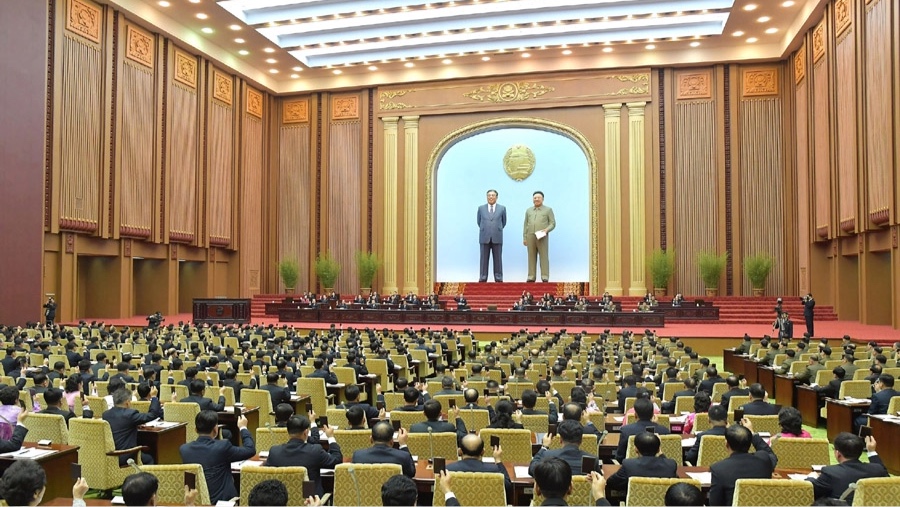
North Korea has amended its constitution to remove references to reunification with South Korea. The Supreme People’s Assembly apparently made the change in March, but it was not publicly known or discussed until early May. This is the first time North Korea has added a clause to the constitution specifying the country’s territory, and it specifically excludes South Korean territory.
The revisions are the latest affirmation of a longer-term downswing in the inter-Korean relationship. In December 2023, Kim Jong Un denounced South Korea as a “forward military base and nuclear arsenal” of the United States and stated he no longer believed unification could take place through peaceful means. On January 15, 2024, he announced that the North would abandon the goal of peaceful reunification, declaring that Pyongyang no longer sees Seoul as “the partner of reconciliation and reunification,” but an enemy that must be subjugated, if necessary, with nuclear weapons. Germany and Austria, divided after World War II under broadly similar circumstances, were reunified decades ago. The Korean division has now lasted significantly longer than either, and Pyongyang has moved to cement it.
What the New Text Says
The revised North Korea constitution defines the country’s boundaries as the territory north of the inter-Korean armistice line along the thirty-eighth parallel and south of the boundaries with China and Russia. The previous constitution defined the country as a “people-centered socialist state” that “represents the interests of the Korean people and struggles for the socialist cause.” The newly amended document does not focus on the “Korean people,” but the specific territory—South Korea is explicitly excluded.
This is a noteworthy change from previous constitutional texts, which called for “national reunification on the principles of independence, peaceful reunification, and great national unity” and that North Korea “struggles to strengthen the people’s government in the northern part” and works to “achieve the complete victory of socialism, and to realize national reunification on the principles of independence, peaceful reunification, and great national unity.” In the newly revised constitution, all such statements that imply or call for future reunification have been dropped.
The new North Korean constitution also downplays Kim’s predecessors. The previous constitution frequently referenced and praised the previous supreme leaders. Kim Il Sung was the “founder of the Democratic People’s Republic of Korea and father of socialist Korea” and the originator of the Juche ideology, which transformed North Korea into a “vibrant socialist country.” In the earlier version of the constitution, Kim Jong Il was praised as “a peerless patriot and defender of socialist Korea” who built on his father’s policies and transformed North Korea into a nuclear state and a military power.
These earlier florid phrases stand in stark contrast to the single, passing reference to the two previous leaders in the newly revised constitution: “Kim Il Sung-ism – Kim Jong Il-ism” are the guiding ideologies of North Korea.
Another interesting provision is the newly added requirement that the military fire a nuclear-armed missile if Kim Jong Un is assassinated. The North Korean leader clearly keeps up on current news, including the recent U.S.-Israeli targeting and killing of Iran’s Ayatollah Ali Khamenei. Kim is making it clear that a similar action against North Korea will have nuclear consequences.
Abandoning the Rhetoric of Reunification
Beyond the constitutional amendment, North Korea has made numerous steps signaling its abandonment of the goal of Korean reunification. One of the most visible symbols was the destruction of the Arch of Reunification, built a year after the 2000 inter-Korean summit at a time when relations were in an upswing and serves as a well-known landmark, even appearing on several North Korean stamps.
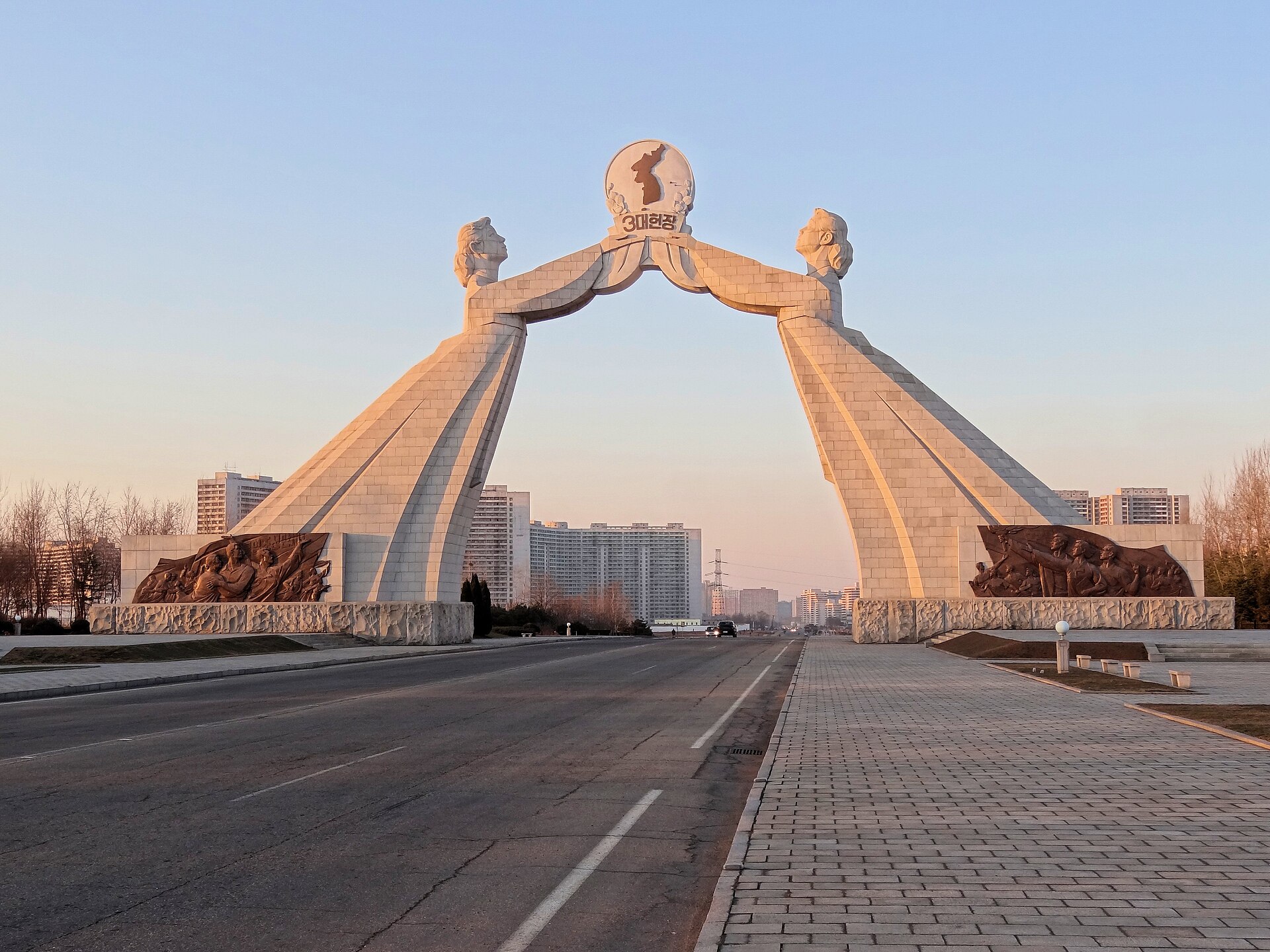
In December 2023, Kim denounced South Korea as a “forward military base and nuclear arsenal” of the United States and stated he no longer believed unification could take place through peaceful means. Soon thereafter, on January 15, 2024, Kim announced that the North would abandon the goal of peaceful reunification. He said that Pyongyang no longer sees Seoul as “the partner of reconciliation and reunification,” but an enemy that must be subjugated, if necessary, with nuclear weapons.
To drive home that point, Kim referred to the Arch of Reunification as an “eyesore,” and he called for the North Korean constitution to be amended to identify South Korea as a “primary foe and invariable principal enemy.” The arch was destroyed between January 19 and 23, 2024.
The Response in South Korea
The South Korean response to North Korea’s constitutional changes was carefully drafted to reaffirm the Lee Jae Myung administration’s commitment to unification while also acknowledging the new North Korean position. On May 18, the Ministry of Unification issued its first white paper on unification since President Lee took office almost a year ago. The paper commits to pursuing a policy of peaceful coexistence rather than one of hostility. This white paper is the first time the South Korean government has officially called North and South Korea “two states.”
The white paper underscores the Lee administration’s ongoing efforts to reduce enmity in inter-Korean relations and move the bilateral relationship from one of antagonism to “relations between two peaceful states aspiring to unification.” The government said it will follow three principles in its relationship with North Korea: South Korea will respect North Korea’s government, will not pursue unification by absorption, and will not engage in hostilities.
Minister of Unification Chung Dong Young, appearing before a National Assembly committee, called the policy change “a peace-oriented two-state approach,” which is fundamentally different from North Korea’s “two hostile states” policy. The new white paper was strongly criticized by the opposition party in the National Assembly, which opposition leaders called a violation of the constitution, prompting a reaffirmation of the policy from the Unification Ministry.
Divided States Through History
The Korean Peninsula was under Japanese rule from 1905 to 1945, and the division of Korea is an outgrowth of World War II. Other countries that were similarly divided at the end of World War II have long since been reunited. Germany and Austria were both divided in 1945. Austria had been annexed to Germany shortly before the outbreak of the war, and after the war ended, Austria was divided into four occupation zones, with the eastern zone under Russian control and the western zone under the control of the United States, Britain, and France. The capital city, Vienna, was likewise divided into four zones, each under the control of one of the four allied powers, although the city itself was surrounded by the Soviet zone.
Germany was divided the same way—a Soviet zone in the east, the United States in the south, Britain in the northwest, and France in the southwest. Berlin, like Vienna, was divided into four allied zones and surrounded by the Soviet occupation zone.
Austria was unified with its prewar boundaries, and the occupying powers withdrew their military forces under the terms of the Austrian State Treaty, signed by the four occupying powers and the Austrian government on May 15, 1955. The treaty stipulated that Austria must remain a non-aligned country—i.e., it could not join NATO, which had been established by the United States and its Western European allies in 1949 to collectively protect member countries from Soviet expansionist military actions.
The Soviet Union was particularly interested in preventing Germany from joining NATO and signed the Austrian State Treaty in the expectation or hope that Germany would follow the Austrian model. As in Austria, the Western occupation zones in Germany were merged and became the Federal Republic of Germany. West Germany joined NATO, and the United States and other NATO countries continued to maintain troops in the country due to lingering concerns about Soviet intentions.
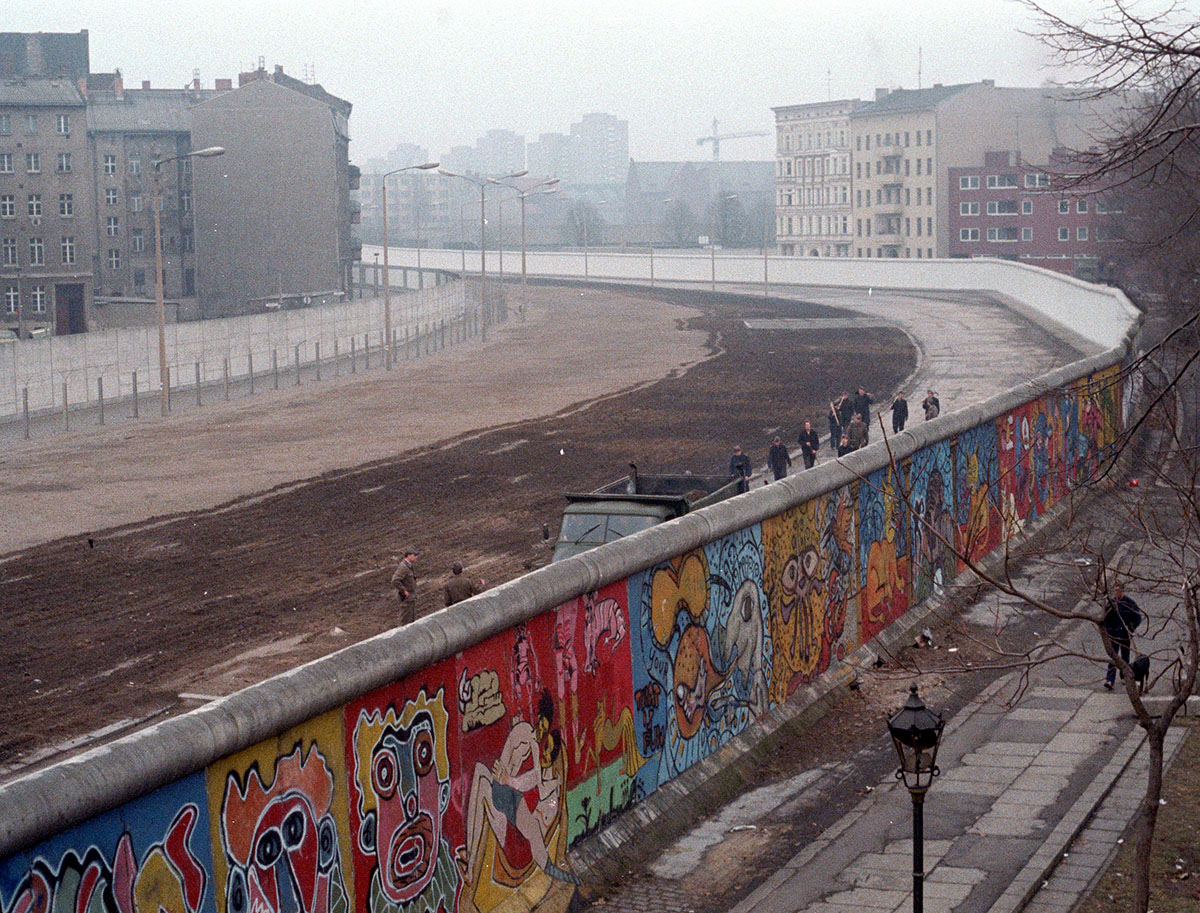
The eventual reunification of East and West Germany was achieved after the Berlin Wall came down in November 1989, and the process was formalized in October 1990. The breakup of the Soviet Union at that same time provided the opportunity to end Soviet dominance in Eastern Europe.
Lessons From Europe
It is clear that German unification has had a significant impact on thinking about Korean unification. Both North and South Korea closely watched events unfold during German unification. President Moon Jae-in observed in 2019 that “the experience of Germany’s unification gives hope for unification, and at the same time shows us the path that we need to follow.”
Although the division of Germany and Austria after World War II has similarities with the Korean division, the differences are significant. Nonetheless, one important element of German reunification is that it happened unexpectedly, and once the process began, it moved far faster than anyone anticipated.
On the other hand, the inter-Korean division has lasted significantly longer than the divisions of Germany and Austria. It has been over eighty years since the Japanese occupation of Korea ended and over seventy-five years since the Korean War broke out, which solidified the separation of the two countries. German unification came forty-five years after the end of World War II.
Conclusion
North Korea’s constitutional amendment is the latest affirmation of a course Kim Jong Un has been charting since late 2023. He no longer sees Seoul as “the partner of reconciliation” but as a “principal enemy.” German reunification offers a reminder that these processes can move suddenly, but it did so because the government in the East lost the will and capacity to enforce separation.
Pyongyang under Kim is moving in the opposite direction. His hostility toward reunification, his move to bring North Korea much closer to Russia, the new requirement that the military fire a nuclear-armed missile if he is assassinated, and a constitution stripped of every statement that implies or calls for future reunification are all clear indications that he is taking no chances. The horizon of reunification has not just receded. Pyongyang has moved to cement the division itself.
Robert King is a Non-Resident Distinguished Fellow at the Korea Economic Institute of America (KEI). The views expressed here are the author’s alone.
This material is distributed by KEI on behalf of the Korea Institute for International Economic Policy. Additional information is available at the Department of Justice, Washington, DC.