
By Sunhyung Lee
Diverging Interest Rates Compound Risks for South Korea
Contrasting interest rate directions by the U.S. Federal Reserve and the Bank of Japan complicate South Korea’s economy.
Listen to this article
0:00 / 0:00
Two of the world’s most influential central banks are pulling the global equity market in opposite directions.
In Washington, the Federal Reserve cut its benchmark by a quarter point to 3.50–3.75 percent. It is the third consecutive reduction in borrowing costs, with more cuts expected. Meanwhile, the Bank of Japan is expected to raise rates from 0.5 percent to 0.75 percent after its December meeting. It would be the highest level in thirty years.
These contrasting policy directions are creating a unique landscape for the global equity market and for South Korea, dampening foreign inflows into Korean equity markets despite improving global liquidity conditions.
Diverging Rates, Converging Risks
When the United States lowers interest rates, yields on U.S. government bonds decline, reducing the return on safe assets. In such an environment, investors tend to search for higher returns elsewhere, a process reinforced by lower global borrowing costs. Growth-sensitive sectors such as technology and semiconductors often benefit from this shift, and given their large weight in Korea’s equity markets, foreign capital inflows can provide a tailwind for Korean stocks.
At the same time, Japan’s gradual move toward monetary tightening introduces a countervailing force. As yields on Japanese government bonds rise to multi-year highs, global investors are presented with increasingly attractive risk-free alternatives. Higher returns on safe assets raise the opportunity cost of holding stocks, particularly in markets that are sensitive to global financial conditions. As a result, a greater share of global capital may be reallocated within the safe-asset space, particularly toward Japanese sovereign debt, given the yen’s status as a safe-haven currency and Japanese government bonds’ status as a safe asset, rather than flowing into equities in Korea.
These dynamics are further shaped by Japan’s role as the largest foreign holder of U.S. government bonds. As Japanese investors rebalance their portfolios in response to changing yield differentials, increased demand for domestic government bonds may affect Japan’s financing conditions, thereby indirectly supporting the Japanese government’s ability to pursue expansionary fiscal policies if political conditions permit.
Taken together, the divergence between U.S. easing and Japanese tightening reshapes global capital allocation. While lower U.S. rates can support equity inflows into Korea under favorable financial conditions, rising Japanese yields may temper those gains by drawing capital toward safer assets. All of this highlights how Korea’s markets remain highly sensitive to shifts in global monetary policy rather than domestic fundamentals alone.
What the U.S.-Japan Policy Split Means for Korea
With the Federal Reserve expected to begin cutting rates and the Bank of Japan preparing for gradual hikes in 2026, Korea finds itself caught between diverging global monetary paths. Cutting rates too early risks further currency depreciation and renewed pressure on financial stability, while staying restrictive for too long could weigh on domestic demand and investment as global financial conditions begin to loosen. For instance, the Korean won has remained weak against the U.S. dollar in recent months. In this current economic condition, the Bank of Korea’s decision to lower its rate can be viewed as currency manipulation to depreciate the Korean won to advance exports. Yet, if Korea’s rate remains high, domestic demand and investment will continue to dwindle due to the high cost of borrowing.
Looking ahead, the persistence of asynchronous monetary cycles suggests that uncertainty will remain a structural feature rather than a temporary shock. For an open, trade-dependent economy like Korea, this reinforces the need for active engagement in international policy dialogue, including the annual meeting of the Group of Twenty (G20) Finance Ministers and Central Bank Governors. This means that improving transparency regarding policy intentions, balance-sheet normalization, and financial-stability risks should be prioritized over mechanically coordinating rates, as suggested by U.S. Secretary of the Treasury Scott Bessent’s recent comment on the South Korean won.
As divergence widens between the United States and Japan, capital flows are likely to become more sensitive to relative yield shifts and exchange-rate expectations, thereby raising the premium on domestic credibility and institutional coherence. Korea’s long-term challenge, therefore, is to build a policy mix that anchors expectations domestically, reassures global markets, and preserves flexibility to adjust once global monetary paths begin to realign.
In this environment, successful policy will be defined less by the timing of rate moves and more by the credibility of the overall framework guiding them.
Sunhyung Lee is a Non-Resident Fellow at the Korea Economic Institute of America (KEI) and an Assistant Professor of Economics at Montclair State University’s Feliciano School of Business. The views expressed here are the author’s alone.
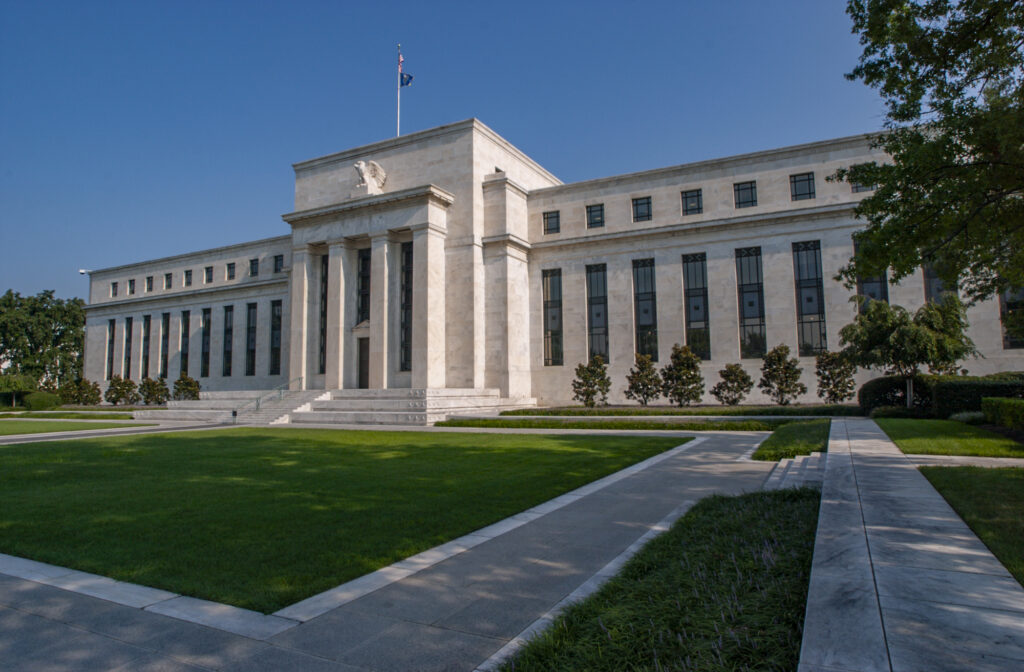
Feature image from The Federal Reserve’s official Flickr account.
KEI is registered under the FARA as an agent of the Korea Institute for International Economic Policy, a public corporation established by the government of the Republic of Korea. Additional information is available at the Department of Justice, Washington, D.C.