Ardor Fades between Trump and Kim, but U.S. President Continues the Courtship
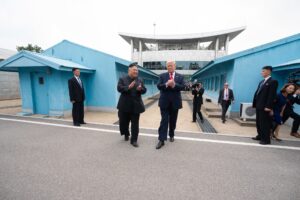
The relationship between North Korean leader Kim Jong-un and U.S. President Donald Trump has been surprisingly cordial and positive since March 2018.
Showing 331 items
The relationship between North Korean leader Kim Jong-un and U.S. President Donald Trump has been surprisingly cordial and positive since March 2018.
Across the ideological spectrum, political parties are focused on securing the youth vote ahead of the crucial legislative elections in April.
The most recent stalemate in the National Assembly exposes the ongoing division between the two major parties and its ramifications on the country.
Growing number of people from both sides of the political spectrum are demanding the leading political parties to put forward new faces.
North Korea has participated in the UN's Universal Periodic Review of human rights, while it has been unwilling to engage other UN human rights mechanisms.
While human rights groups condemned the extradition, the disinterest of the South Korean people may reflect changing domestic attitudes towards North Korea.
While international social media giants have resisted public pressure to change, Korean online portals have been more willing to restructure.
The modification of college admission standards may intensify the housing demands in wealthier neighborhoods and exacerbate wealth inequality.
Social challenges - rather than material privation - affect North Korean defectors during their resettlement in South Korea.
Laws requiring metro workers to minimize disruptions to public transportation during strikes are reflective of the adversarial environment facing unions.
What the North Koreans do not understand, however, is that as Trump becomes increasingly focused on reelection, foreign policy may become less important.
Nixon and Clinton administrations provide a glimpse into how Trump's execution of foreign policy could be impacted by the impeachment inquiry.
The transnational contagion of African Swine Fever highlights the urgency of inter-Korean cooperation.
While it remains an avenue for engagement with North Korea, South Koreans are more wary of bearing the cost of sports diplomacy.
The transfer of wartime operational control of South Korean military from Washington to Seoul remains a wedge issue in Korean politics.