
Why South Korea’s Maneuverability on the Taiwan Issue is Shrinking
South Korea has long benefited from strategic ambiguity on Taiwan, but the narrowing space between the U.S. and China makes this increasingly difficult.
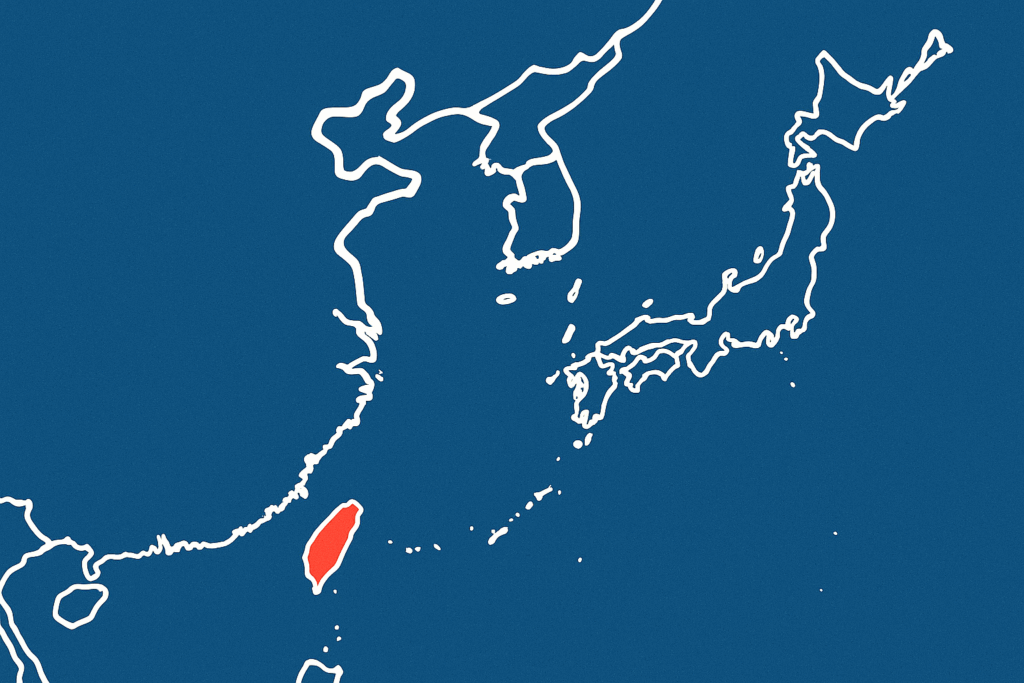
This year, China commemorated the twentieth anniversary of its Anti-Secession Law, which provides domestic legal grounds to prevent Taiwanese independence. Beijing has long used the law to justify the use of force against what it calls “separatist activities” in Taipei, but the 2025 commemoration coincides with renewed pressure from Beijing on its allies and partners to clarify their stance on the Taiwan issue.
For South Korea, there is an additional “dual contingency” risk that any conflict in Taiwan would spill over to the Korean Peninsula. This may soon become a real planning scenario for Seoul, constraining its diplomatic choices in the near and mid-term.
Recently, China has been pressuring the United States to narrow its semantic gaps concerning Taiwan. In February, the U.S. Department of State removed a statement from its website that stated it “does not support Taiwan’s Independence,” sparking harsh criticism from the Chinese government. Chinese President Xi Jinping has taken an increasingly hardline stance on Taiwan, and he is adamantly pushing for the United States to unequivocally oppose Taiwanese independence to further the realization of his “China Dream.” China’s push for this change in language aims to eliminate the U.S. government’s policy of strategic ambiguity toward Taiwanese independence and ensure alignment with the One China policy.
As the Donald Trump administration calibrates its language, U.S. public opinion offers important context for how such shifts might shape expectations for U.S. commitments in the Indo-Pacific region. The Korea Economic Institute’s latest public survey on U.S. attitudes toward the Korean Peninsula, in cooperation with YouGov, shows that a plurality of Americans (47 percent) think the United States should defend both South Korea and Taiwan in the event of a contingency. If forced to choose, more Americans prioritized South Korea (24 percent) over Taiwan (14 percent). Findings also show that around 63 percent of Americans view the U.S.-South Korea alliance positively, citing benefits to U.S. national security, and would continue supporting the relationship even in the event that North Korea denuclearizes.

Support for the U.S.-South Korea alliance is also reflected in support for the continued presence of United States Forces Korea (USFK). A full 60 percent of respondents said the United States should maintain or increase the 28,500-troop force in South Korea, with only 11 percent advocating for a reduction and a mere 6 percent saying USFK should leave altogether.
Such robust public support underscores the enduring value of the alliance—but it also highlights the stakes as the South Korean government navigates the Taiwan question. South Korea has long sought to balance between its security guarantor (the United States) and its primary trade partner (China). At an event with the Center for Strategic and International Studies in August, South Korean President Lee Jae Myung spoke of his agreement with President Trump to strengthen U.S.-South Korea relations to achieve peace and denuclearization on the Korean Peninsula. Meanwhile, advocating for peace in the region is as far as Seoul has been willing to go when discussing Taiwan. But with China seeking less ambiguity on Taiwan, South Korea may be forced to reevaluate its position, as its policy on China remains vague.
A stance considered “too strong” (supporting or implying support for Taiwanese independence) or “not strong enough” (utilizing strategic ambiguity) by China could have ripple effects on the China-South Korea relationship, increasing the risk that a dual contingency becomes reality. On the other hand, if the Trump administration continues with its focus on burden-sharing, demanding USD 10 billion a year for continued USFK presence, this may drive South Korea to become more sympathetic or aligned with China on the Taiwan issue, altering the balance of its respective relationships with the United States and China.
South Korea has long benefited from strategic ambiguity on Taiwan, but the narrowing space between the United States and China is complicating efforts to sustain such an approach. As China seeks explicit opposition to Taiwanese independence and the United States hardens its expectations from allies in the Indo-Pacific, South Korea’s decisions on this issue carry greater weight than ever.
Nailah-Benā Chambers is a Research Intern at the Korea Economic Institute of America (KEI).
Feature image from KEI.
KEI is registered under the FARA as an agent of the Korea Institute for International Economic Policy, a public corporation established by the government of the Republic of Korea. Additional information is available at the Department of Justice, Washington, D.C.