
South Korea’s Labor Rights: Why Economic Strength Depends on Protecting Workers
Labor reform has been a significant focus for Seoul, particularly as it balances economic growth with the need to protect workers’ rights.
This essay was part of a contest jointly organized by the Institute for Korean Studies at George Washington University and the Institute for Korean Studies at Indiana University Bloomington. The contest invited students to analyze a South Korean policy challenge and propose evidence-based solutions. The winning essays are published on the Korea Economic Institute of America’s flagship blog, “The Peninsula.” The views expressed here are solely those of the author and do not reflect the views of KEI or its staff.
The narrative of South Korea’s economic growth is one that portrays laborers negatively, obscuring the persistent marginalization of the workers who make it possible. From delivery carriers facing life-threatening conditions to subcontract manufacturing workers fighting decade-long battles for back pay, the struggles faced by these laborers highlight the urgent need for systemic change in the workforce. Labor rights remain one of the country’s most urgent and unresolved democratic challenges. This hindrance plagues South Korea as it seeks to project global leadership as an advanced, values-based nation, threatening not only social stability but the moral legitimacy of its democratic institutions.
Labor Policies in South Korea
Labor reform has been a significant focus for South Korean administrations, particularly as they balance economic growth with the need to protect workers’ rights. Under the Moon Jae-in administration (2017–2022), labor reforms were part of a broader initiative aimed at democratic renewal and social justice. The Moon administration implemented various reforms, including raising the minimum wage, reducing the legal workweek from sixty-eight to fifty-two hours, and promoting the regularization of non-regular public-sector workers.
These efforts aimed to align South Korea more closely with stronger labor rights models observed in many OECD countries, which emphasize worker protection and union influence. In contrast, the Yoon Suk Yeol administration (2022–2025) shifted the focus of labor reforms from expanding worker protections to prioritizing market flexibility and increasing oversight on unions. There were measures introduced that worried the International Labour Organization (ILO), which expressed concerns about potential violations of workers’ rights to organize due to the government’s increased requirements for labor organizations and intensified investigations into major unions.
The Need for Labor Reform
Non-regular workers make up roughly one-third of the workforce, yet they earn significantly less than their regular counterparts and face higher rates of workplace accidents. Broader structural issues in the labor market, such as irregular employment arrangements, the expansion of subcontract work, and the rise of platform labor, exacerbated insecurity for many workers in the gig economy, particularly in sectors such as delivery and transportation, which increased during the pandemic. Over fourteen delivery workers died in 2020 alone, with many fatalities due to overwork in response to heightened demand. These workers, often classified as special employees, do not benefit from protections under the Labor Standards Act, which guarantees working hour limits, paid leave, and accident compensation. The Democratic Party-controlled National Assembly should improve protections for platform and gig workers facing significant challenges. A stark partisan divide exists, however, as the Democratic Party advocates for enhanced worker protections while the opposition People Power Party emphasizes business interests. Partisan deadlock has stalled proposals intended to address the needs of over 2.3 million platform workers who remain in a “gray zone” of employment, where their status and rights are inadequately protected.
The plight of subcontract and temporary workers highlights deep-rooted inequalities within South Korea’s labor market. An accident at the Taean Thermal Power Station, where a twenty-four-year-old subcontract worker was killed, showed the cost of outsourcing and risk. Several similar cases initiated dialogue on reform, leading to an amendment of the Industrial Safety Act to improve safety for workers in high-risk subcontract jobs, including the enforcement of penalties for discriminatory wage practices and the extension of full insurance protections to irregular and platform workers. Despite legislative changes and ongoing debates, the rapid expansion of platform labor and the classification of gig workers as independent contractors continue to pose substantial challenges, denying them access to basic labor protections, including minimum wage and unemployment insurance. The struggle for labor reform remains a pressing issue in South Korea, with significant implications for worker security and rights.
Policy Recommendations Achieving labor justice in South Korea requires the government to implement concrete policies that recognize workers through all facets of the democratic system, rather than merely through their relation to economic growth. The state should mandate equal pay for equal work across all sectors, enforce wage transparency, and standardize job classifications to prevent employers from using contract status to justify pay disparities. The persistence of a dual labor market, where non-regular workers comprise roughly one-third of the workforce yet earn less and face higher workplace accident rates, demonstrates that existing protections remain insufficient despite the amended Industrial Safety Act discussed above. Labor justice also requires modernizing legal frameworks to reflect the real conditions of contemporary work. The government has made slow steps toward recognizing certain platform workers under industrial accident insurance coverage and broadening union rights through the passage of the Yellow Envelope Act.
The platform and gig sectors that expanded rapidly during the pandemic exposed the limits of the Labor Standards Act, highlighting the need to strengthen, not restrict, the right to organize in a labor union, as that is one of the few ways workers can place checks and balances on corporate power. Weakening unions only reinforces outdated labor standards. The ILO has repeatedly asked South Korea to revise legal barriers that limit union activity, specifically for freelancers, the unemployed, and dismissed workers. Laws such as the Occupational Safety and Health Act aim to prevent industrial accidents, but the continued deaths of subcontract and overworked platform workers reveal that without improved inspection mechanisms and meaningful penalties, legal protections do not translate into workplace security.
Lastly, a just labor system requires cultural change. South Korea has a deep-rooted history of rapid development built on sacrifice and long hours. Accordingly, shortening the maximum working hours to prevent overwork and burnout should be standard practice. Notably, young South Korean professionals are already spreading discourse on the logic of overwork, demanding fairer wages and a better work-life balance.
Conclusion
Labor rights are not obstacles to growth; they are the foundation of a resilient, innovative, and democratic society. The workers who power South Korea’s economy and society are those laboring in factories and industries, delivering packages, and producing technology. They deserve protection equal to that of full-time and higher-ranking workers. Labor policies should focus on maintaining worker retention and safety across all sectors, not just the bare minimum.
More tightly drafted legislation is needed to provide these workers with time off, benefits, and coverage under all existing laws. As South Korea actively engages and expands its leadership on the world stage, it should simultaneously improve domestically to protect its workers and maintain its economic strength by addressing the conditions of workers’ rights.
LillieMae Sweigert is a student at The George Washington University. The views expressed here are solely those of the author and do not reflect the views of KEI or its staff.
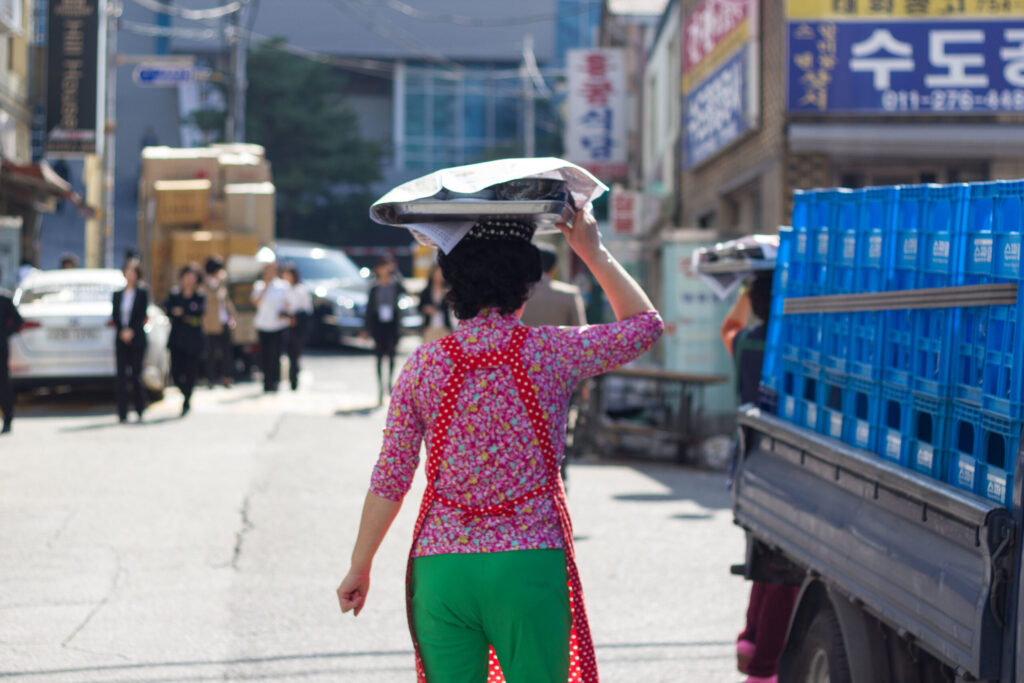
Feature image from Flickr.
KEI is registered under the FARA as an agent of the Korea Institute for International Economic Policy, a public corporation established by the government of the Republic of Korea. Additional information is available at the Department of Justice, Washington, D.C.