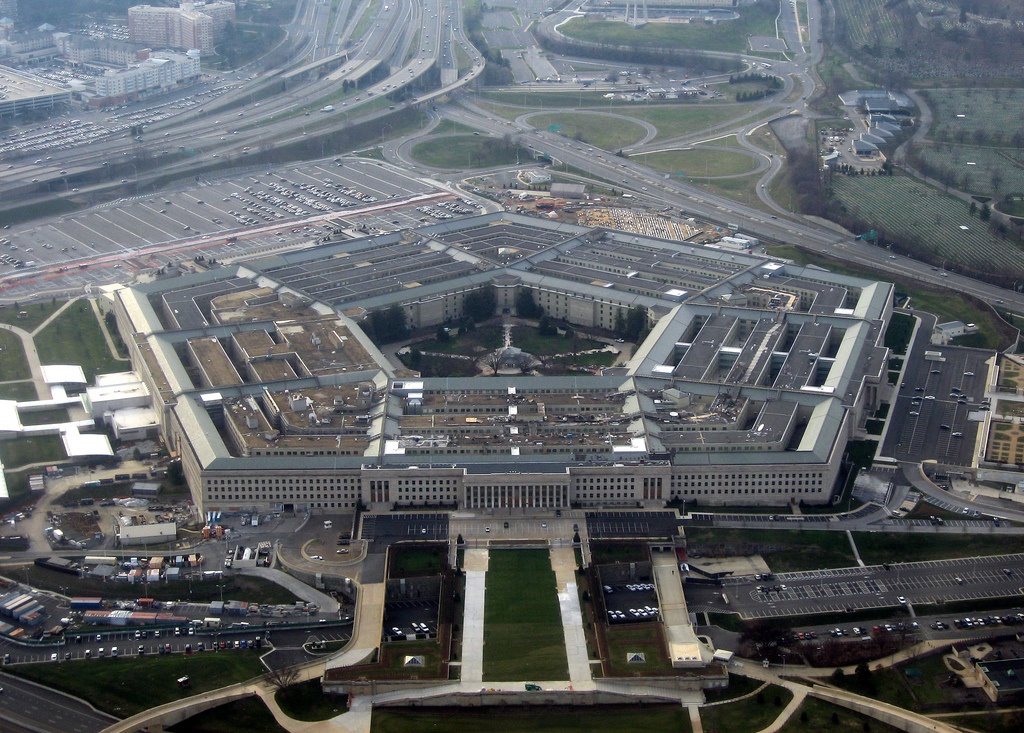
Don’t Fret – The U.S. Military is Not Going Away
Yesterday, for just the fifth time in his tenure, President Barack Obama took the highly unusual step of vetoing a bill that passed the normally grid-locked Congress.
Earlier this year in state of the nation addresses, both presidents stressed the importance of enhancing the lives of middle class families and their centrality to revitalizing their national economies. The work-family balance is no longer a matter of individual life, but a national (even global) issue that governments and policymakers should pick up and do something about.
Still in the nascent stage of planning, a Northeast Asia Development Bank would serve as a multilateral development bank (MDB) to attract investment in Northeast Asia, specifically intending to incentivize the DPRK to denuclearize through access to external capital for development.
Although hardly a new phenomenon, a number of native religious movements both large and small have attracted scores of devout Korean followers, intermingled with political causes, and in some cases have notoriously landed in news headlines.
After the month of August featured shooting, shouting, and a negotiated joint statement, September mainly focused on laying the groundwork necessary to implement the August 25 agreement or to scuttle it.
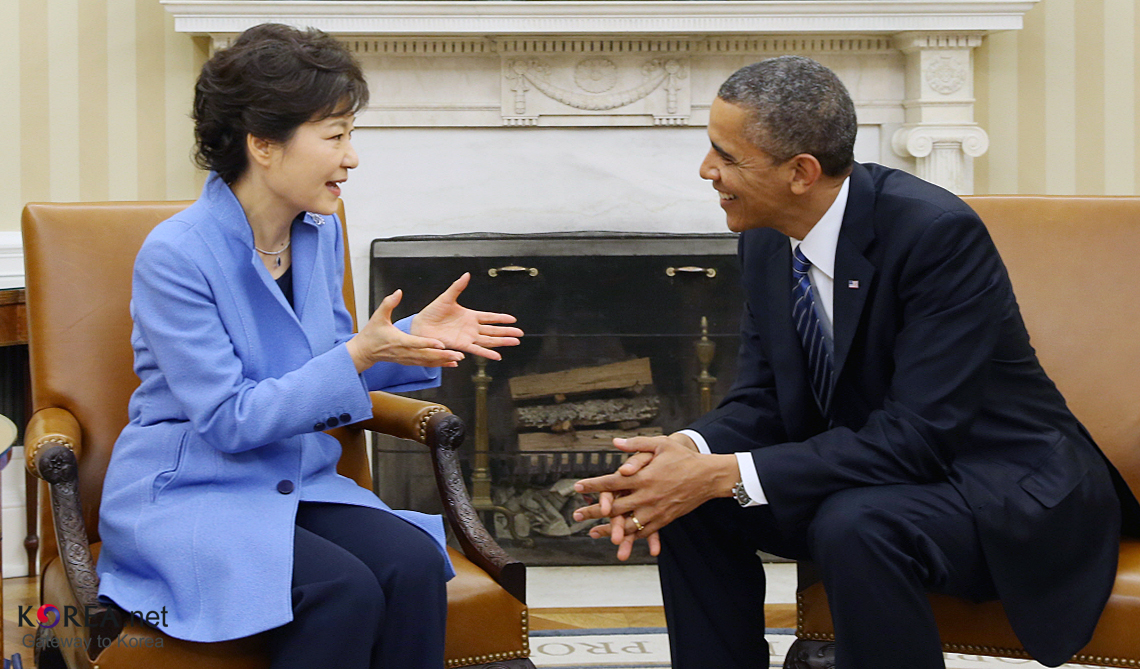
With Washington still abuzz from recent visits of Chinese President Xi Jinping and His Holiness the Pope it is important for Washington to focus on the critical upcoming summit meeting between Presidents Obama and Park.
While only 0.3 percent of Korean residents describe themselves as Muslim, Islam has left an indelible mark in Korean history.
The possibility of an increase of the federal funds rate for the first time since June 2006 has garnered much public attention, with policy heavyweights weighing in for and against a rate rise. At the core of concerns for the global economy is the prospect of capital flight from emerging markets to the U.S., as investors could receive higher yields with less risk.
With China now South Korea’s most significant export market, how responsible is the economic slowdown in China for the sharp decline in South Korean exports?
Is South Korea’s love of the United States unrequited?