
North Korea’s Search for Leverage
Despite the tone and veiled threat, Pyongyang’s recent criticism of U.S.–ROK joint military drills may not necessarily signal an escalation of tensions.
By Korea View
What Happened
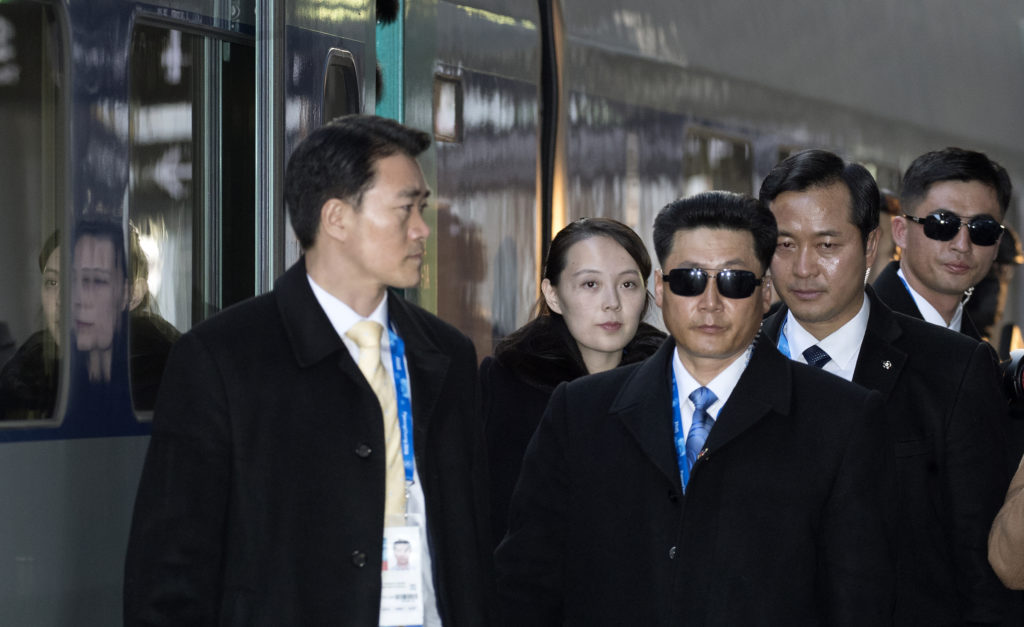
- Criticizing the U.S.-ROK joint military exercises, Kim Jong-un’s sister threatened to withdraw from a 2018 agreement to reduce the military presence along the DMZ.
- The ROK Ministry of Unification noted that military drills should not be used to heighten tensions.
- The comments came just as the U.S. Secretaries of State and Defense arrived in Seoul for 2+2 talks and a year before the ROK presidential election.
Implications: North Korea continues to rebuff actions from Seoul that may potentially give the South leverage in inter-Korean engagement. Pyongyang traditionally sees the joint U.S.-Korea military exercises as a display of superior fighting power vis-à-vis North Korea’s own military. As such, the recent statements reaffirm the regime’s traditional position that it will not bargain from a position of perceived weakness. This is consistent with its recent refusal of pandemic-related aid from South Korea, which would confer Seoul some power over North Korea’s ability to end the quarantine. In this environment, the recent statements from North Korea may not signal a prelude to any escalation of tensions.
Context: North Korea has not taken any actions that would take negotiations in the near future off the table. The regime did not engage in any major provocations during the U.S. presidential election cycle in 2020, leaving open the possibility of dialogue. Most notably, Pyongyang has not launched a ballistic missile since August 2019. There is also no rush to start talks from the North Korean side. If Kim Jong-un were to seek engagement, the Moon administration remains committed to making a breakthrough before the 2022 South Korean presidential election.
This briefing comes from Korea View, a weekly newsletter published by the Korea Economic Institute. Korea View aims to cover developments that reveal trends on the Korean Peninsula but receive little attention in the United States. If you would like to sign up, please find the online form here.
Korea View was edited by Yong Kwon with the help of Melissa Cho and Alexandra Langford. Creative Commons image from Flickr account of the Republic of Korea