
Louisiana Steel, American Cars: What Hyundai Steel’s Investment Means for U.S. Manufacturing
Korean investment is building manufacturing capacity that is taking root in the American economy.
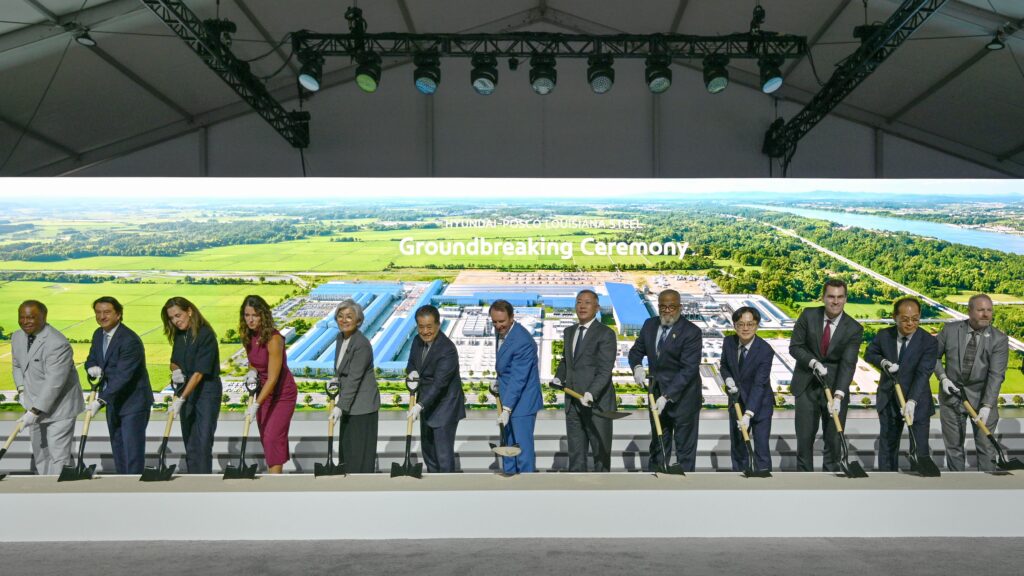
On September 4, 2026, Hyundai Steel marked the start of a USD 5.8 billion steel plant project an hour west of New Orleans in Donaldsonville, Louisiana. The project represents another step in the transformation of Korean investment in the United States, from building manufacturing facilities that serve the U.S. market to creating the upstream industrial capacity that supports American manufacturing.
Just a week later, inside Hyundai Motor Group Metaplant America (HMGMA) near Savannah, Georgia, I saw firsthand why this investment matters. The site tour begins with one of the first steps in automobile production: stamping steel into the components that eventually become a vehicle. Today, the automotive steel used at HMGMA is sourced primarily from Hyundai Steel in Korea, with some supplied by U.S. steel mills.
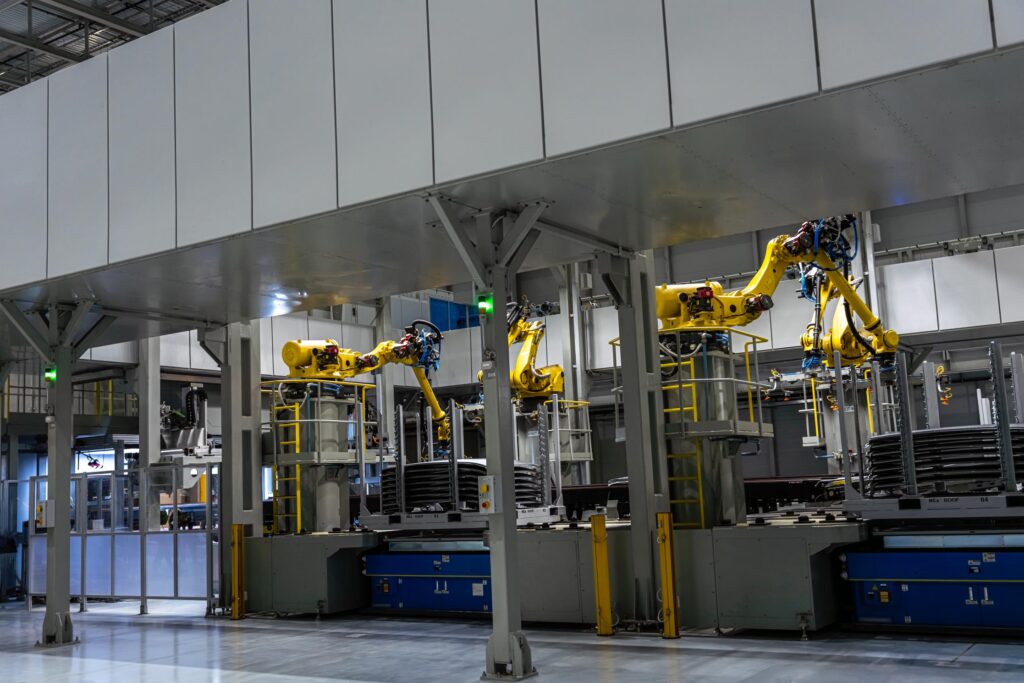
Starting in 2029, that supply chain will gain a new domestic source. Automotive steel produced by Hyundai-Posco Louisiana Steel (HPLS) will supply Hyundai Motor Group’s U.S. manufacturing operations and potentially other automakers across the country. The steel plant in Louisiana and the vehicle plants in Alabama and Georgia thus become part of a broader, increasingly interconnected U.S. manufacturing ecosystem.
Hyundai Steel’s Louisiana project is also significant because the new greenfield steelmaking facility comes at a time when such investments have been exceptionally rare in the United States for decades. The United States is the world’s third-largest steel producer, after China and India, but it is also one of the world’s largest steel-consuming markets. Because domestic production does not fully meet U.S. steel demand, imports have long played an important role in supplying the American market, as illustrated in Figure 1.
When HPLS begins commercial production as scheduled in 2029, the facility is expected to produce 2.7 million metric tons of steel annually. While this capacity will not eliminate the gap between U.S. steel production and consumption, it will add a significant new source of domestically produced, automotive-grade steel. More importantly, it will strengthen the connection between steel production and the growing network of automotive manufacturing facilities being built in the United States.
The significance of the investment extends beyond steel production and the national manufacturing supply chain. It is also creating a substantial economic and social impact in Louisiana well before the plant begins commercial operations. The project is expected to generate approximately 1,300 direct jobs and 4,100 indirect jobs in the region. About 70 percent of contracts awarded to date have gone to Louisiana companies, bringing contractors, suppliers, and service providers from across the state into the project and creating new economic opportunity across the region.
The steel mill investment is also helping build the workforce needed for advanced manufacturing. HPLS is collaborating with Louisiana State University (LSU) and River Parishes Community College (RPCC) on workforce development programs, including the RPCC-Hyundai Workforce Training Center in Donaldsonville set to open in 2027. Such partnerships can help ensure that the economic benefits of the investment extend beyond the plant itself and create opportunities for local workers to develop skills for high-value manufacturing jobs.
HPLS also hopes to establish a relationship with the local community from the beginning of the project. Just two days after the September 4 event, the company hosted a Community Day in Donaldsonville that attracted nearly 700 residents. The event brought together company executives, employees, local leaders, and residents and featured food and culture from both Louisiana and Korea. The firm also donated more than USD 30,000 to local organizations in 2026, including a food bank, youth programs, and community events.
These efforts illustrate another dimension of foreign direct investment that is often overlooked. A major investment is not simply a transaction between a foreign company and a host state. When sustained over time, it can create relationships among companies, workers, educational institutions, local businesses, and communities.
HPLS’s Louisiana project therefore has the potential to become not only a new source of steel for American manufacturing, but also a long-term part of the economic and social fabric of southern Louisiana.
HPLS’s project demonstrates that Korean investment is becoming an increasingly important part of America’s manufacturing capacity, not simply by bringing Korean companies to America but by building production capacity that becomes firmly rooted in the American economy. Just as Louisiana sugarcane has long contributed to America’s food and agricultural sectors, steel produced in Louisiana will soon fuel American manufacturing.
Hyun Jung “Jessie” Je is Senior Fellow and Director for External Engagement at the Korea Economic Institute (KEI). The views expressed are the author’s alone.
This material is distributed by KEI on behalf of the Korea Institute for International Economic Policy. Additional information is available at the Department of Justice, Washington, DC.