
By Robert King
Delayed 2025 Human Rights Report Again Downplays North Korea’s Egregious Human Rights Violations
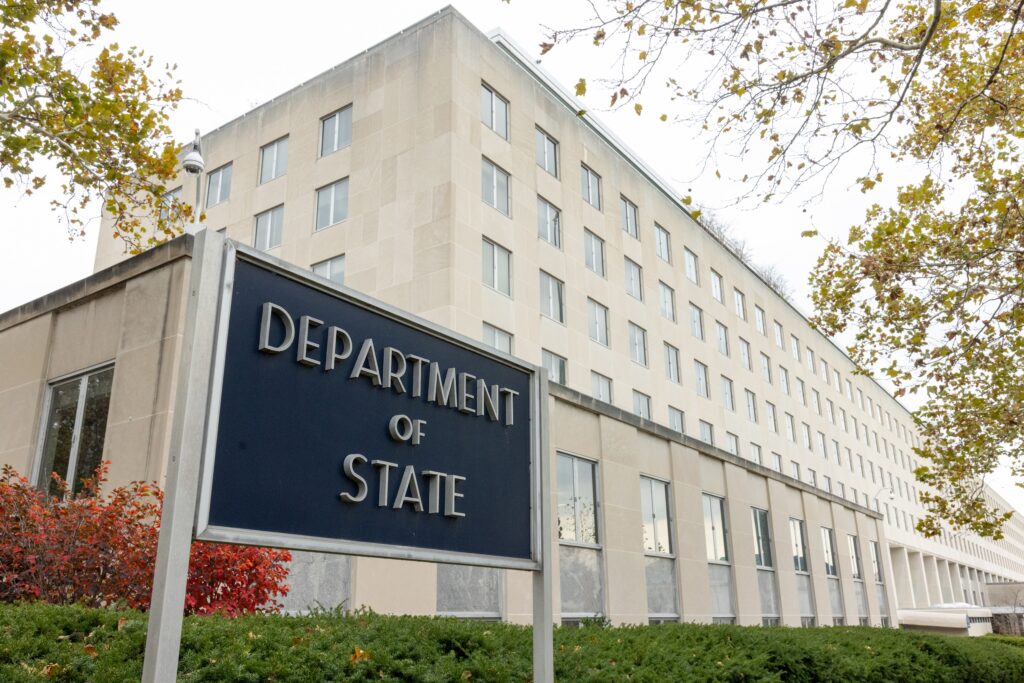
The publication of the U.S. Department of State’s annual human rights report is seven months delayed this year, and it will likely tone down or omit criticisms of North Korea’s human rights conditions and political system.
Listen to this article
0:00 / 0:00
The Country Reports on Human Rights Practices is a series of official reports published annually by the U.S. Department of State on almost all countries in the world. First published in the late 1970s, the report has expanded in scope to include all UN member countries and a few non-UN member countries as well. The United States does not have diplomatic relations with North Korea, but North Korea is a member of the United Nations. As such, the State Department has included a report on North Korea since it issued the first Country Reports. However, not only is the report delayed by almost seven months this year, but it will likely dedicate fewer pages to North Korea than in the past and tone down or omit criticisms of the country’s human rights conditions and political system.
The country reports have become a generally accurate country-by-country “report card” on human rights covering dictatorships and democracies, friendly allies and hostile enemies. The most recent reports were released on August 12, 2025, covering the calendar year of 2024 and 198 countries. The reports discuss adherence to internationally recognized human rights under the Universal Declaration of Human Rights, which was adopted by the United Nations in 1948 with strong support from the United States.
Under U.S. law, the State Department is to issue the human rights report annually on or before February 25. In practice, during recent decades, publication of the reports has often been delayed until March and, in a few cases, even April. The most recent report was finally released on August 12, 2025, almost six months after the deadline.
During Donald Trump’s first term as president, the annual human rights reports followed that traditional schedule. The report for 2017 was published on April 20, 2018; the report for 2018 was published on March 13, 2019; the report for 2019 was published on March 11, 2020; and the report for 2020 appeared on March 30, 2021.
As with prior reports, the most recent report does not compare countries or rank them based on the severity of documented human rights abuses. The original intention was for these reports to be factually accurate and not politically adjusted to reflect the status of relations between the United States and individual countries. The 2024 report (the last year of the Joe Biden administration) was released after Trump’s return to the White House in January 2025.
The report on North Korea in the first report released during the second Trump administration was half the length of the previous year’s publication, which was issued by the Biden administration, and some country reports were cut even more. The report on Israel, for example, was cut by 93.5 percent; the report on the West Bank and Gaza was cut by 89.3 percent; and the report on Hungary was cut by 75.6 percent.
The North Korean human rights report for 2024 is significantly shorter than any of the four annual reports published during Trump’s first term. The North Korean report for 2023 (published in April 2024 during the Biden presidency) was fifty-three pages long, and the 2024 report (published in August 2025 during the second Trump term) was only twenty-five pages. In addition to being half the length of the previous year’s report, the 2024 report “significantly reduced the amount of reporting on the regime and omitted criticism of Pyongyang’s political system,” according to a South Korean analysis. The 2024 report made no mention of the Kim family’s seventy-five-year authoritarian grip on North Korea.
The report for 2025 should have been made public in February 2026—some seven months ago.
Marco Rubio’s Record on North Korean Human Rights
Born in the United States of Cuban parents, U.S. Secretary of State Marco Rubio was a senator whose foreign policy priorities were strongly anti-totalitarian and pro-democracy. As a senior member of the Senate Committee on Foreign Relations, Rubio was a leading advocate for human rights in North Korea. In 2017, he introduced the Senate version of the North Korean Human Rights Reauthorization Act, during Trump’s first term. The House and Senate approved the legislation, and Trump signed it into law in 2018.
In 2023, when the legislation came up for reauthorization again during the Biden presidency, Rubio reintroduced it in the Senate. The Senate adopted the Rubio-sponsored legislation by a unanimous voice vote, but the House adopted another version of the bill, and the two failed to reconcile the minor differences before Congress adjourned in 2024. As a senator, Rubio considered North Korean human rights an important issue.
Secretary of State Rubio’s Pivot on North Korea and Human Rights
For over a year and a half as secretary of state, however, Rubio has done little to support human rights in North Korea. Under the Biden administration, the Senate confirmed a career State Department official as an ambassador-ranked special envoy for North Korean human rights. When Rubio assumed the position of secretary of state, the special envoy (who was not a political appointee but a career civil service employee at the State Department) was transferred to another position in the department. The post of special envoy for North Korean human rights was not filled, and there is no indication that a special envoy will be appointed in the near future.
As secretary of state, Rubio has taken several actions inconsistent with the positions he took as a U.S. senator and certainly inconsistent with the views of many of his Senate colleagues who voted to confirm him as secretary. One of the most destructive efforts was the “reorganization” of the State Department’s Bureau of Democracy, Human Rights, and Labor, which involved eliminating most offices in the bureau and slashing staff, in some areas cutting 80 percent of office positions. In addition to personnel cuts, the State Department has cut hundreds of millions of dollars appropriated to support global democracy and human rights programs. Under Rubio’s leadership, among other cuts, the State Department Country Reports on Human Rights Practices stopped reporting on violence, criminalization, and abuses based on sexual orientation and gender identity.
In May 2025, after serving as secretary of state for five months, Rubio appeared at a hearing before the Senate Foreign Relations Committee. The exchange between Rubio and Senator Chris Van Hollen (D-MA), former Senate colleagues and both members of the Foreign Relations Committee, was particularly sharp and impassioned. Van Hollen told Rubio, “I have to tell you directly and personally that I regret voting for you for Secretary of State.” Rubio fired back, “Your regret for voting for me confirms I’m doing a good job.”
Nowhere is this de-emphasis of the State Department’s human rights agenda under Rubio’s leadership more visible than in the changes made to the country reports. A careful analysis and extensive reporting on the 2024 report indicate noteworthy changes in the human rights report on North Korea in particular. The latest report cited “credible reports of ‘significant’ human rights issues in the North, including arbitrary or unlawful killings; disappearances; torture or cruel, inhuman, or degrading treatment or punishment; involuntary or coercive medical or psychological practices; and arbitrary arrest or detention.” Such language has been commonly used in the past, but “the sharp reduction of pages dedicated to North Korea this year was notable.” The analysis also omitted criticism of the North Korean political system, which the report had included in the past.
An NPR analysis of the 2024 country reports, which appeared the day it was publicly released in August 2025, reported that the State Department’s “long-awaited reports on international human rights… drastically reduce the types of government repression and abuse that the United States under President Trump deems worthy of criticism.” Some international human rights groups expressed concern that the second Trump administration has “increas[ed] authoritarian practices” and that its policies have led to a “devastating erosion of human rights.”
This inordinate delay in publishing the annual human rights report suggests chaos and confusion in the reorganized and disorganized State Department. As Trump continues to court Kim Jong Un for a summit meeting before the end of this year, however, the lack of even a watered-down human rights report may help his quest.
Robert King is Nonresident Distinguished Fellow at the Korea Economic Institute of America (KEI). The views expressed here are the author’s alone.
This material is distributed by KEI on behalf of the Korea Institute for International Economic Policy. Additional information is available at the Department of Justice, Washington, DC.