
By Ellen Kim
Why the Prospect of a U.S.-North Korea Summit in November Is Uncertain
China’s policy ambiguity regarding North Korea’s denuclearization and the outcome of U.S.-Iran nuclear negotiations could serve as important indicators of the future direction of U.S.-North Korea relations and the prospects for renewed dialogue.
Listen to this article
0:00 / 0:00
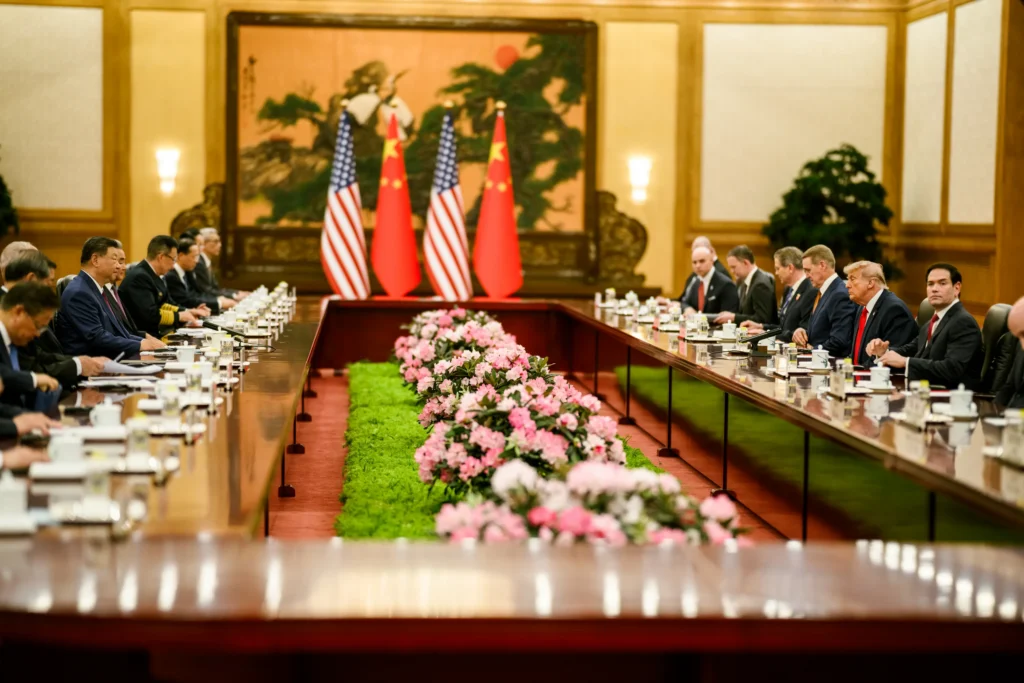
The White House recently announced that during the U.S.-China summit, U.S. President Donald Trump and Chinese President Xi Jinping confirmed their shared goal of denuclearizing North Korea. However, China’s official readout of the meeting made no mention of North Korea. When questioned, a spokesperson from China’s Ministry of Foreign Affairs responded by citing “continuity and consistency” in China’s longstanding policy position on the Korean Peninsula, while refraining from explicitly addressing denuclearization. This once again underscored China’s policy ambiguity regarding North Korea’s denuclearization.
Such ambiguity began to surface more visibly after South Korea, China, and Japan failed to adopt a joint declaration reaffirming their commitment to denuclearizing the Korean Peninsula at their trilateral summit in May 2024. Since then, China has effectively ceased all references to denuclearization in official documents and diplomatic settings, raising concern among experts that China may be tacitly accepting North Korea’s status as a nuclear-weapon state.
China’s silence reflects a combination of factors. First, amid concerns that closer North Korea-Russia ties could weaken China’s influence over North Korea, China appears intent on avoiding actions that might provoke North Korea while simultaneously seeking to strengthen bilateral ties. At the same time, China seems to recognize the reality of North Korea possessing roughly fifty nuclear warheads and, therefore, the practical limitations of denuclearization. As U.S.-China strategic competition intensifies and the regional security environment shifts rapidly, China has also found it necessary to recalibrate its strategic priorities; in this context, China’s policy ambiguity is increasingly serving as a convenient instrument for advancing its strategic interests.
By contrast, the Trump administration has maintained its denuclearization stance but has not presented a concrete roadmap for North Korea policy. Instead, Washington has demonstrated its strong commitment to denuclearization through military pressure on Iran and intense negotiations over the dismantlement of Iran’s nuclear program.
Against this backdrop, President Xi is expected to visit Pyongyang in June. Prior to the first U.S.-North Korea summit in 2018, Xi and North Korean leader Kim Jong Un held two summits to enhance strategic communication and policy coordination between the two countries. Given this precedent, observers are focusing considerable attention on whether Xi’s upcoming visit could serve as a catalyst for the resumption of U.S.-North Korea dialogue. In particular, should President Trump attend the Asia-Pacific Economic Cooperation (APEC) summit in China this November, the period surrounding the summit could create an opening for renewed efforts toward a U.S.-North Korea summit.
However, premature optimism should be avoided. As China seeks to strengthen its political, economic, and strategic cooperation with North Korea on the occasion of the sixty-fifth anniversary of the signing of the Sino-North Korea friendship treaty this year, Beijing may continue to remain silent on the issue of denuclearization. Even if Xi attempts to play the role of mediator in U.S.-North Korea dialogue by conveying a message from Trump to Kim, North Korea may not readily embrace China’s role given its longstanding preference for direct negotiations with the United States.
For South Korea, the government should closely monitor how the trajectory of U.S.-Iran nuclear negotiations may influence North Korea’s strategy toward the United States and its negotiating posture. Although Pyongyang continues to firmly reject denuclearization, it is likely closely watching and analyzing how the Trump administration balances sanctions relief with nuclear dismantlement in its negotiations with Tehran. In this regard, the outcome of Iran’s nuclear negotiations could serve as an important indicator for the future direction of U.S.-North Korea relations and the prospects for renewed dialogue. Policymakers should therefore manage developments on the Korean Peninsula with careful attention to these broader geopolitical dynamics.
This article was originally published in Korean in Hankook Ilbo on May 30.
Ellen Kim is Senior Fellow and Director of Academic Affairs at the Korea Economic Institute of America (KEI). The views expressed here are the author’s alone.
This material is distributed by KEI on behalf of the Korea Institute for International Economic Policy. Additional information is available at the Department of Justice, Washington, DC.