
Tactical and Operational Lessons North Korea Is Learning From the Iran War
The Iran war highlights to North Korea the importance of buried infrastructure, dispersed missile forces, and indigenous drone development.
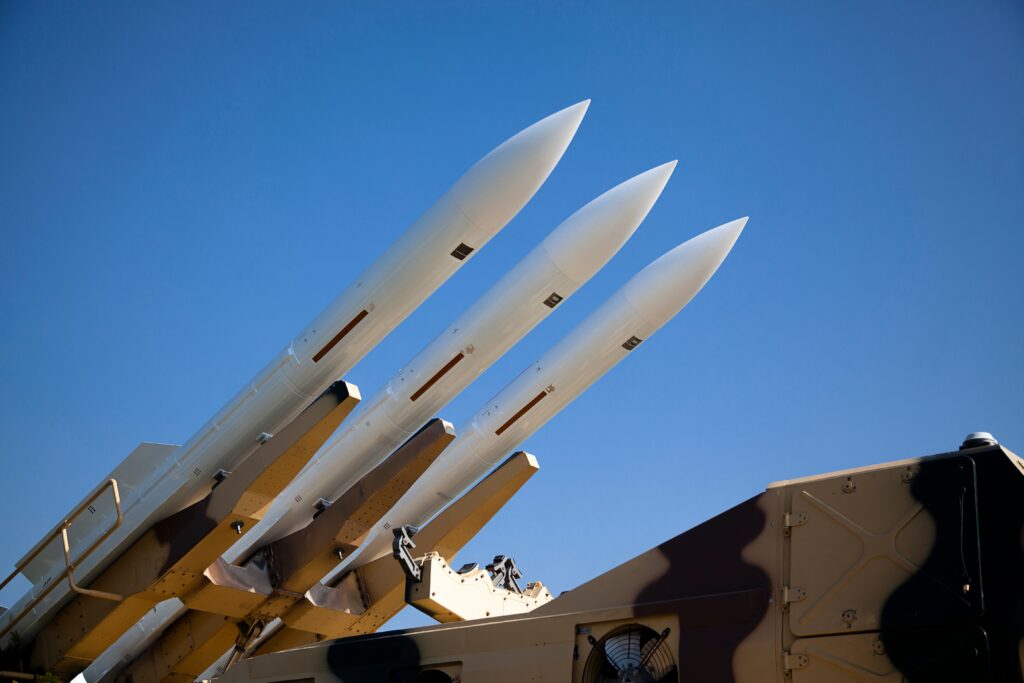
The Iran war may push North Korea to lower its nuclear threshold rather than raise it, and that is the lesson U.S. and South Korean war planners should fear most. Watching a U.S.-Israeli air campaign batter a near-nuclear partner state offers North Korea validation for buried infrastructure, dispersed missile forces, and indigenous drone development.
Iran’s ability to strike back against U.S. and Israeli air power carries real strategic validation for North Korean leader Kim Jong Un. Iran’s extensive network of mobile missile launchers and underground munitions depots proved sufficiently dispersed to deny U.S. and Israeli strike aircraft a clean sweep of high-value targets. In this light, North Korea’s own investments in buried military infrastructure look increasingly sound. The hardening and expansion of those underground facilities will almost certainly move up Kim’s list of priorities. This could mean deeper excavation and more concealed entry points for these underground facilities, many of which are buried deep in North Korea’s mountainous terrain.
Another area demanding close attention is Iran’s effective use of low-cost attack drones. The Shahed drone series is the latest proof that cheap, mass-produced loitering munitions can overwhelm sophisticated air defenses. While North Korea’s drone program remains less mature than Iran’s, Kim has made indigenous drone development a stated priority.
Operationally, Iran’s “mosaic defense” doctrine, which decentralizes command authority to regional commanders in wartime, proved remarkably resilient under pressure. Even as U.S. and Israeli strikes claimed the lives of key political and military figures, the Islamic Republic did not crumble. The regime’s institutional architecture is robust and designed precisely to absorb such blows and fight on. In North Korea’s highly personalist dictatorship, it remains to be seen whether Kim would ever relinquish total control of his military. North Korea’s wartime command and control strategy is highly secretive and likely known to only the most senior commanders in the Korean People’s Army (KPA).
Iran’s parallel institutions, spanning the clerical establishment, the Islamic Revolutionary Guard Corps (IRGC), the regular armed forces, and the security services, stand in sharp contrast to North Korea’s hyper-centralized party-state system, in which power flows from a single point of authority: Kim Jong Un. Even after the assassination of Ayatollah Ali Khamenei, the Iranian regime continued combat operations in a decentralized fashion. The IRGC, with its pervasive control of Iran’s main economic and defense sectors, now stands as the central player in Iranian policymaking and upholds the integrity of the entire system.
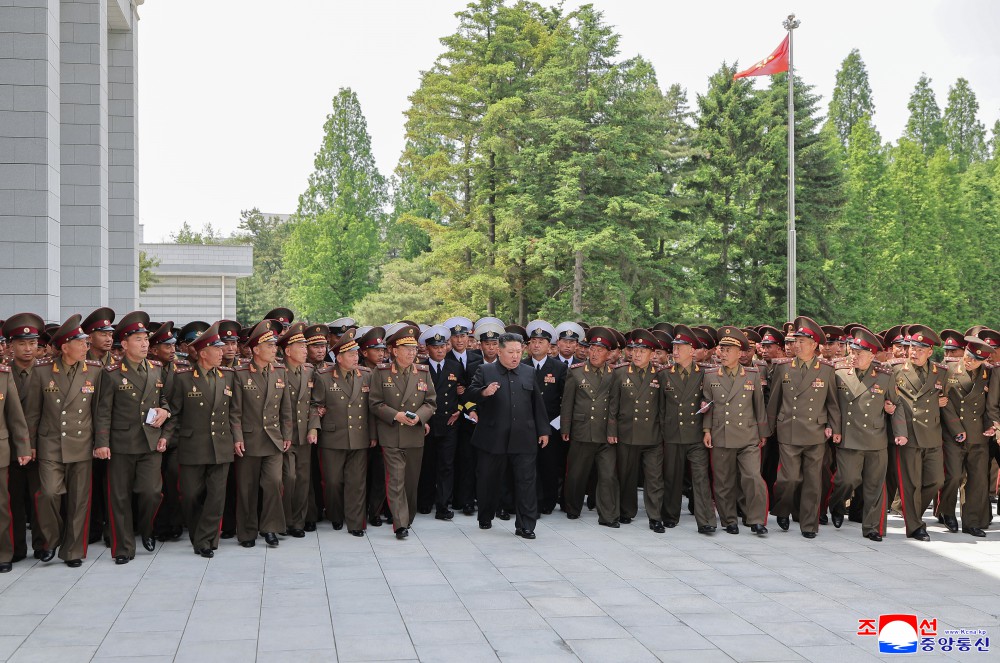
North Korea offers no comparable institutional architecture. In typical communist fashion, political and military power descends exclusively from the Korean Workers’ Party (KWP), and within the KWP, from Kim himself. The KPA does not operate independently of the KWP; it is an instrument of it. There are no parallel power centers, no institutionally autonomous economic actors, and no political establishment capable of filling a leadership vacuum if Kim were killed. It is doubtful that Kim’s teenage daughter has the experience or support networks to preserve her father’s regime. Where Iran’s system is designed to survive decapitation of its supreme leader, North Korea’s is designed around the assumption that decapitation will never occur. This makes the situation on the Korean Peninsula a powder keg, which is why Kim codified preemptive nuclear strikes if the regime feels threatened.
The Iranian experience carries uncomfortable implications for U.S. and South Korean war planners. At its core, the conflict has demonstrated that even a sustained, technologically superior air campaign cannot guarantee rapid regime collapse. If Iran, a larger, more geographically exposed state, could absorb relentless punishment and continue fighting, North Korea, with its deeper tunnels, denser mountain terrain, and robust nuclear arsenal, presents an even more daunting operational challenge.
The nuclear dimension is where the Iranian lesson resonates most. Iran was a near-nuclear state. North Korea is an established nuclear power with sophisticated missile delivery systems. U.S. and South Korean planners must now contend with the very real possibility that a sustained conventional air campaign could rapidly cross Pyongyang’s nuclear threshold. Kim will likely conclude from the ongoing war that Iran’s ultimate vulnerability stemmed from its failure to develop nuclear weapons. The Iran conflict may even cause Kim to lower his nuclear threshold rather than raise it, further complicating U.S-South Korea deterrence planning.
For South Korea specifically, the Iranian war experience offers little comfort. Seoul remains geographically exposed to devastating conventional fire from artillery and rocket systems arrayed just north of the demilitarized zone (DMZ). If Kim accelerates his indigenous drone program with Iranian lessons in mind and Russian technology in hand, South Korea’s layered air defenses will face an increasingly sophisticated saturation threat.
As seen in Iran’s resolve, the most uncomfortable implication for U.S-South Korea war planners is the reality that a conflict with North Korea would not be short. The alliance must therefore ensure that its munitions stockpiles can sustain a prolonged military campaign. The wars in Ukraine and the Middle East have already placed significant strains on U.S stockpiles. A Korean contingency would test them even more.
This reality places the U.S-South Korea alliance in a profound strategic dilemma. Deterrence demands a credible and overwhelming offensive capability. Kim must believe that any act of aggression will be met with devastating force from allied forces. Yet the Iranian experience demonstrates that devastating force may not be decisive, which risks emboldening rather than deterring a hereditary dictatorship that has spent decades studying how smaller powers survive confrontations with stronger ones.
This tension pulls alliance strategy in two directions simultaneously: toward greater investment in bunker-busting munitions and advanced air defense on one hand, and toward renewed emphasis on diplomatic off-ramps and escalation management on the other.
After concluding a summit meeting with Xi Jinping in Beijing, Donald Trump should prioritize another visit to the Indo-Pacific and meet once again with Kim. Given Trump’s penchant for spectacle and theatrics, a reunion of the two leaders could reduce tensions on the peninsula and reignite diplomatic talks. Nonetheless, it remains to be seen whether Kim sees any personal benefit in meeting with the mercurial U.S leader.
Benjamin R. Young is Non-resident Fellow at the Korea Economic Institute of America (KEI) and Assistant Professor of Intelligence Studies at Fayetteville State University. The views expressed here are the author’s alone.
This material is distributed by KEI on behalf of the Korea Institute for International Economic Policy. Additional information is available at the Department of Justice, Washington, DC.