The Future of U.S.-Korea Shipbuilding
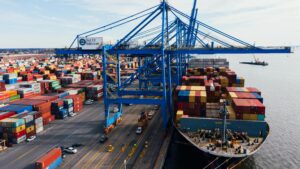
Bilateral cooperation in shipbuilding could become a linchpin of U.S. maritime security and economic strategy for decades to come.
Analysis and publications on economic policy, trade relations, business, financial issues, and commercial developments affecting U.S.-Korea relations.
Showing 777 items
Bilateral cooperation in shipbuilding could become a linchpin of U.S. maritime security and economic strategy for decades to come.
The first major deal of the year carries implications for South Korea on everything from tech trade to agriculture
New KEI research shows that perception and visibility, not dollar amounts, shape how Americans feel about foreign investment.
Seoul's optimistic rhetoric belies deep skepticism about the prospects for a significant breakthrough on trade with the Trump administration.
The protectionist policies of the Trump administration have profound implications for both the United States and South Korea
If the United States and Korea are rowing in the same direction, the two countries should help set the pace for the rest of the...
The imposition of reciprocal tariffs on Korea and the addition of import duties signify a sharp turn away from the KORUS FTA playbook.
The first quarter of 2025 marked the transition into what will likely be seen as a new global economic reordering.
The U.S. has played a uniquely important role in sustaining the global movement for truth, justice, and accountability for the people of North Korea. Today,...
For South Korea, U.S. partnership presents an opportunity for its shipbuilding sector to maintain competitiveness while reducing dependence on China
Short-term fears of economic volatility can make people lose confidence in a currency and refuse to hold it, no matter how cheap it gets.
Without exception, the April 2 tariffs are much larger than the tariffs South Korea and others levy on the United States.
The president held up a placard explaining that nearly every country trading with the United States will be forced to pay heavier tariffs.
The U.S. position that national security is non-justiciable is fundamentally at odds with the WTO’s insistence on legal discipline.