
[2024 in Review] Yoon Suk Yeol’s Declaration of Martial Law, Investigation, and Impeachment
President Yoon’s impeachment marks the third instance in the last two decades in which impeachment has been brought against a president.
By Scott Snyder
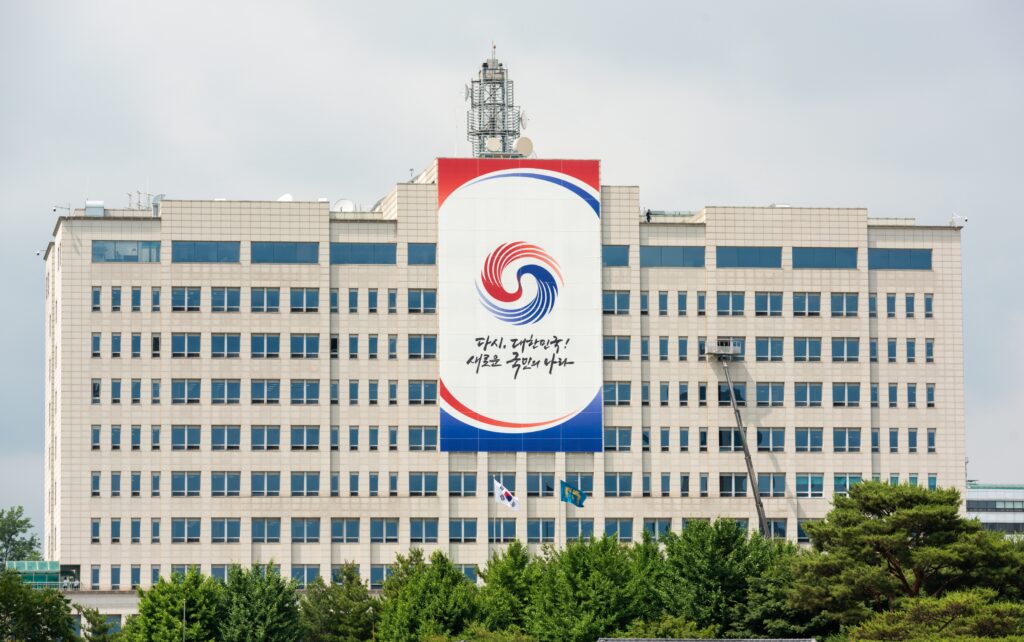
South Korea faced the prospect of political paralysis and a protracted constitutional crisis resulting from the declaration of martial law by President Yoon Suk Yeol and its dismissal hours later by a National Assembly resolution. On December 3, Yoon announced at 22:25 his intent to impose martial law “to eradicate pro-North Korea forces and protect constitutional order.” A quorum of National Assembly members evaded efforts by special forces to secure the National Assembly chamber and unanimously passed a resolution to lift the martial law in a 190-0 vote within three hours following Yoon’s announcement.
Yoon’s failed declaration of martial law immediately catalyzed a series of simultaneous and overlapping investigations on the events leading to the declaration by the Supreme Prosecutors’ Office, police, military, Corruption Investigation Office for High-ranking Officials (CIO), and National Assembly. Yoon’s failed declaration of martial law severely damaged his political legitimacy and placed the president at risk of being charged with treason. However, Yoon dug in his heels, justified his actions, blamed his political opponents, and vowed to fight against mounting calls for his resignation.
The rapid launch of multiple investigations accelerated the main opposition Democratic Party in its efforts to impeach President Yoon for his actions and created fissures within the ruling People Power Party (PPP). Most notable was PPP Chairman Han Dong-hoon’s search for an orderly exit for Yoon from his presidential responsibilities through calls for his resignation and Han’s ultimate support for the president’s impeachment in opposition to his own party’s institutional position. The legislative tensions culminated with the National Assembly’s passage of articles of impeachment on December 14 by a 204-85 vote margin.
Following its passage, South Korea’s constitution designated Prime Minister Han Duck-soo to assume the responsibility of providing interim leadership as South Korea’s acting president. Acting President Han himself fell victim to impeachment and replacement by Deputy Prime Minister Choi Sang-mok thirteen days later due to his call for the opposition and ruling parties to solve an impasse over nomination of three Constitutional Court justices to fill empty seats as well as the fate of two additional bills authorizing the establishment of National Assembly-appointed special prosecutors to investigate first lady Kim Keon-hee and President Yoon Suk Yeol. Meanwhile, the Constitutional Court must complete a review of the impeachment case within 180 days of the article of impeachment’s passage. If the Court decides to uphold the impeachment resolution, elections to replace the president will be held within 60 days following the Court’s decision. If the Court decides to reject the impeachment decision, President Yoon would be eligible to resume his duties, though the damage to his authority caused by the martial law declaration and his impeachment would substantially weaken Yoon’s leadership capacity.
President Yoon’s impeachment marks the third instance in the last two decades in which impeachment articles have been brought against a sitting South Korean president. In 2004, the Constitutional Court reinstated President Roh Moo-hyun after 63 days, while the Court in 2017 upheld the impeachment and removal from office of President Park Geun-hye after 91 days of deliberations. While South Korea’s successful implementation of the constitutional processes and procedures for impeachment, removal from office, and the holding of new elections affirms the resiliency of the democratic process, the accumulated experience of three impeachments in two decades has also increased discussions of the need for constitutional revision, both to change the term and eligibility of the president to pursue a second term in office and to refine and clarify any perceived shortcomings in the rules governing the impeachment process.
Scott Snyder is President and CEO of the Korea Economic Institute of America. The views expressed here are the author’s alone.
Photo from Shutterstock.
KEI is registered under the FARA as an agent of the Korea Institute for International Economic Policy, a public corporation established by the government of the Republic of Korea. Additional information is available at the Department of Justice, Washington, D.C.