
Can South Korea Fill the Middle East’s Missile Defense Gap?
Iran war interceptor shortages and slow U.S. Patriot production are pushing Gulf states toward South Korea's Cheongung-II — if Seoul can scale capacity.
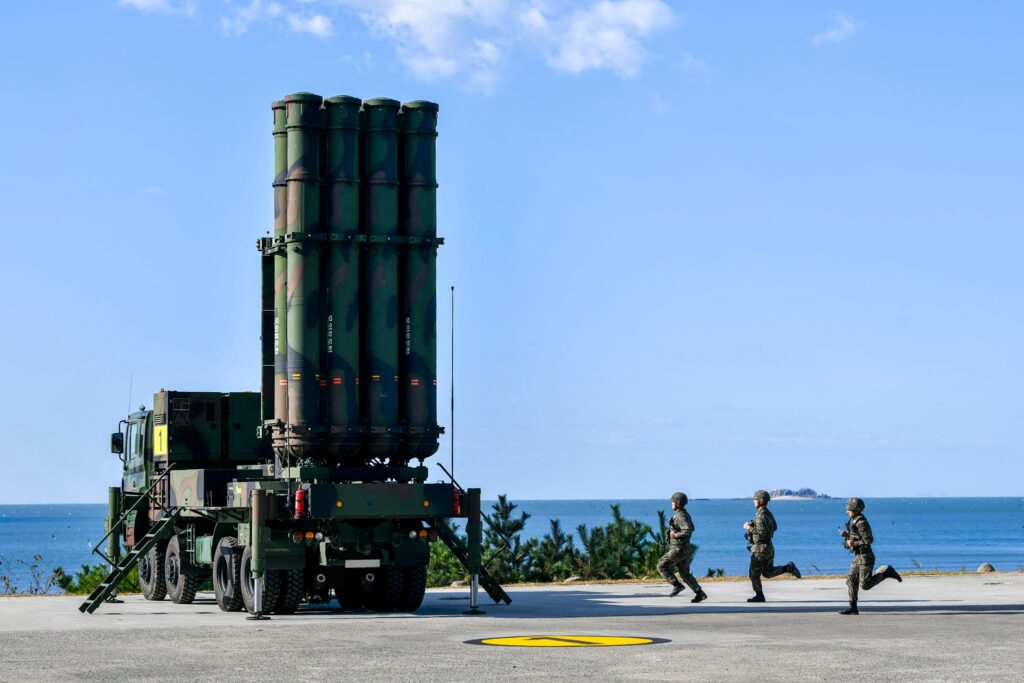
The Iran war has rapidly depleted the Middle East’s missile defenses. With uncertainty surrounding whether the current U.S.-Iran truce will hold, governments across the region are looking to restock interceptor inventories. The strong battlefield performance of South Korea’s Cheongung‑II ballistic missile defense system has made it a serious procurement option for regional buyers, creating an opening for South Korean defense exporters amid a global shortage.
That opportunity comes with a near-term constraint. The Cheongung-II consortium produces only eight batteries a year, and South Korea’s broader missile defense portfolio is weighed down by still-developing systems for long-range air defense and a low-altitude Iron Dome-type system, while dedicated drone interceptors are either just entering production or still in development. The clearer advantage is medium-term.
The Cheongung-II costs about a third of the U.S. Patriot system, and South Korean producers have shown they can scale faster and more affordably than most competitors. If they can expand capacity to match demand, the South Korean government stands to become a durable presence in allied missile defense procurement.
The Middle East’s Interceptor Shortfall
The wars in Ukraine and Iran have underscored the centrality of layered air and missile defense systems against a mix of ballistic missiles, cruise missiles, and drones. Modern systems were built for missile interception, but they have increasingly been used against drone attacks. Because drones are far cheaper than interceptors, Ukraine has pioneered lower‑cost counter‑drone solutions to preserve its limited missile stocks.
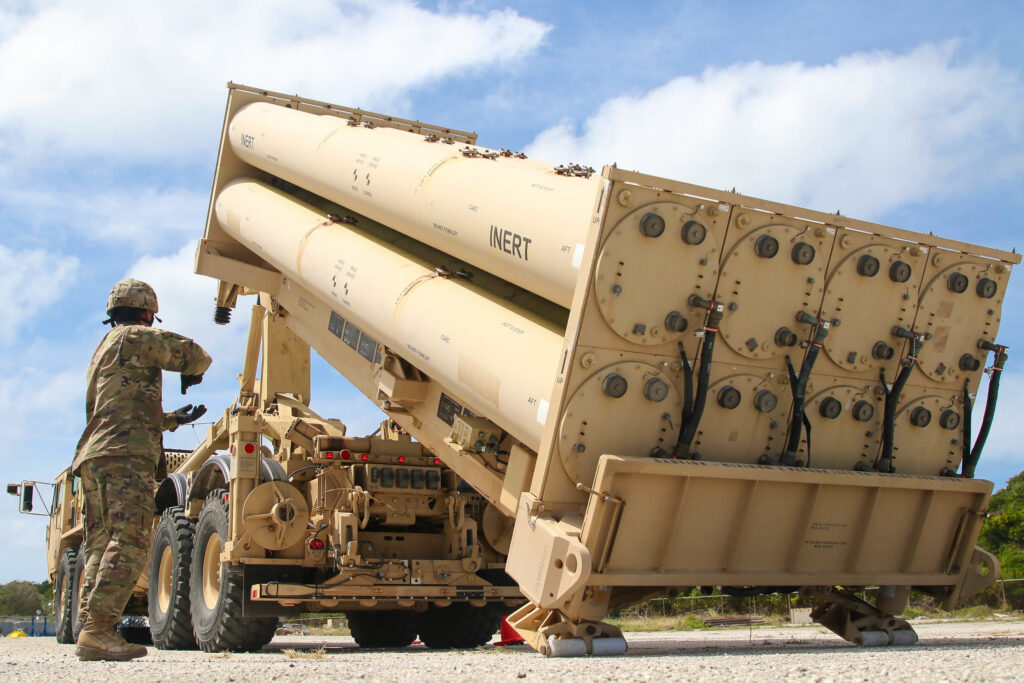
Within that layered architecture, the Terminal High Altitude Area Defense (THAAD) system intercepts missiles at higher altitudes and longer ranges, while the Patriot system covers lower‑altitude threats. These systems complement one another but still leave gaps, particularly against low‑flying rockets, drones, and artillery—areas where systems like Israel’s Iron Dome excel. In the current conflict, the United States has redeployed THAAD and Patriot batteries from other regions to bolster Middle Eastern defenses, supplementing the Patriots already purchased by Gulf governments.
Prior to the war, U.S. arms sale data suggested Saudi Arabia held roughly 1,800 Patriot interceptors, Qatar held 1,000, and the United Arab Emirates held 900. Since the war began, Iran has launched just under 5,800 strikes through early April. Not every strike requires interception, but the volume has strained regional interceptor inventories.
There are different variants of Patriot missiles, but the vast majority used by Middle Eastern states are the PAC-3 variant, which is similar to the Cheongung-II. Both are missile-to-missile interceptors, but they have different ranges, speeds, and peak elevations.
By late March, the United Arab Emirates and Kuwait were estimated to have expended 75 percent of their Patriot missile stockpiles, while Bahrain was estimated to have expended 87 percent. Saudi Arabia does not publish stockpile or usage data, but applying similar usage rates implies that Qatar, Saudi Arabia, and the United Arab Emirates alone have used at least 2,775 interceptors.
The United States has also expended a significant amount of Patriot and THAAD missiles, with internal Pentagon documents putting the figure at more than 1,300. Estimates from the Center for Strategic and International Studies (CSIS), however, suggest that the United States, in the current conflict, has gone through 50 percent of its THAAD missiles.
To put the expenditure of THAAD and Patriot missiles in context, during the 2025 attack on Iran, the United States utilized ninety-two THAAD interceptors (14 percent of its stockpile) and thirty Patriot missiles. Over four years of war, Ukraine has received and used roughly 600 Patriot PAC-3 variant missiles and slightly more of the PAC-2 variant. No THAAD batteries have been deployed to Ukraine.
To replenish the region’s supply of interceptors, the United States has approved the sale of 5,250 interceptors to Bahrain, Kuwait, Qatar, and the United Arab Emirates.
Production Bottlenecks Push Demand to Seoul
The problems for Gulf states extend beyond usage rates to production constraints. The capacity to produce new Patriot and THAAD interceptors is limited. There are multiple variants of the Patriot missile in production, but the primary one in use is the PAC-3 MSE. Lockheed Martin hopes to increase production of the PAC-3 MSE from 600 to 2,000 per year by the end of 2030. It has also agreed to increase production of THAAD interceptors from 96 to 400 per year over the next seven years. But those expansion plans are contingent on Congress approving funding to justify the production expansion.
The United States is not the only source of Patriot missile production. Mitsubishi Heavy Industries is currently licensed to produce thirty PAC-3 interceptors per year, with the capacity to increase to sixty per year, but this is insufficient on its own to meet growing demand.
The approved interceptor sales to Bahrain, Kuwait, Qatar, and the United Arab Emirates significantly exceed the CSIS estimates of U.S. interceptor stockpiles, suggesting that the vast majority of these sales will require new production. It will take years to produce the supply needed to meet the new demand.
Higher usage rates and limited missile-interceptor production capacity in the United States and Japan are pushing Gulf states to expand their supplier base, with the Cheongung-II’s battlefield success raising interest. The Cheongung-II is an upgrade of South Korea’s original indigenously designed surface-to-air guided missile defense system and was first deployed in November 2020. Neither the Cheongung-II nor its original model was combat tested prior to the war in the Middle East.
Prior to the war, Iraq, Saudi Arabia, and the United Arab Emirates already had agreements in place to purchase the Cheongung-II system and are now looking to South Korea as a potential solution to ongoing shortages. In 2022, the United Arab Emirates agreed to acquire ten Cheongung-II batteries (each battery holds thirty-two interceptors). It was followed by Saudi Arabia, which agreed to purchase ten batteries, while Iraq has a contract for eight batteries. Two of the United Arab Emirates’ ten batteries have been delivered to date, while Iraq and Saudi Arabia are still awaiting delivery. The three countries have all requested accelerated delivery.
Kuwait and Qatar are also reported to be interested in acquiring the Cheongung-II, with Qatar reportedly in negotiations and seeking early delivery.
Because of potential delays in the delivery of Patriot missile systems, countries beyond the Middle East may look to other sources for missile defense. Switzerland is reportedly the first country outside the Middle East to consider purchasing the Cheongung-II system.
Seoul’s Capacity Constraints
Despite rising demand for missile defense, South Korea may be unable to meet international needs in the short term.
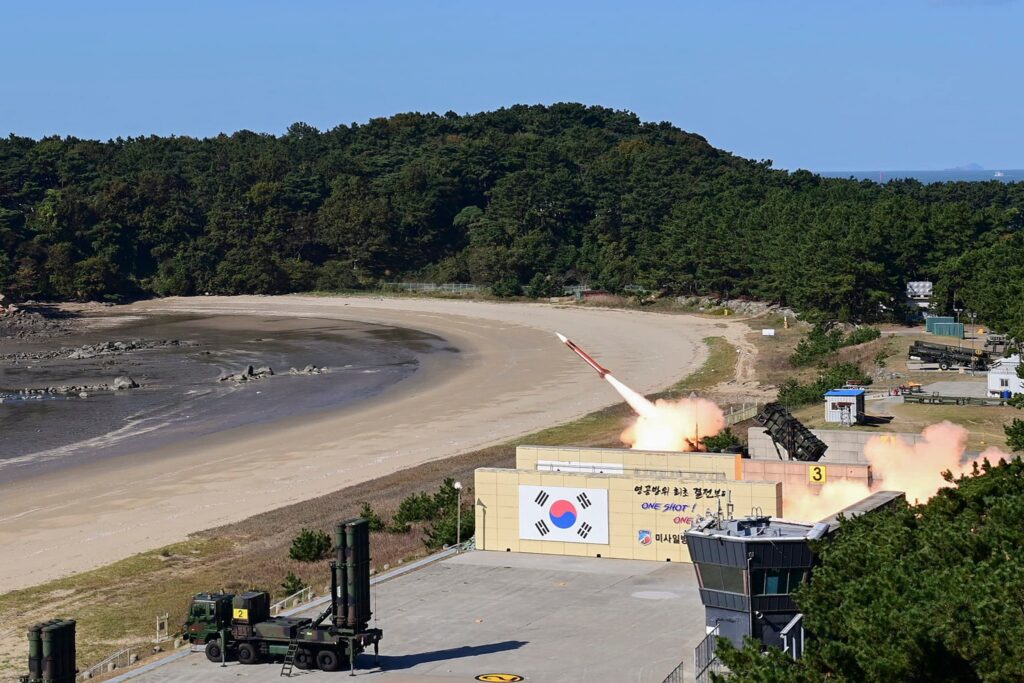
The Cheongung-II is produced by a consortium in South Korea. LIG Nex1 integrates the overall system and produces the interceptor missiles, while Hanwha Aerospace produces the vehicles and mounted launchers, and Hanwha Systems provides the advanced radar.
After the initial contracts in the Middle East were signed, the consortium increased its production capacity, but it is currently only able to produce eight batteries a year. Interceptor production rates are not publicly available, but if they align with Cheongung-II battery production, they are likely less than 300 a year, limiting South Korea’s ability to quickly supply new interceptors without drawing on existing government stocks. The government may be reluctant to draw off its own stocks and risk lessening deterrence against North Korea.
Looking more broadly at missile defense, there are other short-term constraints on South Korean exports. The indigenous Long-range Surface-to-Air Missile (L-SAM) system was completed only at the end of 2024 and entered mass production last year. South Korea is fast-tracking the development of a Low Altitude Missile Defense system similar to Israel’s Iron Dome and drone interceptors, but currently lacks the first capability and has limited abilities on the latter.
Whether Seoul realizes that potential depends on execution. LIG Nex1 and Hanwha affiliates must manage potential supply chain constraints and guarantee that expanding testing is available to ensure quality. If they can manage those challenges, South Korea could emerge as a major supplier of missile defense systems in the years ahead.
Troy Stangarone is a Visiting Senior Fellow at the Korea Economic Institute of America (KEI) and Non-Resident Fellow with the Carnegie Mellon Institute for Strategy and Technology. All views expressed are the author’s alone.
This material is distributed by KEI on behalf of the Korea Institute for International Economic Policy. Additional information is available at the Department of Justice, Washington, DC.