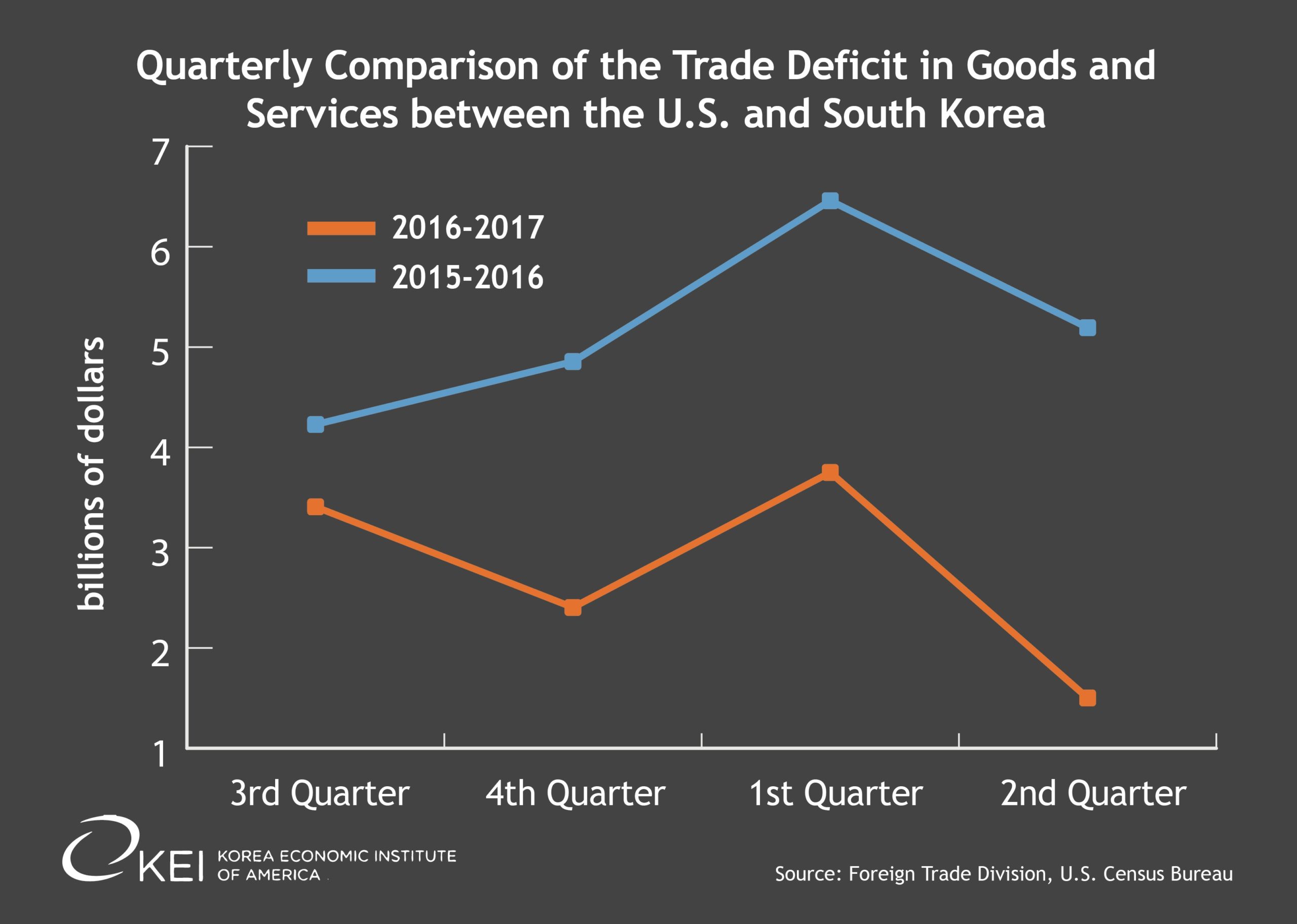
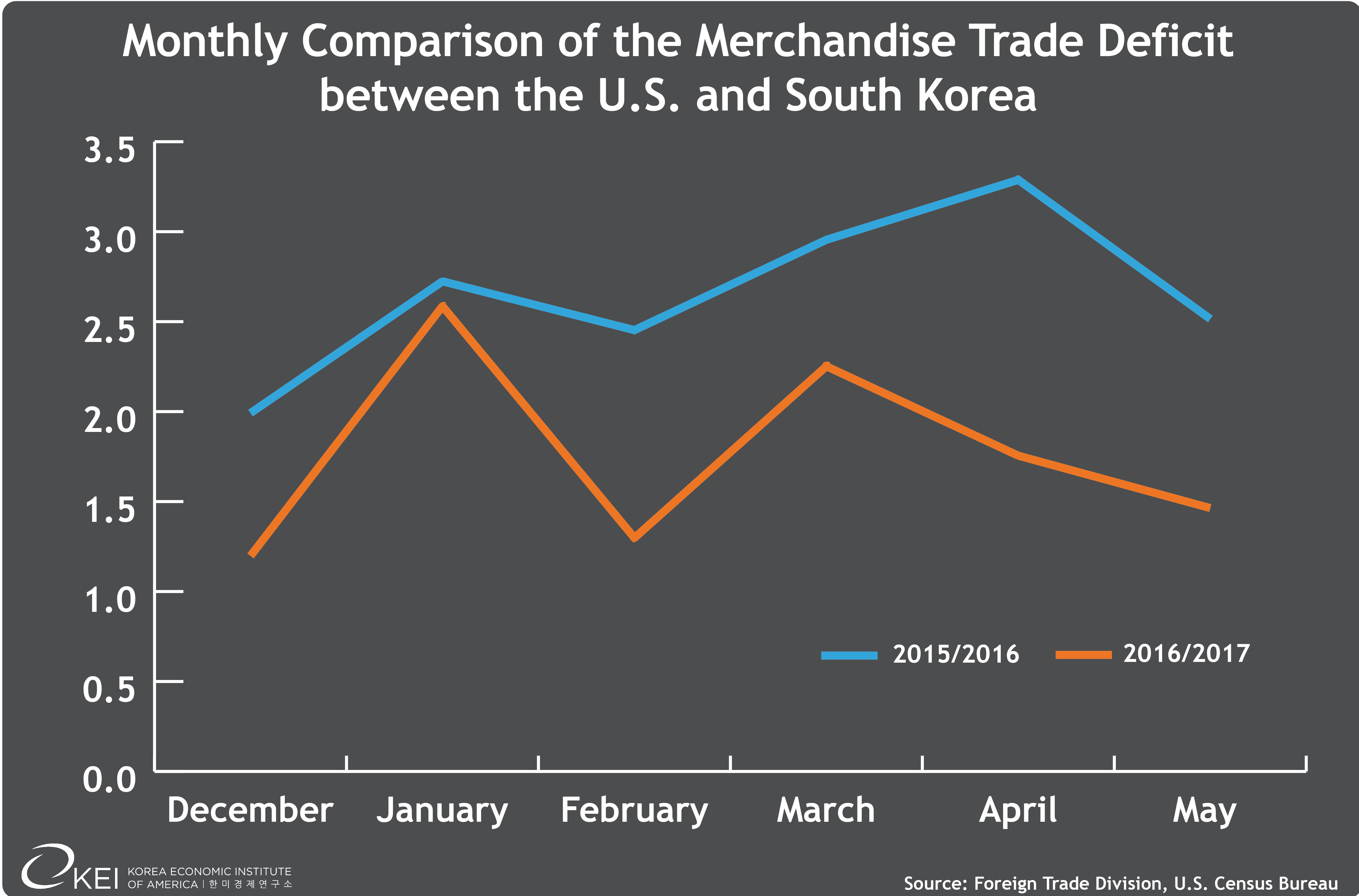
U.S. Trade Deficit with South Korea Continues to Decline
If present trends continue for the final two months of 2017, the U.S. will set a record level of merchandise exports to Korea, reaching nearly $48 billion.


If present trends continue for the final two months of 2017, the U.S. will set a record level of merchandise exports to Korea, reaching nearly $48 billion.

Less than a decade ago, the subject of U.S. beef in Korea garnered fierce criticism. Today, Korea represents the second largest export market for U.S. beef.

If the digital trade section of the KORUS FTA is amended, Korea will likely need to open up its e-commerce industry to foreign competitors.
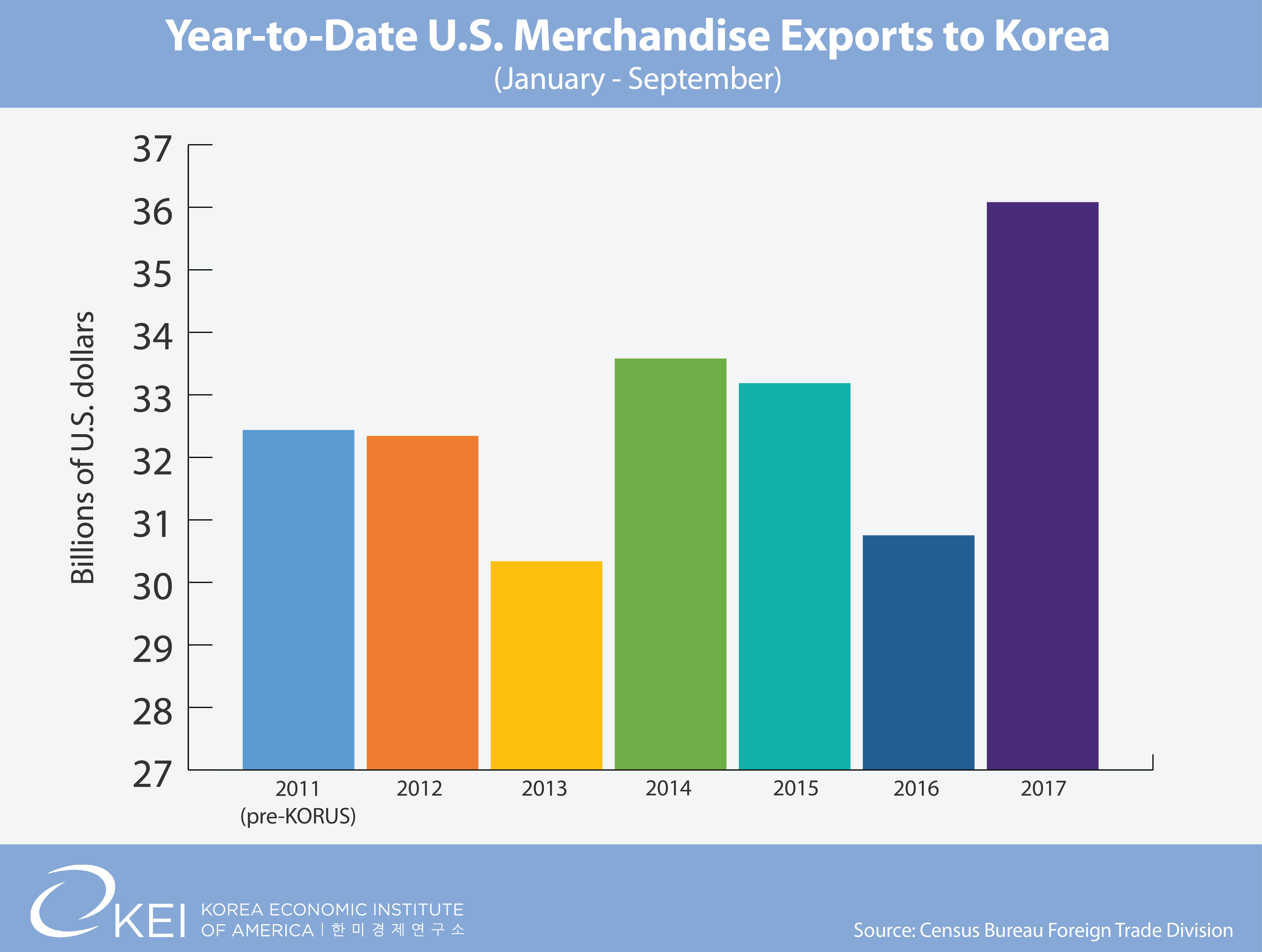
One reason for the downward trend in the U.S. bilateral trade deficit with Korea is that the U.S. is on track to set a record in goods exports this year.
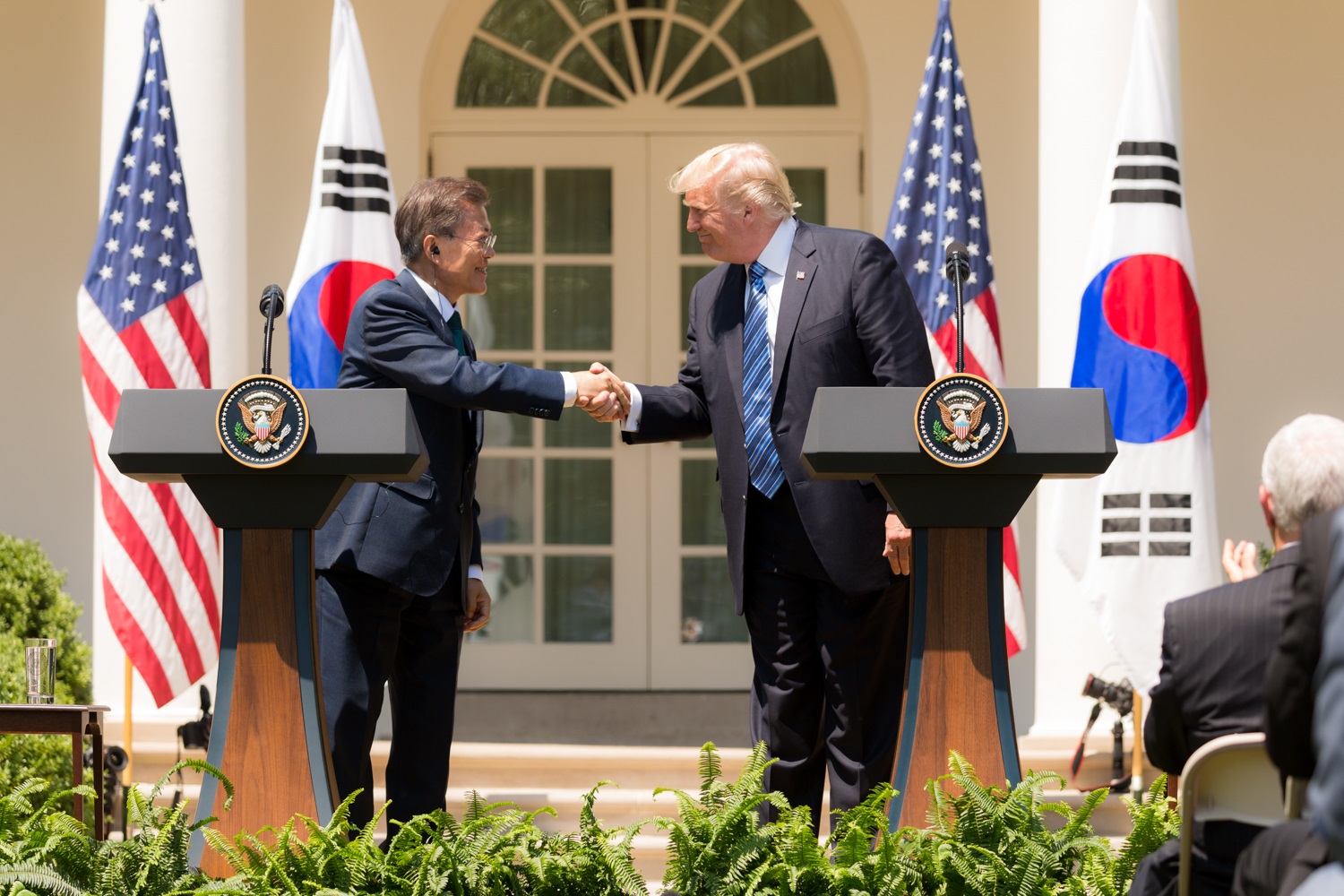
This will be the second time that the United States has pushed to renegotiate the KORUS FTA, which was originally signed in 2007 but not implemented until 2012.

South Korea continues to demonstrate its confidence in America by once again in 2016 increasing its holdings of $38.8 billion in investments at U.S.-based companies, nearly double the level the year prior to the implementation of the Korea-U.S. Free Trade Agreement (KORUS FTA) in 2011.
Rumors flooded Washington over the Labor Day holiday weekend that the U.S. would soon withdraw from the Korea-U.S. Free Trade Agreement (KORUS FTA).

Much has changed since President Trump first raised his concerns about the KORUS FTA,
Last week, the Office of the U.S. Trade Representative (USTR) released its Summary of Objectives for the NAFTA Renegotiation, providing a window into how the administration may pursue updating the U.S.-Korea Free Trade Agreement (KORUS FTA).
Last March, President Donald Trump directed the Department of Commerce and the Office of the U.S. Trade Representative (USTR) to prepare an Omnibus Report on Significant Trade Deficits within 90 days.