
By Korea View
Conventional Economic Promise Boost Polling
Following the model established by past campaigns, Lee Jae-myung’s looks to appeal to moderate voters with economic promises.
What Happened:
- The ruling party’s presidential candidate Lee Jae-myung announced his plan to raise income per capita to USD 50,000, elevate the country’s hard power, and reach KOSPI stock index of 5,000.
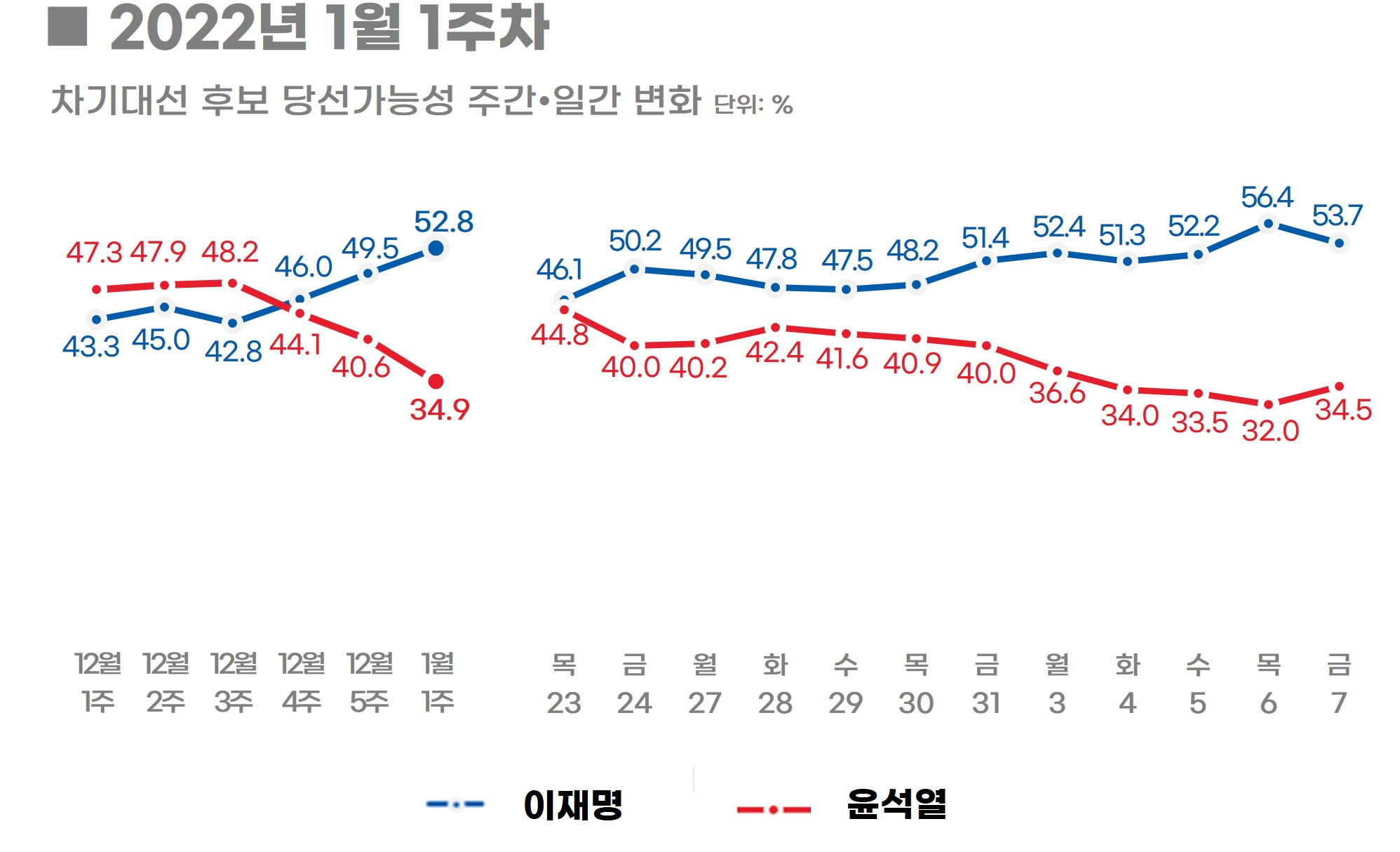
- Polling two days after this speech showed that Lee led the race with 36 percent against his main opponent’s 26 percent.
- According to a different poll, Lee’s electability increased by 0.9 percent after the speech.
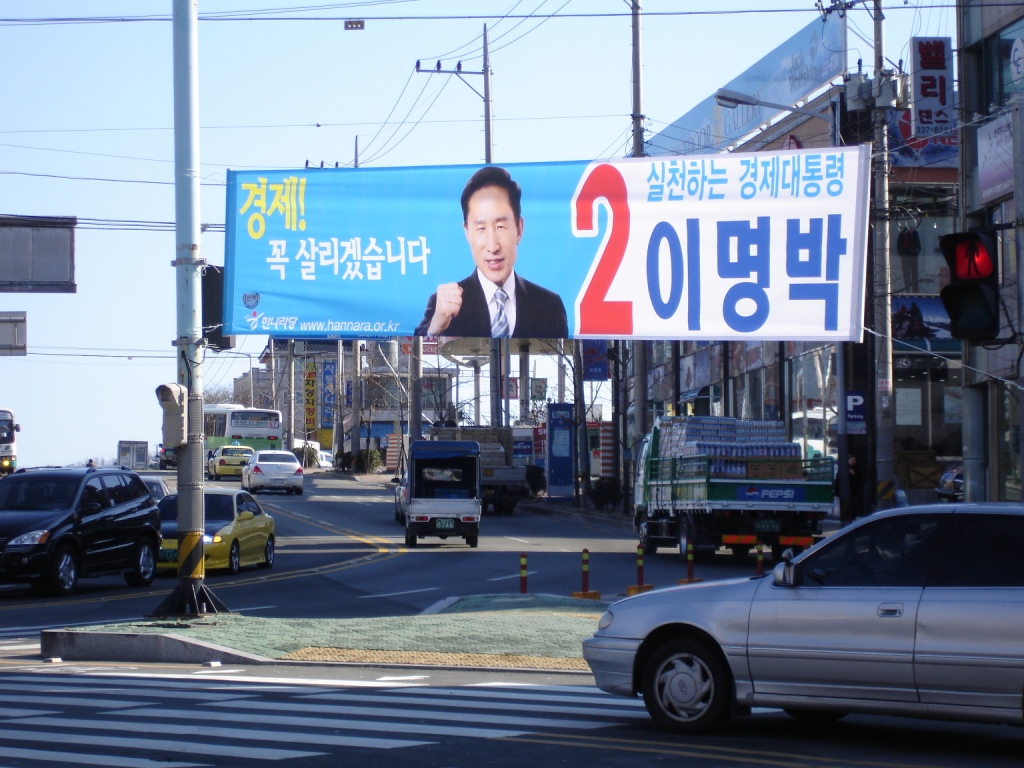
Implication: Korea’s political campaigns often focus on catering to a moderate constituency by using economic promises. Candidate Lee’s decision to pronounce a bold economic plan (“the 555 plan”) echoes the successful campaign led by former President Lee Myung-bak during the 2007 Presidential Election. Although Lee Myung-bak and Lee Jae-myung represent opposite sides of the political aisle, they mirror one another’s focus on moderate constituents and strategy of using conventional economic promises to reach these voters. This may be built on survey results that show increased electability for a candidate after announcing moderate plans.
Context: Political scientists have proposed that a candidate in the center is more likely to win an election because they are able to appeal to a broader range of voters. Lee Myung-bak and Lee Jae-myung both seem to be adherents of this proposition. However, the growing polarization in Korean politics that many commentators are observing represents a potential complicating factor. People’s support for a candidate appears less driven by their platform and more prompted by their opposition to the other candidate.
This briefing comes from Korea View, a weekly newsletter published by the Korea Economic Institute. Korea View aims to cover developments that reveal trends on the Korean Peninsula but receive little attention in the United States. If you would like to sign up, please find the online form here.
Korea View was edited by Yong Kwon with the help of Kayla Harris, Yubin Huh, David Lee, Sarah Marshall, and Mai Anna Pressley. Picture from Flickr account of Jens-Olaf Walter