
After a Decade, the North Korea Travel Ban Needs a Second Look
It is unclear whether the current U.S. ban on Americans traveling to North Korea has improved North Korea’s attitude toward the United States or the conditions under which the North Korean people suffer.
By Robert King
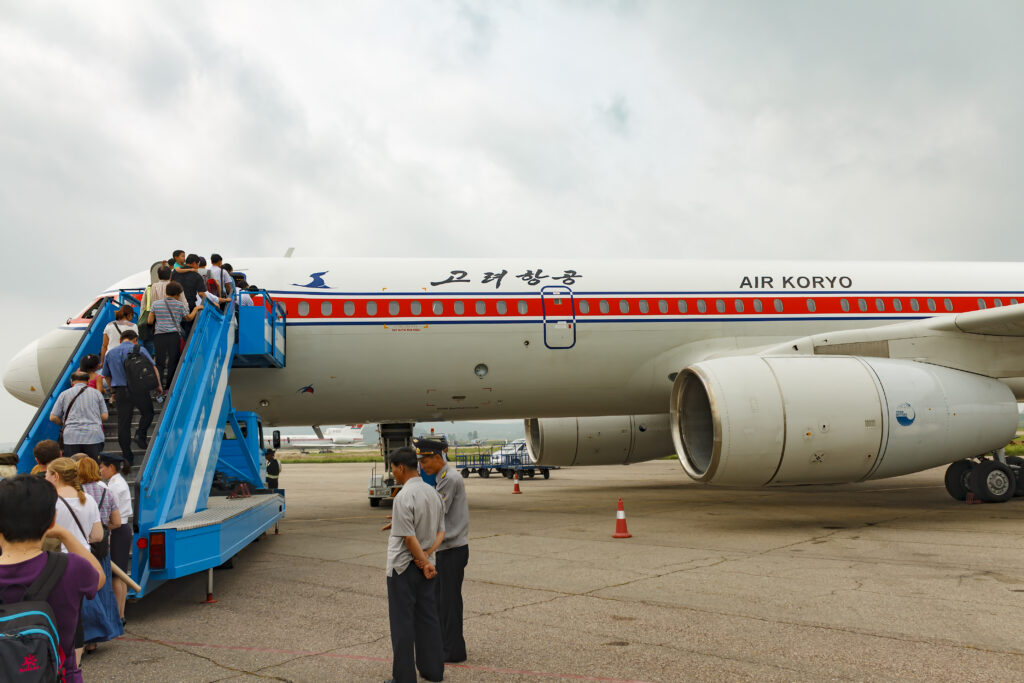
For the tenth consecutive year, the U.S. Department of State has renewed its ban on Americans traveling to North Korea, extending the prohibition through August 31, 2027. The renewal arrived with the familiar warnings about arrest and detention and no public assessment of what a decade of prohibition has accomplished or whether it has done anything to change North Korea. What the ban has done is keep out not only tourists but also American humanitarian workers who bring urgently needed aid to ordinary North Koreans. Ten years in, that tradeoff deserves a closer look.
“Do not travel to North Korea due to the continuing serious risk of arrest, long-term detention, and the threat of wrongful detention of U.S. citizens. Do not travel to the Democratic People’s Republic of Korea for any reason,” the State Department warns. “U.S. passports cannot be used to travel to, in, or through the Democratic People’s Republic of Korea (DPRK or North Korea) unless they are specially validated for such travel by the Secretary of State. Special validations are granted only in very limited circumstances.”
The extension of the travel ban comes without any effort to identify whether it has been helpful. Over the last decade, the travel ban has been extended with no indication of improving North Korea’s attitude toward the United States or the conditions under which the North Korean people suffer. The prohibition has kept American tourists from taking “unforgettable” and expensive tours to North Korea, but it has also prevented U.S. citizens from providing much-needed humanitarian assistance.
U.S. citizens can get a special validation passport from the State Department, which can be used to travel legally to or through North Korea, but such passports are not easily or quickly granted. “We may grant you an exception to travel [to North Korea] if you qualify,” and “we only issue special validations [for travel to North Korea] on a limited basis,” according to the department. Travel without permission can result in a person’s passport being revoked, and individuals who violate the travel ban can be charged with “felony misuse of a passport.”
The Death of Otto Warmbier
The United States banned travel to North Korea beginning September 1, 2017, by then Secretary of State Rex Tillerson. All secretaries of state since that time, both Republican and Democrat, have renewed the prohibition every year and have permitted few exceptions.
The prohibition began after North Korea returned University of Virginia college student Otto Warmbier to the United States after seventeen months of captivity, most of which he spent in a comatose state. Warmbier traveled to North Korea with other university students for a Christmas break trip in January 2016, but was arrested at the Pyongyang airport as he and the group tried to depart. North Korean authorities accused him of attempting to steal a propaganda poster off the wall of the hotel where he stayed in Pyongyang. Two months later, Warmbier was filmed inside a North Korean court confessing to the crime and begging for clemency.
Warmbier was sentenced to fifteen years’ imprisonment at hard labor. A day or two after the trial and sentencing, he sank into a coma after apparently suffering a severe neurological injury under circumstances that have never been fully explained by the North Korean regime, which refused to notify anyone outside the country of Warmbier’s condition. Finally, after seventeen months, North Korea revealed Warmbier’s condition, claiming it was the result of some sort of toxic mix of botulism and sleeping pills.
Medical professionals in the United States came to a different conclusion. After the North Koreans finally permitted a small team to enter the country and retrieve Warmbier, tests at a medical center in Cincinnati, Ohio, showed that he suffered cardiopulmonary arrest, which cut off blood flow and oxygen to his brain. Warmbier was in a state of “unresponsive wakefulness” (vegetative state) with extensive loss of brain tissue and muscular atrophy. He died just a week after he was returned to his family from North Korea. Less than two months later, the United States banned all travel to North Korea.
A rough estimate suggests that a thousand U.S. citizens visited North Korea the year before the travel ban was implemented in 2017. Few North Koreans came to the United States before or since the U.S.-imposed travel ban.
The prohibition cannot stop North Korean diplomats and government officials dealing with official matters at the UN headquarters in New York City because of international agreements which the United States has entered into. The number of North Korean diplomats accredited to the United Nations in New York is very small and carefully monitored. When this author was the U.S. special envoy for North Korean human rights issues, for example, he met with a North Korean deputy chief of mission at a coffee shop on Forty-Second Street and noticed a casually dressed FBI agent reading his newspaper two tables away.
When President Donald Trump and North Korean leader Kim Jong Un met in Singapore in June 2018, and nine months later in Hanoi in February 2019, Trump said he raised the Otto Warmbier case with Kim. The North Korean leader, according to Trump, “didn’t know about it.”
Fit for Purpose?
This year will mark a decade since the travel ban has been in effect. There has been little or no indication that the travel ban has caused North Korea to change or moderate its treatment of outside visitors. A few U.S. citizens have been granted an exemption passport and have traveled with that document to North Korea for humanitarian purposes. Still, the number is very small and significantly smaller than before the ban was imposed in 2017.
The time has come for the U.S. government to rethink the ban on all U.S. citizens seeking to travel to North Korea. There is still good reason for concern that some naive tourists may fail to recognize the potential problems, dangers, and differences in Pyongyang that can involve serious risks of punishment for visiting U.S. citizens. Maintaining prohibitions on tourist travel still makes sense.
On the other hand, humanitarian assistance groups that provide urgently needed aid to the North Korean people do understand how to work with North Korean officials in providing help. They are much more sensitive and experienced in dealing with government officials in North Korea than the average American tourist visiting North Korea. There is much they can offer in terms of knowledge and experience if it is made easier for them to go to North Korea.
Individuals with organizations that provide such humanitarian aid should be able to get the necessary U.S. travel documents without long delays and steep costs. It is in the interest of the United States to have American citizens providing humanitarian assistance to North Koreans, without consuming much of their all-too-limited financial resources to pay for expensive travel documents from the United States. The State Department should provide the documents without cost to humanitarian workers. Currently, the legal costs paid to the government are a burden to U.S. humanitarian groups that provide charitable help for North Koreans. The current language describing how to get the special permission required for a U.S. citizen to travel to North Korea for humanitarian reasons says, “We may grant you an exception to travel if you qualify.” The use of “may” is the wrong word. It should read that the United States “will” grant exceptions to all who qualify.
Robert King is a Non-resident Distinguished Fellow at the Korea Economic Institute of America (KEI). The views expressed here are the author’s alone.
This material is distributed by KEI on behalf of the Korea Institute for International Economic Policy. Additional information is available at the Department of Justice, Washington, DC.