
Maximum Flexibility: Explaining the Lee Jae Myung Administration’s China Policy
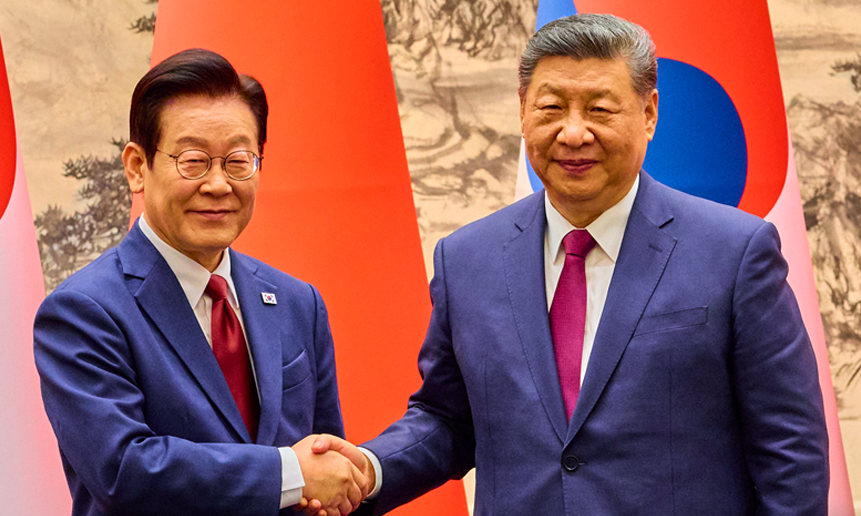
What kind of China policy will the Lee Jae Myung government pursue? Specifically, what approach does President Lee intend to take, and what obstacles might he face? Explaining the dynamics of South Korea–China relations requires not only an understanding of the Lee administration’s perspective on China, but also China’s view of Lee’s China policy. The objective of this paper is to describe the Lee government’s China policy, explain its dilemma and logic, and forecast its likely trajectory.
The questions raised above are also significant in the context of U.S.–South Korea relations. South Korea’s China policy and the U.S.–South Korea alliance are closely intertwined, like two sides of the same coin. If Seoul moves too close to Beijing, U.S. policymakers may worry about the integrity of the alliance. Indeed, there were lingering anxieties in Washington about a potential resurgence of anti-American sentiment under Lee, given his seemingly pro-China stance. This concern has led to arguments that the Lee administration must send clear and consistent signals underscoring the importance of the alliance from the outset. To this end, both during the campaign and after his inauguration, Lee has repeatedly stressed that the U.S.–South Korea alliance is the foundation of South Korea’s pragmatic diplomacy. At the same time, however, he has also expressed a strong desire to improve ties with China. This dual messaging once again renders South Korea’s diplomacy ambiguous.
This paper argues that the Lee administration is pursuing a strategy of maximum flexibility toward China. Through this approach, South Korea seeks to engage simultaneously with both the United States and China. This pursuit of simultaneity distinguishes the Lee administration’s diplomacy from that of its predecessors: the Moon Jae-in government, which initially prioritized restoring ties with Beijing, and the Yoon Suk Yeol government, which focused on strengthening relations with Washington. The strength of the maximum flexibility strategy lies in its ability to help South Korea avoid immediate repercussions—whether punishment from the United States or retaliation from China—that could result from leaning too far toward one side. The challenge, however, is that this strategy risks confusing both capitals, potentially eroding Seoul’s credibility with each over time. Despite these risks, maximum flexibility may be the only viable option for the Lee administration. Given the unpredictability of a second Donald Trump administration and the broader uncertainty surrounding U.S.–China strategic competition, maintaining maximum flexibility is a rational and pragmatic choice.
To examine the Lee administration’s China policy and China’s response, this paper first explores Lee’s personal views on China and how they have evolved over time. The next section analyzes the structural challenges that shape the Lee administration’s China policy. The paper then defines the concept of maximum flexibility and compares it with strategic ambiguity. Using this analytic framework, the following section details the Lee administration’s approach to China and uncovers its underlying strategic intent. Finally, the paper investigates Chinese perspectives on the Lee government’s foreign policy by drawing on Chinese-language sources, including newspaper editorials, scholarly articles written by Chinese academics, and expert commentaries published in Chinese media.