
North Korean Traders Are Quietly Engaging Chinese Capitalists
Bringing in Chinese money while keeping out Chinese cultural influence is far harder in practice than it sounds. The same is true of Chinese capitalism.
North Korea’s won has lost roughly four-fifths of its value against the dollar in two years, and its trade deficit with China ran near USD 860 million in the first half of 2026 alone. Kim Jong Un’s answer remains self-reliance. But unconfirmed reports from the defector community describe something else happening at the border—North Korean traders working with Chinese capital and imported machinery to add value to their exports. If that is real, it is the opposite of self-reliance and the most consequential development in the North Korean economy.
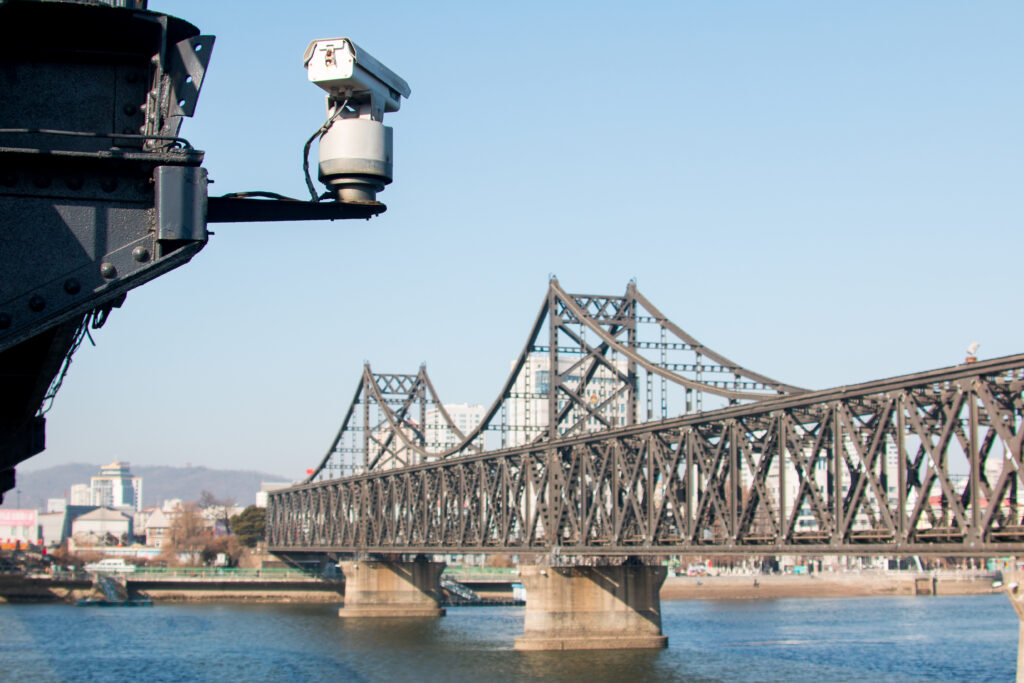
This presents a difficult choice for the regime. Combined with continued strong dollarization and use of yuan, private sales to China can raise productivity and incomes sharply, improving living standards and slowing inflation. But it robs the regime of its ability to direct employment, investment, and production in a long-failing socialist system. Opening to traffic of a long-delayed modern highway bridge across the Yalu River—it was completed with Chinese money in 2014, but North Korea has dragged its feet on finishing access roads—may be a bellwether of such change, but it has not happened yet.
Trade With China Rises Sharply
Media reports of soaring trade between North Korea and China are somewhat exaggerated, as many fail to note the huge North Korean deficit and rising prices. North Korean imports increased 13 percent to USD 1.18 billion in the first half of 2026 compared to the first half of 2025, according to Chinese data, but the level is still far below the pre-2016 sanctions era. North Korean exports are reported to have jumped 56 percent but to only USD 324 million, leaving a large USD 859 million first-half deficit, according to Chinese customs data.
More tellingly is the composition of the trade. Reported North Korean imports are largely consumer goods such as meat, fish, textiles, furniture, and other items likely sold in markets. Cereal imports were small, and no machinery imports were recorded. Reported North Korea’s exports to China jumped by nearly USD 100 million in the first half of 2026, but much of this may have been due to tungsten shipments, a critical raw material with defense industry applications. A Chinese policy that centralizes control over the tungsten chain has opened the door to this unsanctioned item. Both North and South Korea have very large reserves, and Pyongyang is the first to take advantage. One of the world’s largest such mines is being opened in South Korea, possibly putting a crimp in soaring prices.
Financing the Gap
There is a longstanding question of how Pyongyang finances its huge trade deficit, although transactions with Moscow are likely helping, as is illicit cyber activity. But this boost apparently isn’t enough to offset the import deficit, as the won has continued to plummet—down from about 15,000 won per dollar two years ago to 67,000 as of this writing, according to unconfirmed Daily NK data.
And with the drop in the won, domestic prices have soared. Asia Press, for instance, reports that rice prices in early August were 37,000 won per kilogram, up from 13,000 two years ago, citing unconfirmed data points. Other prices have reportedly risen similarly in won terms, although much less in dollar or yuan terms, confirming the deterioration of the won currency.
An Obvious But Untried Solution
Self-reliance has been a mainstay of North Korea’s economic planning for decades, but became particularly apt under Kim Jong Un after international sanctions severely limited international trade channels in 2016 and 2017. The sanctions program, designed to compel disarmament, has seemingly been met with continued trade in illicit goods by China and, more recently, Russia’s willingness to buy North Korean military products and pay Kim for soldiers to help sustain its invasion of Ukraine. Further North Korea-Russia trade may continue along a new bridge under construction linking the two countries’ narrow land border. If China continues to allow its businesses to sell machinery and technology, and if Kim continues to look the other way, allowing North Korea firms to engage in this private activity, trade may flourish and the two economies can begin to integrate along the border.
The result of such integration across two widely divergent economies—one largely market- and money-based, and the other still, at least in theory, planned and rationed—can be a large productivity boost for the North Koreans and for businesses in China’s economically lagging northeast provinces. Chinese firms can take advantage of very low wages in North Korea, and North Korean firms can take advantage of relatively cheap and abundant Chinese capital. This is opposite to self-reliance, however, and Pyongyang could interpret this sort of economic vibrancy as a direct challenge.
Conclusion
Border trade promises higher North Korean income and slows inflation, which the won’s collapse makes urgent. It also puts money, machinery, and Chinese managers inside an economy built on the premise that the state directs all three. Bringing in Chinese money while keeping out Chinese cultural influence is far harder in practice than it sounds. The same is true of Chinese capitalism.
William Brown is a Distinguished Non-Resident Fellow at KEI. Due to a secrecy agreement with his former employer, CIA, he has cleared this text with its Publication Review Board which finds no issues of concern. This clearance does not suggest any endorsement or fact checking by the government.
This material is distributed by KEI on behalf of the Korea Institute for International Economic Policy. Additional information is available at the Department of Justice, Washington, DC.